

Emergency Water Storage: How Much You Need and the Best Containers by Home Size

Quick answer
Store 1 gallon per person per day. See how much water your family needs and the best containers by home size, from 7-gallon jugs to 55-gallon drums.
We earn a small commission if you buy through links on this page, at no extra cost to you. As an Amazon Associate we earn from qualifying purchases.
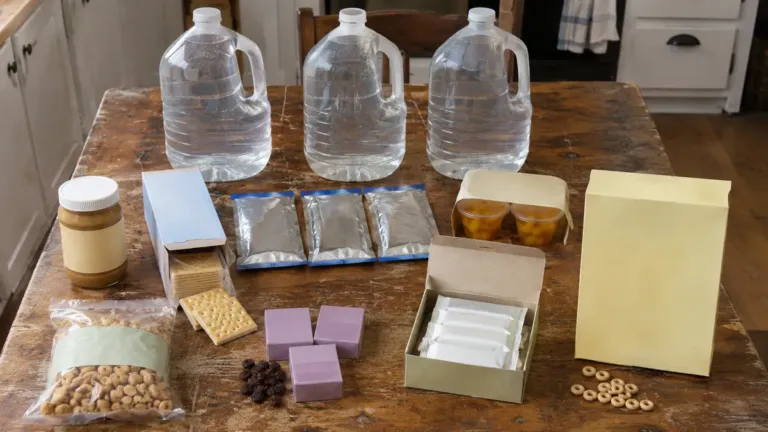
Short answer: store at least 1 gallon of water per person per day. Keep 3 days ready to grab, and 2 weeks at home if you have the room. That’s the advice from the American Red Cross and the CDC.
It’s 6 a.m. in January. You turn the kitchen tap for the coffee pot, it coughs twice, and then nothing. Your phone buzzes with a neighbor asking the same question you’re about to ask. That’s the moment a few jugs in the closet start to feel like the smartest thing you ever bought.
A winter storm, a boil-water notice or a broken main can turn the kitchen tap into a very expensive decoration. A few jugs that fit your home and your back are enough to start.
How much emergency water does your family need?
One gallon a day covers drinking plus a little washing up, so here are the totals.
| People | 3 days | 2 weeks | 2 weeks in 7-gallon jugs | 2 weeks in 55-gallon drums |
|---|---|---|---|---|
| 1 | 3 gallons | 14 gallons | 2 jugs | A drum is more than you need |
| 2 | 6 gallons | 28 gallons | 4 jugs | 1 drum |
| 4 | 12 gallons | 56 gallons | 8 jugs | 1 drum plus 1 jug |
| 6 | 18 gallons | 84 gallons | 12 jugs | 2 drums |
Plan for more if you live somewhere hot, or have kids, a pregnant or nursing mom, someone sick, or pets at home. Ready.gov says water needs can double in very hot weather. Our free food storage calculator does the food and water math for your exact household, with a hot-climate option.
One big tank or lots of small jugs?
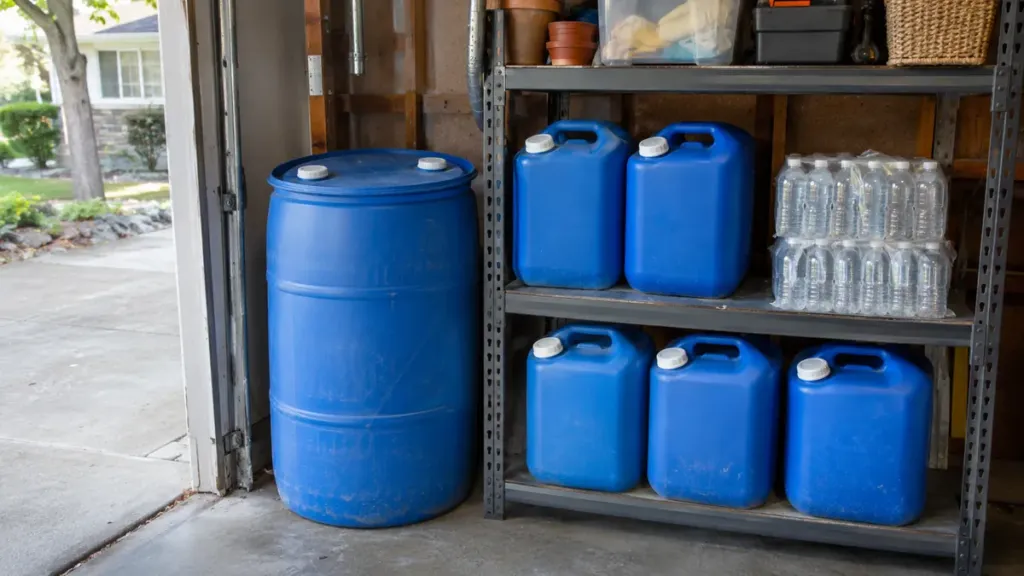
It depends on your floor and your back. The first time you pick up a full 7-gallon jug, you’ll understand why it has a molded grip. It weighs about 58 pounds, roughly a big bag of dog food with a gallon of milk on top.
Water weighs about 8.3 pounds a gallon, so a full 55-gallon drum holds about 460 pounds of water and stays exactly where you fill it.
| Container | Holds | Full weight | Good for | You’ll also want |
|---|---|---|---|---|
| Bottled water cases and 1-gallon jugs | 1 gallon or less each | About 8 lb a gallon | Anyone who can’t lift a big jug | Nothing extra |
| Small jugs | 5 to 7 gallons | 42 to 58 lb | Apartments, carrying, taking with you | Nothing extra |
| Stackable kits | 5 gallons each | About 42 lb each | Closets and pantry corners | The spigot that comes in the kit |
| 55-gallon drum | 55 gallons | About 460 lb | Garages and basements | A drum pump, a bung wrench to open the caps, and a water preserver |
| Bathtub bladder | Up to 100 gallons, depending on your tub | Several hundred pounds in the tub | Filling up when a storm is on the way | The pump that comes with it |
| Large tank | 160 gallons | Over 1,350 lb | Big families with garage space | A level, solid floor |
Small jugs win on flexibility. You can carry one to the car, give one to a neighbor, or lose one to a crack without losing everything. If 40 pounds is too much for you, cases of bottled water and 1-gallon jugs do the same job, just in more trips. One big drum wins on space: a 55-gallon drum is almost two weeks of water for a family of four in one spot.
What to do: start with 3 days of water per person in jugs or cases you can lift. Add a drum later if you have a basement or a garage that stays mild.
Put this plan on paper
A printed plan you can follow when the lights are out. US Letter or A4, instant download.
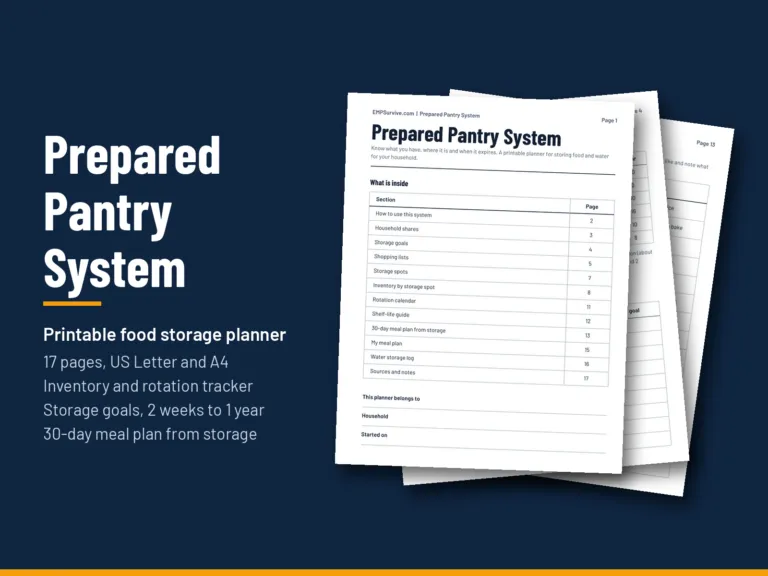
Prepared Pantry System
Know what you have, where it is and when it expires. A printable planner for building your food storage from 2 weeks to a full year.
$3.90 one-time
The best water storage containers by home size
The free advice above is enough to get started, even with cases of store-bought water. What these containers save you is the cleaning, the guessing and the leaks. Black Friday week: we checked the deal tag below on Amazon on Nov 26. Amazon prices change often, so check the price on the page.
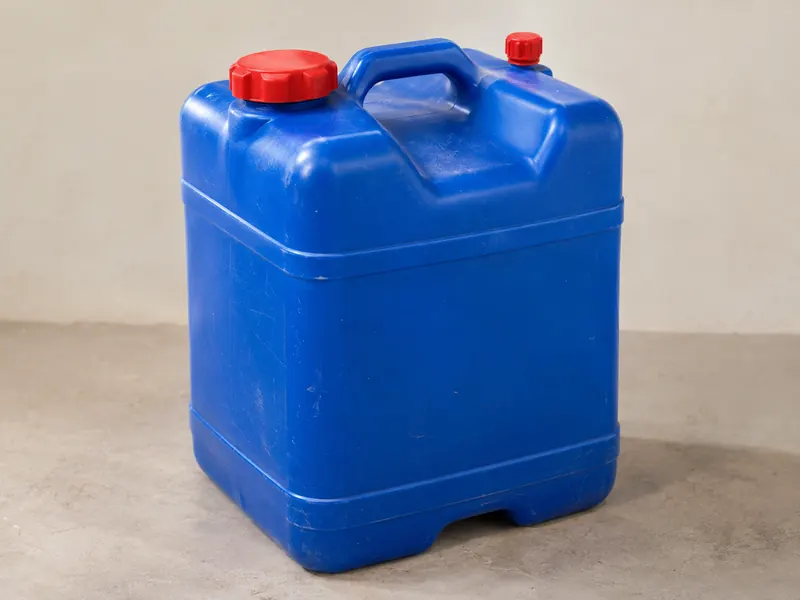
For a small apartment
Reliance Aqua-Tainer 7 Gallon Water Container
A week of water for one person, with its own tap.
The spigot means you never have to tip a 58-pound jug over a pitcher.
- Rigid 7-gallon jug with a molded grip
- Screw-on vent so the water flows smoothly
- Stacks to save space when empty (about 11 x 11 x 15 inches)
See the 2-pack on Amazon (paid link) · 4-pack
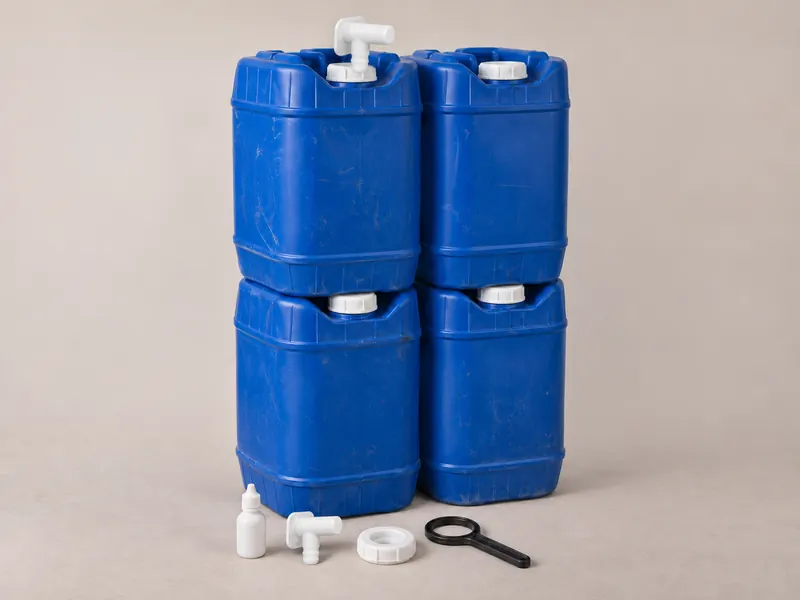
For a closet that stacks
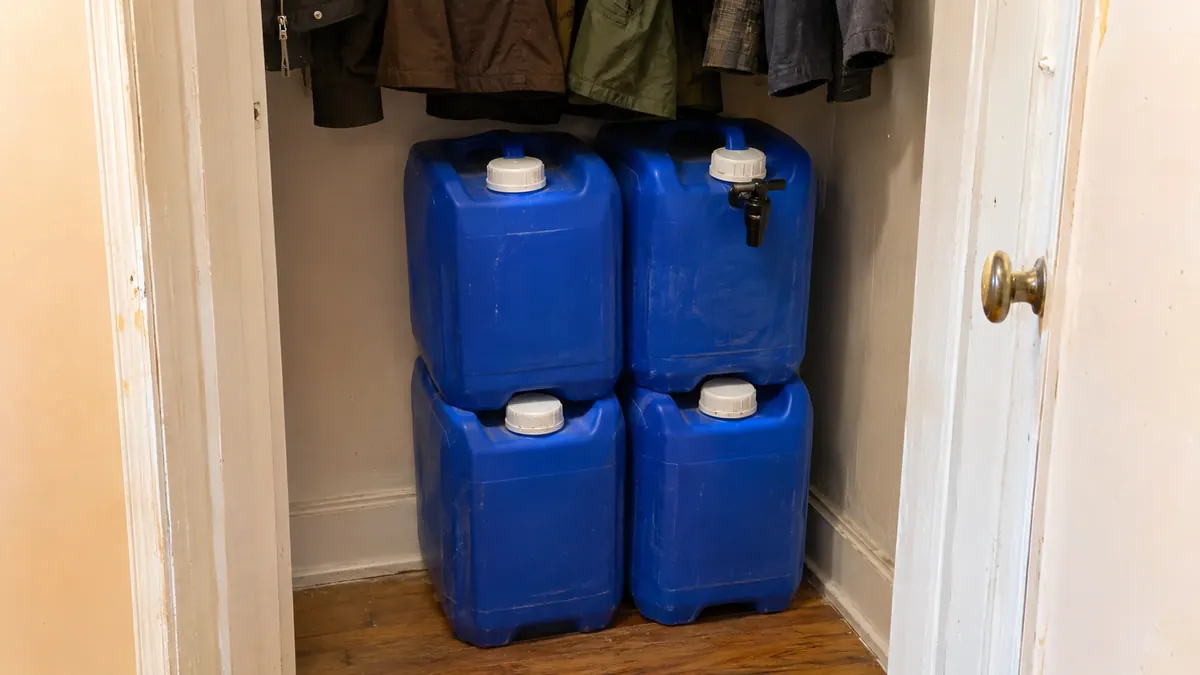
Saratoga Farms Stackable Water Storage Containers (20 Gallons)
Twenty gallons that stack neatly in a closet corner.
Four smaller jugs instead of one big drum, so you only ever lift one at a time.
- Four 5-gallon containers with flat tops that stack
- Spigots, a cap wrench and a bottle of water preserver in the kit
- BPA-free, food-grade HDPE plastic
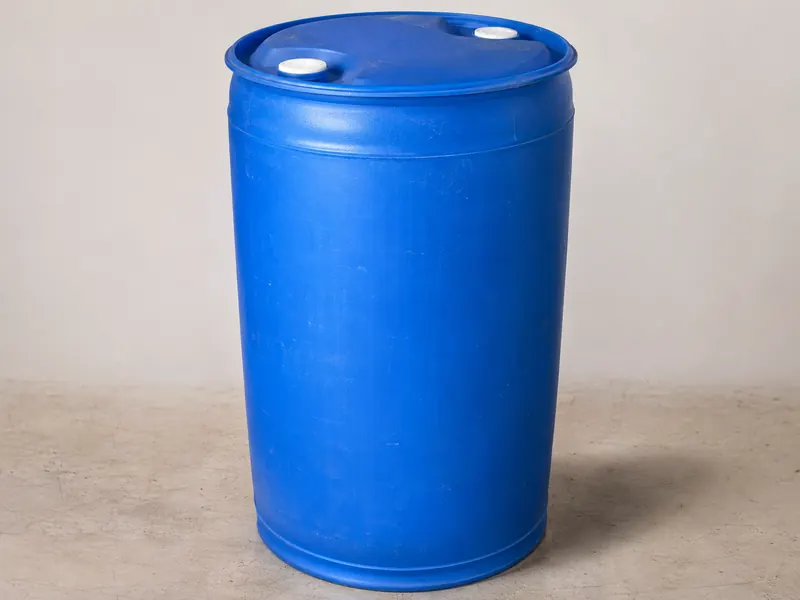
For a garage or basement
Augason Farms 55-Gallon Water Storage Barrel
Almost two weeks of water for a family of four, in one spot.
Fill it once, write the date on it, and let it be the most boring thing in the garage.
- 55 gallons in a BPA-free, food-grade plastic drum
- Two built-in plug fittings for filling and drawing water
Fill it where it will live. Full, it weighs about 460 pounds. You’ll need a drum pump to get water out and a bung wrench to open the caps.
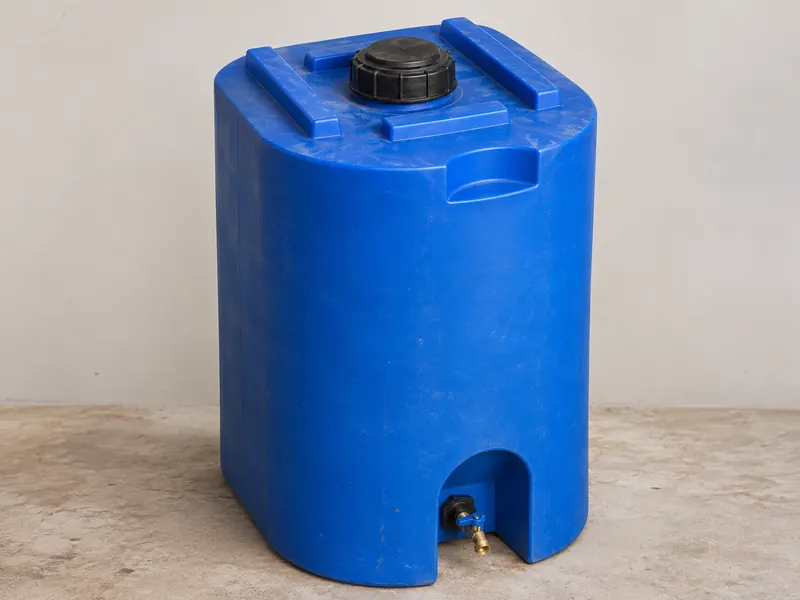
For a tank with a tap
33% off on Nov 26
WaterPrepared 55 Gallon Stackable Water Tank
Fifty-five gallons with a spigot, so you can skip the pump.
Filling a pitcher is one twist of the tap, no pumping and no siphoning on your knees.
- Built-in spigot fits a standard garden hose
- Plastic blended to block sunlight, which helps stop algae and bacteria
- Stacks to save floor space (22 x 23 x 30 inches)
For when a storm is on the way
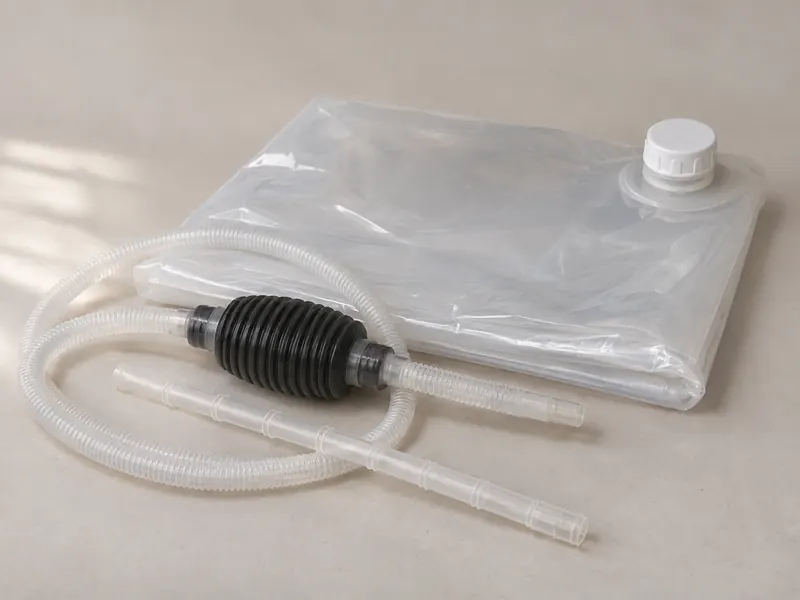
Zipcase 100 Gallon Bathtub Water Storage Bladder
Your tap water, sealed up in the tub before the storm hits.
Set it up once in good weather, so you’re not reading instructions by flashlight.
- Holds up to 100 gallons in heavy-duty, food-grade plastic (the maker says it meets FDA food-storage rules)
- Keeps water fresh for up to 8 weeks, the maker says
- Siphon pump included to fill pitchers and jugs
Two small add-ons make any of these work better. A water preserver concentrate is a few drops of treatment you add to the water so it keeps longer; one bottle treats a 55-gallon drum (use it within a year of when it was made; check the date on the bottle). And a pack of water purification tablets is the cheap backup for any water you’re not sure about.
How do you keep stored water safe to drink?
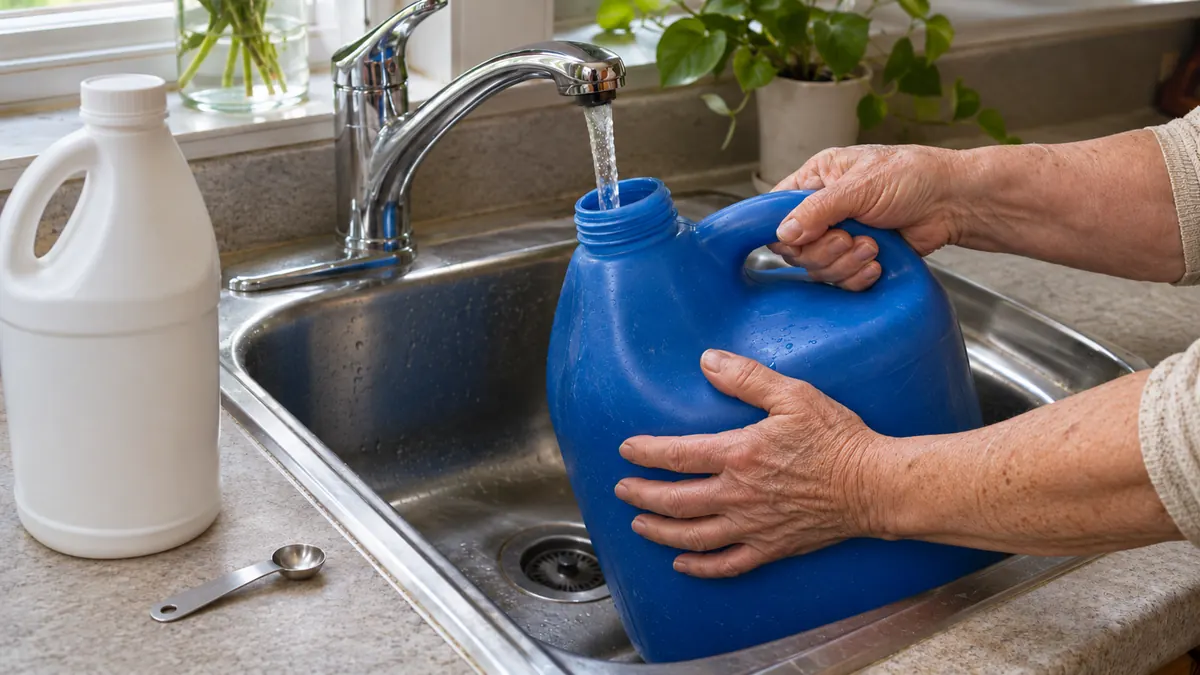
Store-bought bottled water is the easiest option. Keep it sealed in the original bottles. If you fill your own containers, here is what the CDC says to do:
- Use food-grade containers made of unbreakable material, not glass.
- Never reuse a container that held bleach, pesticides or other chemicals.
- Wash it with soap and rinse with water. Then shake 1 teaspoon of plain, unscented bleach in 1 quart of water inside it. Wait 30 seconds, pour it out and let it air-dry.
- Fill with clean tap water and close the lid tight.
- Store it cool (50°F to 70°F), out of sunlight and away from gasoline or pesticides. If your garage bakes in summer or freezes in winter, a basement or an inside closet is a better spot.
- Replace water you filled yourself every 6 months.
Label each jug “drinking water” with the fill date. A sticky note saves a lot of guessing next spring.
A storm is coming: should you fill the bathtub?
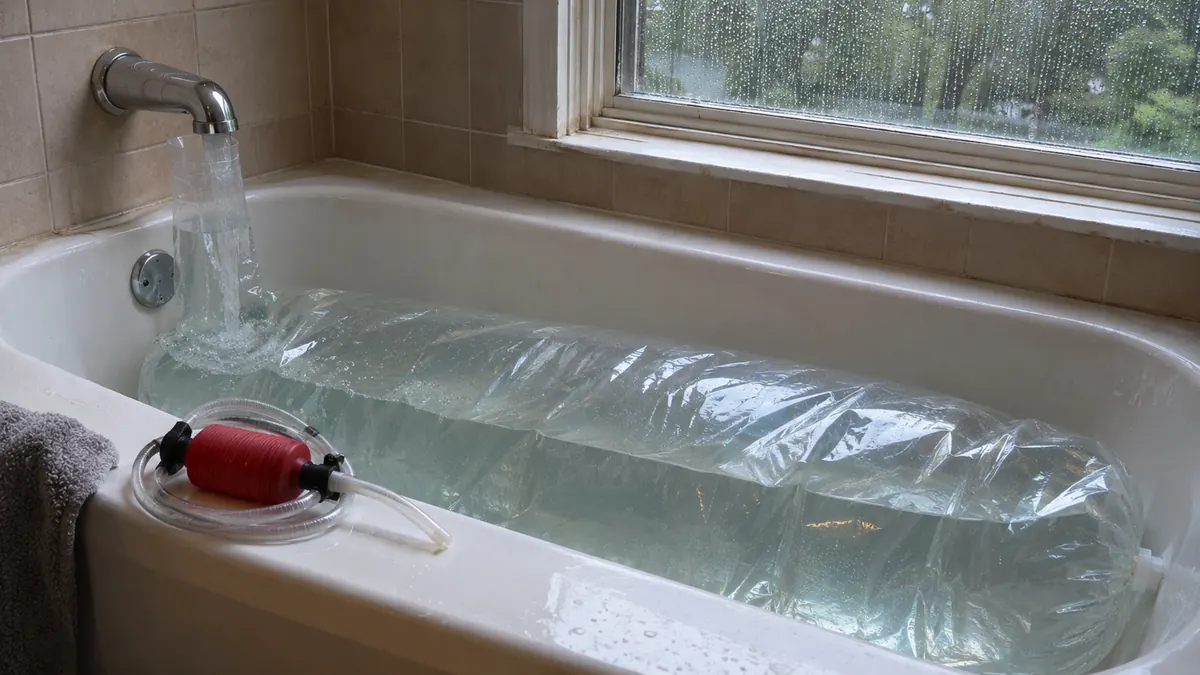
Filling the tub is an old trick, and it still works for flushing the toilet and washing up. An open tub isn’t great for drinking, though. Dust gets in, and so does whatever the dog decides to investigate.
A bathtub bladder fixes that. The bag sits in the tub, you fill it from the faucet, and the water stays closed up until you pump it out. It’s a good fit if a hurricane or ice storm is in the forecast and you don’t have room for drums the rest of the year.
What to do: if a big storm is two days out, fill jugs and the bladder while the tap still runs. Then fill buckets, or a second tub if you have one, for flushing.
Water storage questions people ask
Do I need to add anything to 55 gallons of tap water?
Not if you follow the simple rule. City tap water is already treated, so fill a clean, food-grade drum and swap the water every 6 months, as the CDC advises. If you’d rather not empty a drum twice a year, add a water preserver concentrate when you fill it; its makers say that stretches storage to up to 5 years. The 6-month rule is the CDC’s; the 5 years is the maker’s claim. If your water comes from a private well, ask your local health department how to treat it before you store it.
Is expired bottled water still OK to drink?
Usually, yes, if the seal isn’t broken and it was kept cool and out of the sun. The FDA doesn’t require a date on bottled water, and state health departments say it has no set shelf life when it’s unopened and stored right. The CDC still says to go by the printed date, so for your emergency shelf, rotate: drink the oldest cases on road trips and put fresh ones at the back.
Water pouches or jugs?
Both, for different jobs. Sealed water pouches are small and tough, so they fit a go bag or the car. Jugs and drums hold the 2 weeks at home. Our go bag list covers the grab-and-go side.
Start with the gallons, then pick the container that fits your floor. Water is boring right up until the tap stops.
Sources
- American Red Cross, Survival Kit Supplies (1 gallon per person per day; 3 days to evacuate, 2 weeks at home)
- CDC, How to Create an Emergency Water Supply (containers, cleaning, storage temperature, 6-month replacement, expiration dates)
- Ready.gov, Water (extra water for heat, children, nursing mothers and sick people; replace every six months)
- FDA position on bottled water dates, as reported by the VERIFY team (KSDK)
- Product details: each product’s Amazon or Legacy Food Storage page, checked Nov 26, 2026
We earn a commission from some links on this page. Our reviews are based on research, specs and buyer reports.
Comments
Comments appear right away. We remove spam, sales links and personal attacks.
No comments yet. Yours can be the first.