

Faraday Cage Trash Can: Will a $37 Metal Can Stop an EMP? What the Government Guide Says

Quick answer
Short answer: not by itself. The U.S. government's EMP guide says a plain metal trash can usually isn't reliable. Wrap your spare electronics in a paper bag and heavy-duty foil first. The can is optional.
In this guide
Short answer: not by itself. The U.S. government’s own EMP guide says a plain metal trash can usually isn’t reliable. What it recommends first is already in your kitchen drawer.
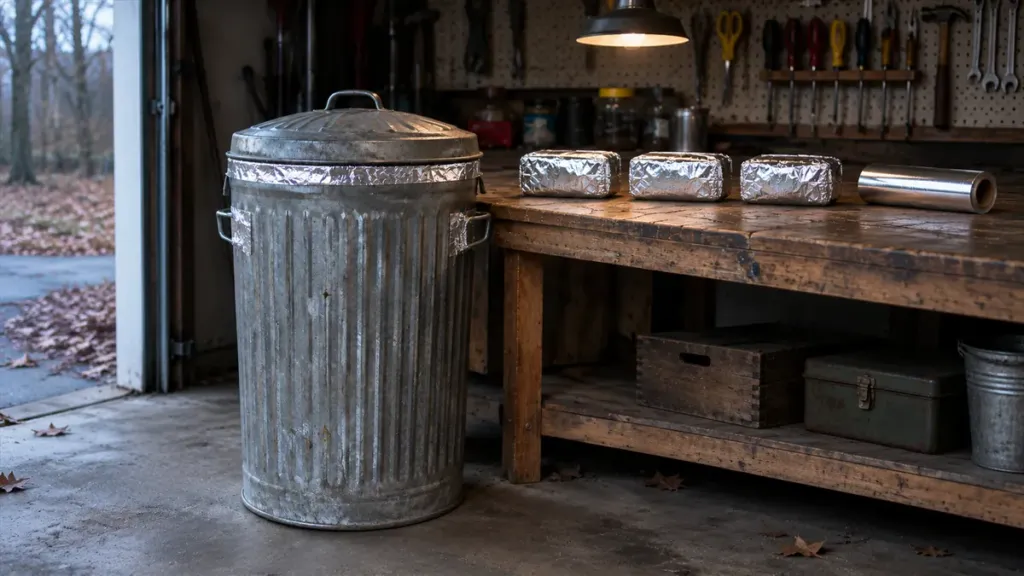
You’ve probably seen the video. A radio wrapped in foil goes into a metal trash can, the lid goes on, done. People call it a faraday cage trash can, which is just a fancy name for a metal can used as a shield against an EMP, the kind of energy burst that can fry electronics.
The video went up on TikTok back in July, and viewers left a long line of questions underneath. Does it need a ground wire? Will a microwave do? Do you have to know when it’s coming? Good questions, and the government has answered most of them.
Does a faraday cage trash can really work?
Not reliably. That’s the word from CISA, the federal agency that looks after the power grid and phone networks. Its 2019 guide says metal trash cans “do not usually provide reliable EMP protection for items placed inside of them.”
The problem is the gaps. There’s one around the lid, more where the handles are riveted on, and sometimes one along the bottom. Radio waves get in the way a cold draft gets in around an old window, even when the window looks shut.
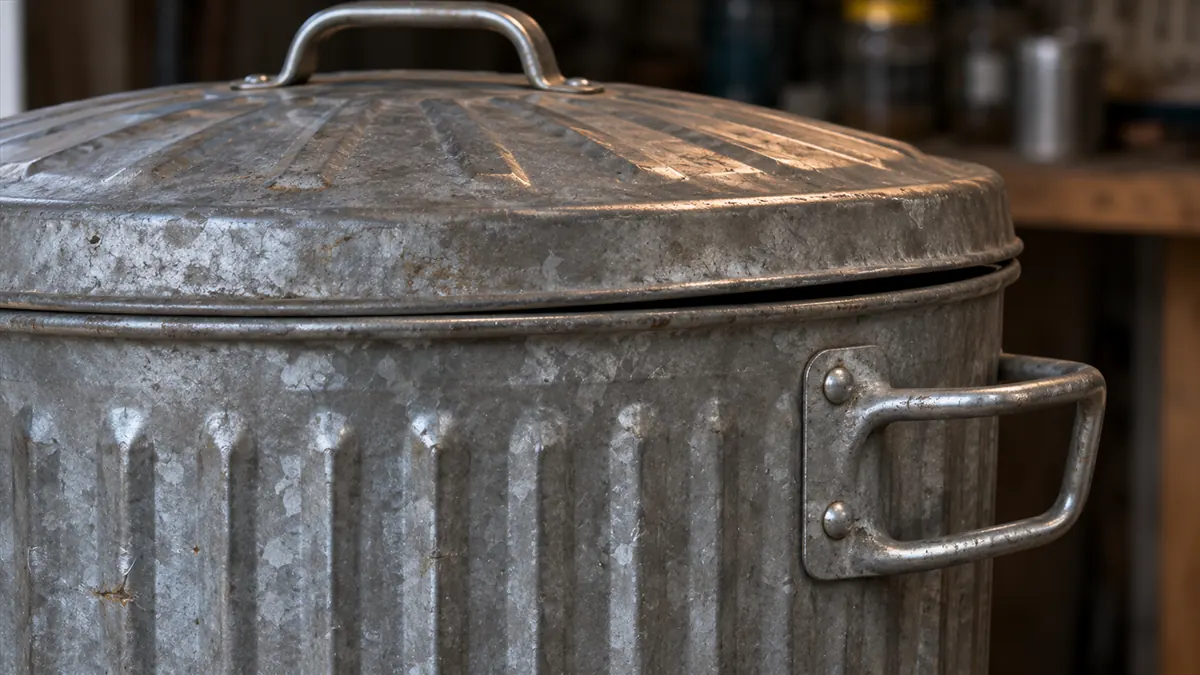
So the video has the right idea about metal. It just skips the part where the lid has to seal.
So what should you do instead?
Wrap your spares in foil. It’s what that same guide tells ordinary people to do, and you can do it at the kitchen table:
- Turn the device off and unplug it. Take the batteries out if they come out.
- Slide it into a paper or plastic bag.
- Wrap the bag in heavy-duty foil. Cover every side, overlap the edges, and go around twice if you can.
If a cord won’t come off, tuck it in the bag too. If the battery is sealed inside, like in most phones, leave it there. Nobody is asking you to pry anything open.
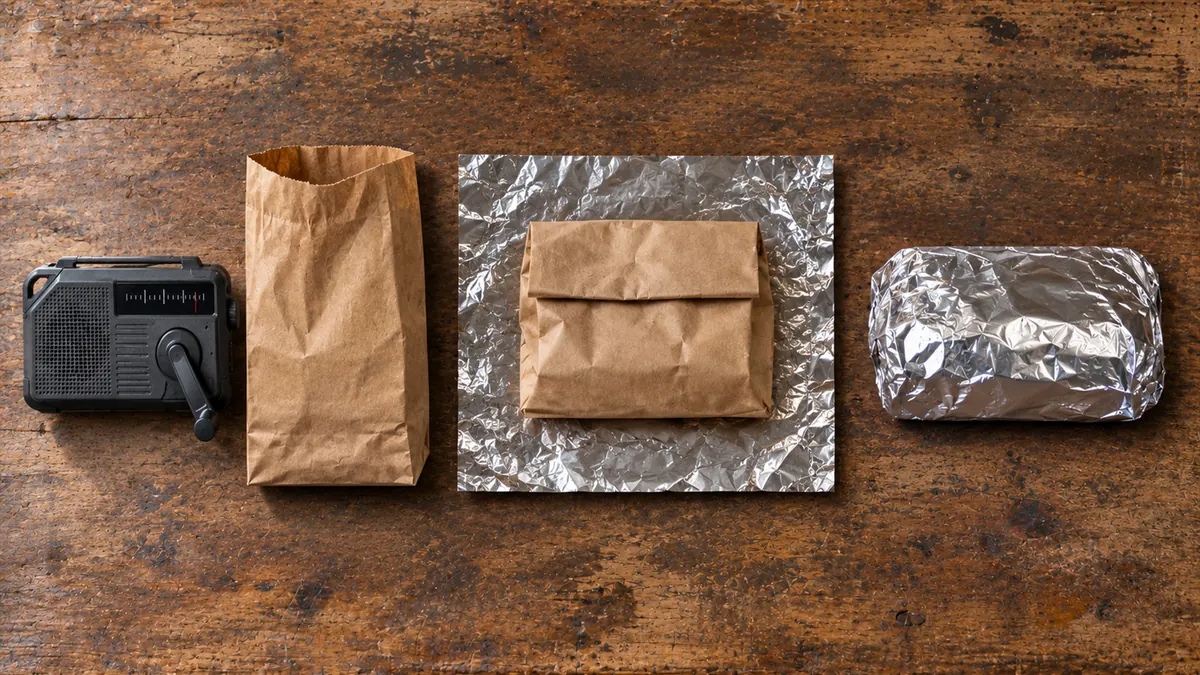
What’s worth wrapping? Spares, not the things you use every week. A spare radio comes first, and we’ve written about what radio can still tell you after an EMP. After that, an old phone with your maps and family photos on it, a flashlight, a small solar charger.
What to do: wrap one spare tonight. A brown lunch bag and the foil you already have will do it.
Put this plan on paper
Print at home in US Letter or A4. One-time price, instant download.
Power Outage Bundle
What to do when the lights go out, a pantry that keeps your family fed, and a 12-month plan to get ready.…
$9.90 $11.70 for all 3

World War III Ready Binder
A calm, step-by-step plan for war threats, fallout and grid-down days at home. Every safety step is traced to Ready.gov, FEMA, CDC…
$14.90 one-time
Still want to build the can?
Go ahead. It’s a good, dry place to keep your wrapped spares together. A 20-gallon galvanized steel can with a lid was $36.99 at Ace Hardware when we checked on November 16.
One thing up front: the guide gives no test results for a homemade can, and it doesn’t say how to seal the lid or check your work. So this is a sensible build, not a proven one.
- Close the gaps. Those are the lid seam, the handle rivets and the bottom seam. Aluminum foil tape, the shiny kind sold for sealing heating ducts, is one way to do it.
- Line it with cardboard so the bundles don’t clank around.
- Put it where it will stay before you load it.
- Wrap everything first. The foil is the part the government recommends, so the can is your second layer, not your only one.
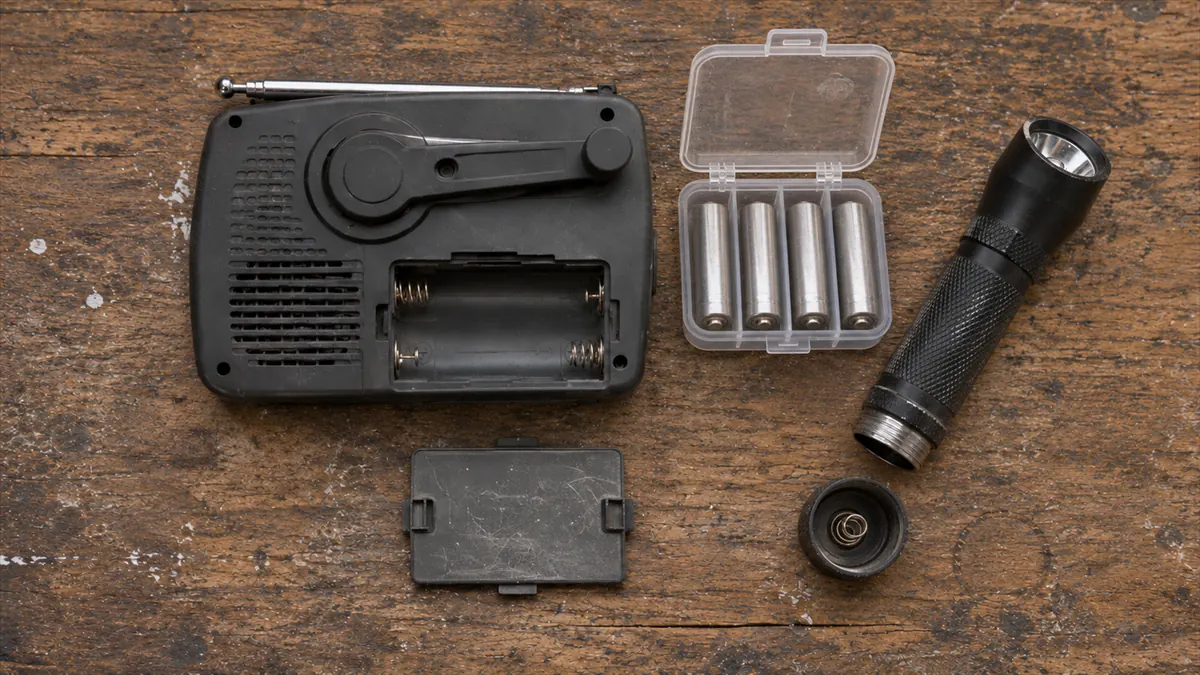
The batteries you took out go in their original pack or a plastic battery case, so the ends can’t touch. Duracell says the same. Keep them dry, and away from the grandkids.
And if $37 is a stretch this month, skip the can and don’t feel bad about it.
How worried should you be?
Less than the videos make it sound. The guide says small battery radios and other handheld electronics usually come through an EMP fairly well, as long as they aren’t plugged in or hooked to a long antenna. Not always, though, and the risk goes up if they’re switched on or charging at the time. That’s why a little foil is worth the trouble.
All of this is about an EMP. A foil wrap or a can won’t help in an ice storm or an ordinary outage. For those you want a working battery radio within reach, not sealed in a can. A solar storm is different again. It goes after power lines and big transformers, according to the government’s space weather forecasters.
Want your plan on paper?
Everything above is free, and it’s enough to get you started. The Power Outage Bundle is for people who’d rather have the outage charts and checklists printed and stuck to the fridge door, instead of looking things up on a dying phone.
What did viewers ask?
Does the can need a ground wire?
The guide gives no ground-wire instructions for a trash can. Its grounding advice is for communications sites and shielded buildings, not a can in the garage.
Do I need to know when an EMP is coming?
No. That’s the reason you wrap spares. They stay wrapped all year, and your everyday phone stays in your pocket.
Will an old microwave oven work instead?
It can, for small electronics, the guide says. Test it first: put a cell phone or a radio inside and see if a signal still gets through. The guide suggests that check for microwave ovens. It doesn’t give a home test for a trash can. And never turn the microwave on while electronics are stored inside.
Planning something bigger than a can? We have a guide to shielding a room or a whole home.
Sources
- CISA, Electromagnetic Pulse (EMP) Protection and Resilience Guidelines for Critical Infrastructure and Equipment, 2019. Trash cans, foil and microwave ovens: printed page 35. Batteries: page 34. Small devices: pages 13 and 35
- NOAA Space Weather Prediction Center, Electric Power Transmission
- Duracell, frequently asked questions
- Ace Hardware, Behrens 20-gallon galvanized steel garbage can, price seen Nov. 16, 2026
The can keeps your spares in one place. The foil is what the government recommends, and you probably own it already.


Comments
Comments appear right away. We remove spam, sales links and personal attacks.
No comments yet. Yours can be the first.