What You're Actually Looking At With Joseph's Well
Water scarcity is the preparedness gap that most people discover too late. Food storage gets attention; communication gets attention — water gets a few bottles and a prayer. Joseph's Well entered this gap with a specific claim: that ordinary people can build a system pulling drinkable water directly from the air, without wells, pipes, or municipal infrastructure. Before you spend money on it, that claim deserves a rigorous look — not a faith-based endorsement, and not reflexive skepticism either.
I've reviewed dozens of preparedness products over the years. Atmospheric water generation is a legitimate technology. The question with any DIY guide in this space is whether the methodology is sound, whether the claimed outputs are achievable under real-world conditions, and whether the instructions are specific enough to actually build something functional. Those are the questions this review answers.
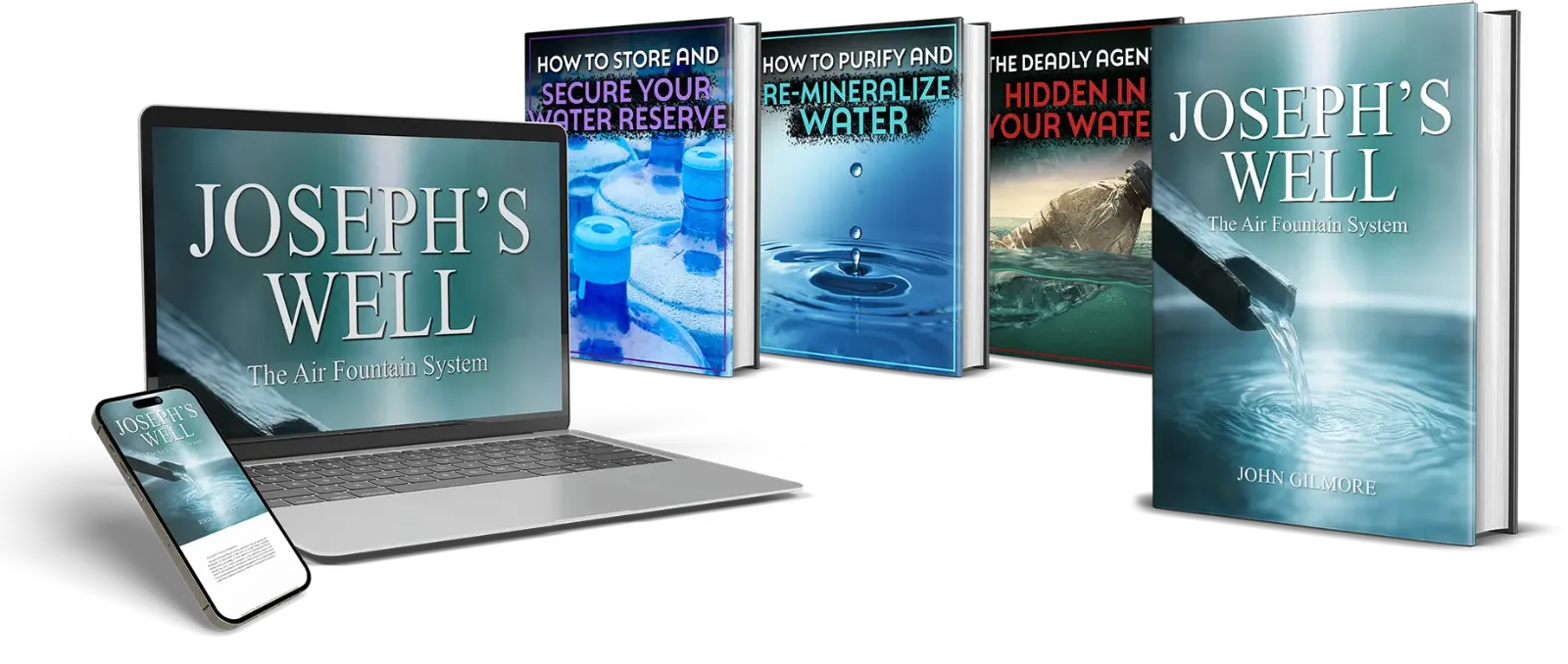
One critical clarification upfront: Joseph's Well is a digital product. You receive plans, instructions, and guides — not hardware, not a pre-built machine. If you're expecting a physical device shipped to your door, stop here. What you're buying is the knowledge to build one yourself.
What Joseph's Well Actually Includes
The core product is a set of DIY instructions for constructing an atmospheric water generator — a system that extracts moisture from ambient air through condensation, then filters that water to drinking quality. The methodology is built around components that most hardware-store customers can source: coils, fans, filters, and a power supply that the guide suggests can be solar-powered for full grid independence.
Creator John Gilmore frames this as a desert-tested system developed from his off-grid Arizona lifestyle, drawing inspiration from Israeli military condensation technology used in arid environments. The positioning is faith-based — Gilmore targets Christians concerned about prophesied drought and water scarcity — but the underlying engineering concept is real regardless of the framing.
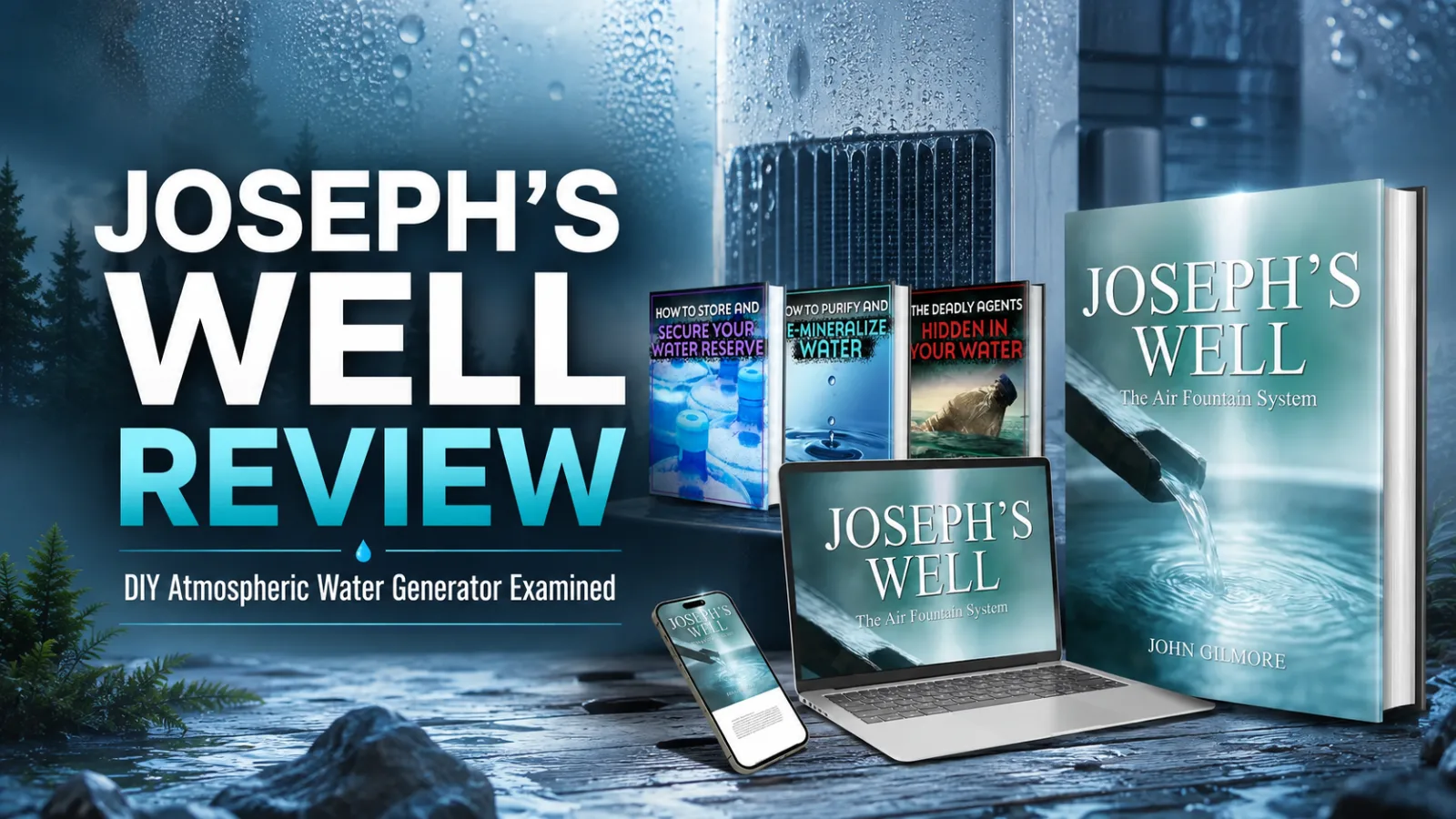
Beyond the main construction guide, three bonuses are included with purchase:
- Water Storage Guide — covers long-term storage methods for water you generate or collect
- Purification and Mineralization Techniques — addresses how to treat and remineralize water produced by the system
- Water Contamination Report — a reference document on common water contaminants and what to filter for
The bonus set is actually well-matched to the core product. Atmospheric water generation produces demineralized water — the same issue you encounter with reverse osmosis — so including a remineralization guide demonstrates some awareness of the full water-quality picture. In my assessment, the bonus content adds genuine value rather than padding the package with irrelevant material.
What you won't find: certifications, third-party testing data, or independent lab results on water quality output. That gap matters, and I'll address it directly in the critique section.
The Core Method — Is the Science Legitimate?
Here's the part most guides miss: atmospheric water generation isn't pseudoscience. It's applied thermodynamics. When air contacts a surface cooled below its dew point, water vapor condenses into liquid — the same process that fogs a cold glass in summer humidity. Commercial atmospheric water generators operate on this exact principle and are sold by legitimate engineering firms. The Israeli military applications Gilmore references are real — the IDF has used atmospheric water units in field operations.
This isn't marketing — it's physics. The condensation principle works. The question is whether a DIY build using common components can replicate meaningful output, and under what conditions.
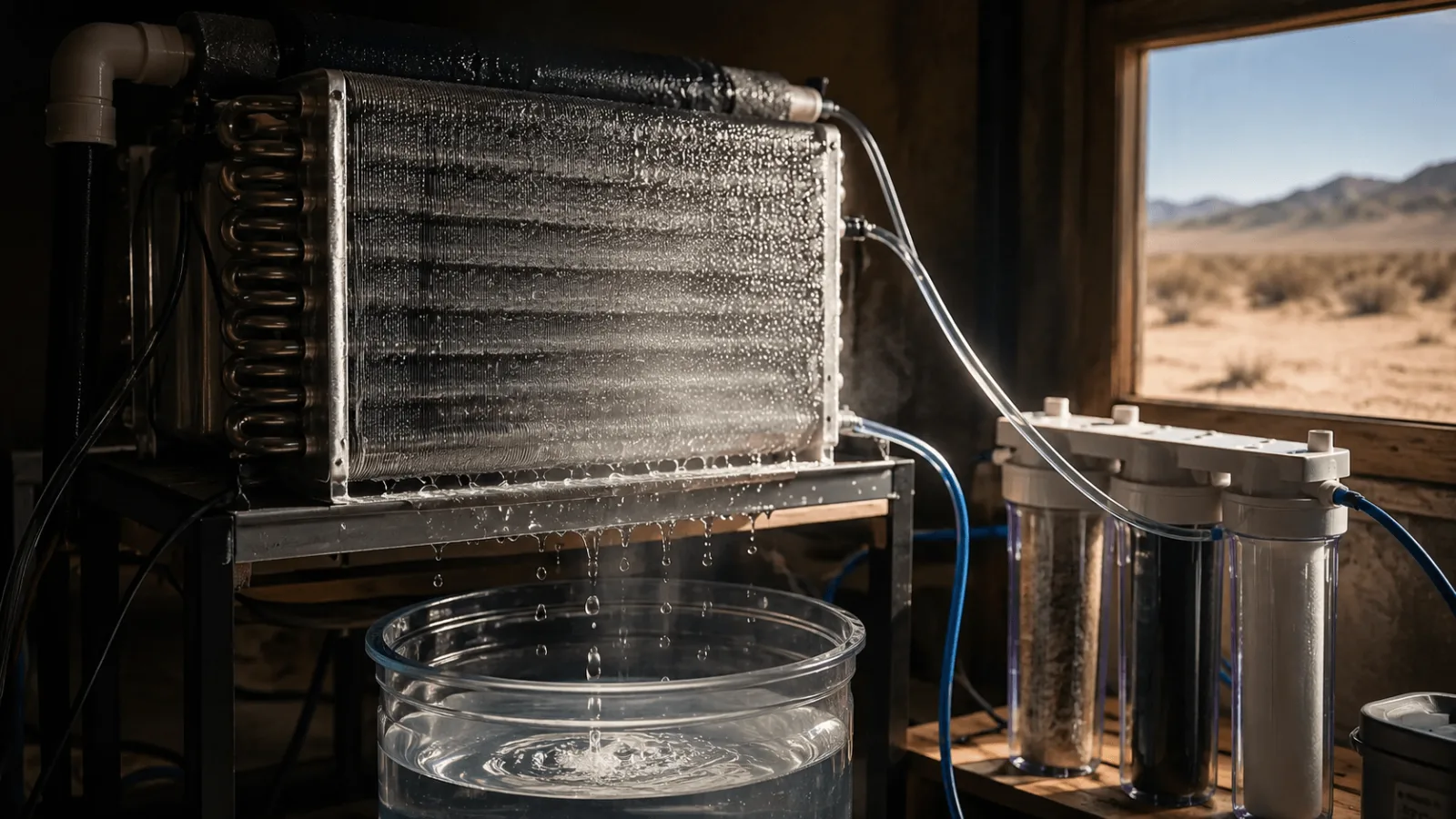
Here's what the vendor marketing obscures: atmospheric water generation is humidity-dependent. At 70% relative humidity and moderate temperatures, a well-built system can produce substantial water. In genuinely arid conditions — say, 20% humidity in a desert summer — the same system produces a fraction of the theoretical maximum. The 50-gallon-per-day figure represents an upper bound under favorable conditions, not a guaranteed daily yield in drought scenarios.
That's a significant limitation for a product positioned specifically around drought preparedness. I'm not dismissing the system — I'm naming the constraint the sales page doesn't.
The filtration methodology described in the guide addresses the legitimate concern that condensed atmospheric water can carry particulates and VOCs absorbed from ambient air. A multi-stage filtration approach — sediment pre-filter, activated carbon, final polishing — is the correct architecture for this. Based on the methodology described, the approach aligns with established water treatment principles. Whether the specific component specifications in the guide produce NSF-equivalent results without third-party testing is something buyers can't verify from the documentation alone.
Who This Is For — and Who It Isn't
The single most important thing I tell every client is that preparedness tools need to match your actual scenario — not the scenario the marketing imagines for you. Joseph's Well has a real audience. It also has people who shouldn't buy it.
This system makes sense for:
- Off-grid homesteaders or rural property owners in humid climates — the Southeast, Pacific Northwest, and Gulf Coast regions — where ambient humidity consistently runs above 50%
- Preppers who want a water source that isn't dependent on rainfall, municipal supply, or stored reserves
- DIY-oriented buyers comfortable with basic electrical and plumbing work who want a weekend project with practical output
- Faith-based preppers in Gilmore's target audience who respond to the framing — the methodology doesn't change based on why you're building it
- Anyone wanting a backup water strategy to complement, not replace, existing stored water
This system is not the right fit for:
- Desert residents expecting 50 gallons per day during a drought — the physics won't support it at low humidity
- Buyers expecting a physical product — you're purchasing plans, not hardware
- Anyone without basic tool skills or the willingness to source components — this requires active construction effort
- People who need immediate, deployable water capacity — building and testing this system takes time
- Buyers wanting certified water quality documentation — no third-party lab validation exists for this specific design
The honest segmentation here matters: if you're in Phoenix in August with 15% humidity, this system is not your primary drought solution. If you're in Tennessee with summer humidity above 70%, it's a legitimate supplemental water source worth building.
What I'd Change About This Product
My critiques are specific, not general.
First, the output claims need humidity-indexed tables. Stating "up to 50 gallons per day" without a humidity/temperature matrix is misleading by omission. A responsible guide would show expected output at 40%, 55%, 70%, and 85% relative humidity so buyers can calculate a realistic yield for their specific location. That data exists in atmospheric water generator engineering literature. Including it would strengthen the guide considerably.
Second, the water quality section needs quantifiable benchmarks. Describing a filtration stack is useful. Specifying what contaminant reduction rates buyers should verify — turbidity, VOC levels, microbial counts — would make this actionable for anyone serious about drinking safety. The remineralization bonus is a good addition, but it doesn't substitute for understanding what you're removing in the first place.
Third, the power consumption math is underdeveloped. A fan and cooling system capable of producing meaningful condensation draws real wattage. The solar integration section should include panel sizing calculations tied to actual output targets, not general suggestions. Undersizing the power supply is the most common failure point in DIY atmospheric water builds.
Here's the proportionality check: none of these gaps makes the core methodology wrong. They make it incomplete. A mechanically inclined buyer with some research discipline can fill these gaps — but they shouldn't have to.
Joseph's Well vs. Commercial Atmospheric Water Generators
Here's what most people get wrong about the DIY vs. commercial comparison: commercial atmospheric water generators, such as those from Watergen or EcoloBlue, cost $2,000 to $30,000, depending on output capacity. They come with NSF certification, validated water quality data, and engineering support. If budget isn't a constraint and you need verified output, buy commercial.
Joseph's Well exists in a different tier. Based on typical DIY AWG component costs — cooling coils, a quality fan array, pre-filter housing, carbon filtration, and basic frame materials — a competent build likely runs $150 to $400 in parts depending on component quality and sourcing. That's a fraction of the commercial cost for a system with legitimate underlying science, even accounting for the guide's documentation gaps.
The ROI case is credible for the right buyer. A family storing 55-gallon drums needs to rotate that water regularly and remains dependent on the initial fill source. An atmospheric system — even producing 10 to 20 gallons daily in moderate humidity rather than the theoretical maximum — provides a continuously replenishing supply that stored water can't match.
The implementation advice I'd add: build and test this system before you need it. Dial in the component sizing, verify your actual local output rates across different seasons, and integrate the filtration testing into your normal maintenance cycle. A system you've run for six months is a known quantity. A system you assemble during a crisis is a variable.
Final Verdict
Joseph's Well teaches a real methodology built on legitimate atmospheric physics. The core concept is sound, the bonus materials are well matched to the primary content, and the price point makes the ROI reasonable for buyers in humid climates who are willing to build and test the system before relying on it. The gaps — humidity-indexed output tables, quantified water-quality benchmarks, and detailed power sizing — are real, and buyers should go in knowing they'll need to supplement the guide with independent research on their local conditions.
The 60-Day Money Back Guarantee removes the financial risk from the evaluation entirely. If you build it, test it against your local humidity conditions, and find the output doesn't serve your scenario, you have a clean exit.
If you're a DIY-capable prepper in a humid region looking for a water source that doesn't depend on storage, rainfall, or infrastructure, Joseph's Well Official Website is a reasonable starting point — with clear eyes about what the guide delivers and what you'll need to verify yourself.
Most people treat water preparedness as a storage problem. This system reframes it as a generation problem — and that's actually the more resilient approach.