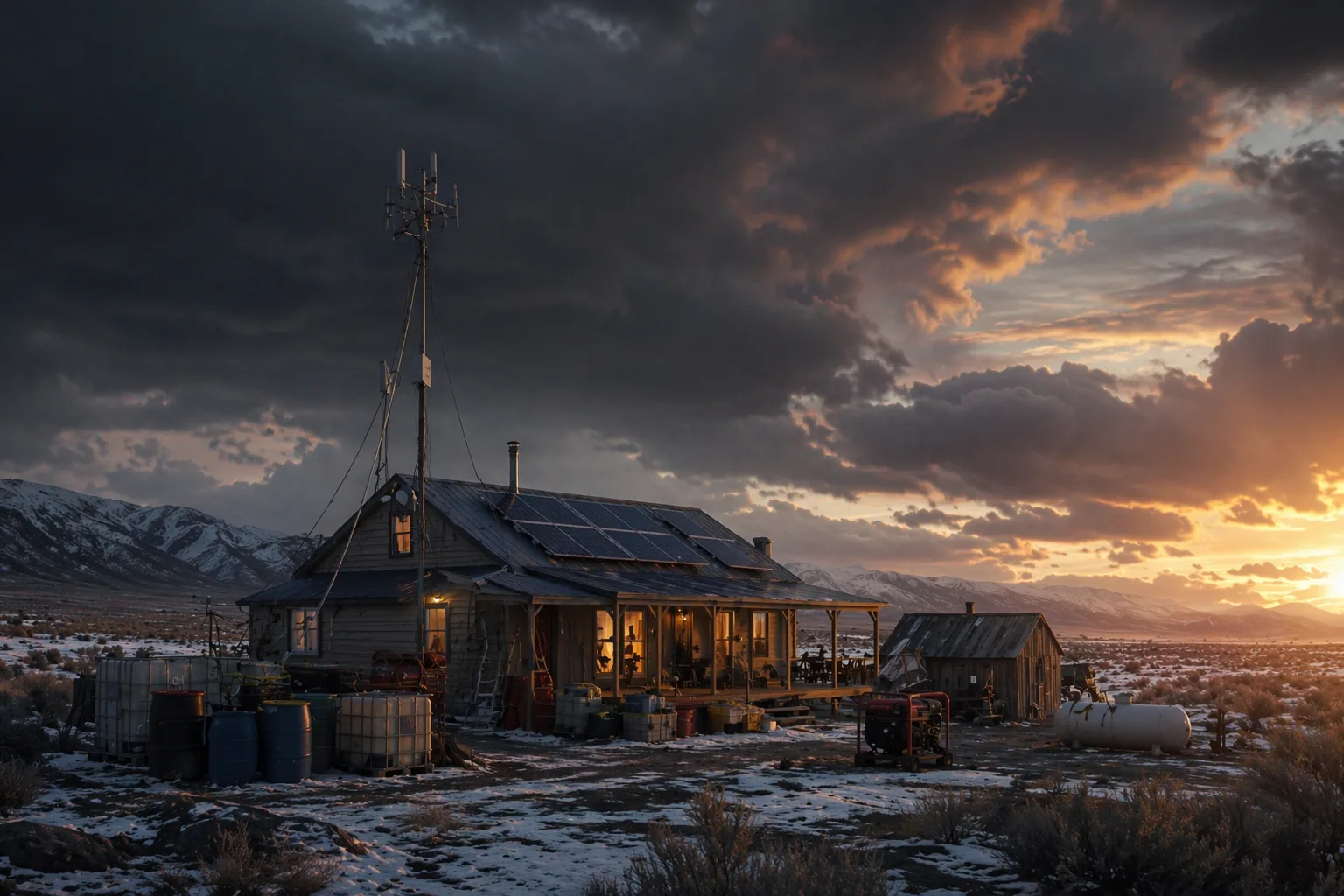
Introduction: When Every Minute Counts
The first 72 hours after a disaster can be the most critical time for your survival. After more than twenty years of studying emergency scenarios and creating response plans, I've learned something crucial: it's not always the strongest who survive; it's those who are prepared. With rising global tensions that could escalate into serious situations, such as North Korea's nuclear threats and ongoing conflicts worldwide, being prepared isn't just smart—it's essential. Whether you're up against an EMP attack, a nuclear event, a natural disaster, or even challenges with infrastructure, the choices you make in those first three days can set the stage for your survival moving forward.

Did you know that ***FEMA***states professional emergency responders may not be able to reach everyone within 72 hours or even longer after a major disaster? That's a whole three days where self-reliance is key before help arrives! I've seen this happen time and again during regional crises, where those who followed carefully planned hour-by-hour strategies managed to navigate through the chaos. In contrast, others struggled to cope with the most necessities. In our world, where international tensions can escalate rapidly and some nations possess significant capabilities, knowing exactly what to do in those crucial first hours isn't just helpful—it's vital.
In this comprehensive guide, I'll walk you through exactly what you need to do—hour by hour—to maximize your chances of survival when systems fail, whether due to natural causes or human conflict. Let's dive straight into the practical steps that could significantly impact your survival during a disaster!
Hour 0-1: Immediate Response Protocol
When disaster strikes, your immediate actions can greatly influence how you manage the entire crisis. I refer to this period as the "golden hour" of emergency response. Here's your priority sequence to ensure everything proceeds smoothly:

Situation Assessment and Safety Confirmation
Your first crucial task is to assess the situation and establish safety quickly. I've found that taking these methodical steps prevents panic and establishes control:
- Check yourself for injuries—self-assessment is the first step. You can't help others if you're severely compromised.
- Check your immediate surroundings for structural damage, fire hazards, gas leaks, or electrical risks that require immediate attention.
- Account for all household members - Please ensure that you implement your family's predetermined meetup plan and communication protocol.
- Gather essential communication tools—battery-powered radios, emergency phones, or alternative communication devices must be accessible immediately.
Information Gathering
Knowledge is your most valuable resource in a crisis. In the first hour, you must:
- Could you tune in to your emergency radio to listen for public broadcasts and emergency alerts?
- Contact emergency services if the communication infrastructure is still functioning.
- Evaluate whether the emergency is localized or widespread to assess potential resource availability and allocation.
- Assess immediate threats that necessitate evacuation compared to those that allow for sheltering in place.
Immediate Supply Review
Before making any significant decisions, quickly inventory your critical supplies:
- Water - Verify access to your stored emergency water (1 gallon per person per day)
- Ready-to-eat food: Check the availability of no-preparation food items.
- Medical Supplies - Ensure that your first aid kit and prescription medications are readily accessible.
- Light sources - Locate flashlights, headlamps, and alternative lighting
- Defensive tools - Confirm access if security concerns are present
Having these items pre-organized in easily accessible containers within the first hour can distinguish between a methodical response and chaotic scrambling.
Hours 1-6: Stabilization and Resource Organization
After ensuring everyone is safe, the next crucial step is to establish a stable environment and devise a plan to optimize the use of your resources.
Shelter Security Measures
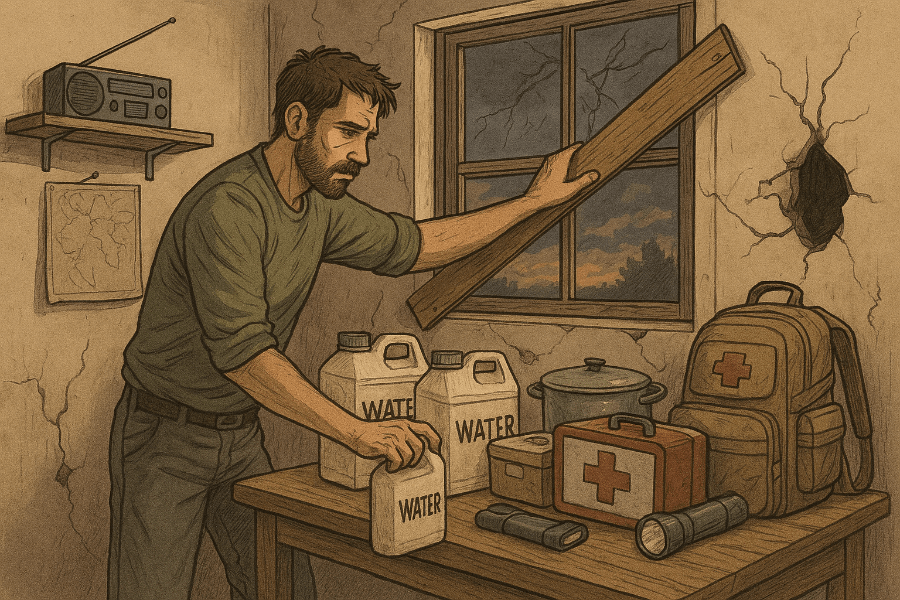
Ensuring the security of your shelter is crucial, whether you're staying put or have moved to another location.
- Conduct a thorough perimeter assessment for vulnerabilities.
- Implement predefined security measures tailored to the specific threat level. Designate sleeping and living zones in the safest areas.
- Consider alternative sanitation systems if plumbing is disrupted.
- Could you set up privacy barriers when sheltering with multiple households?
Water System Implementation
Water management becomes your most urgent resource concern. During this period:
- Secure existing water - fill all available containers before municipal supplies fail.
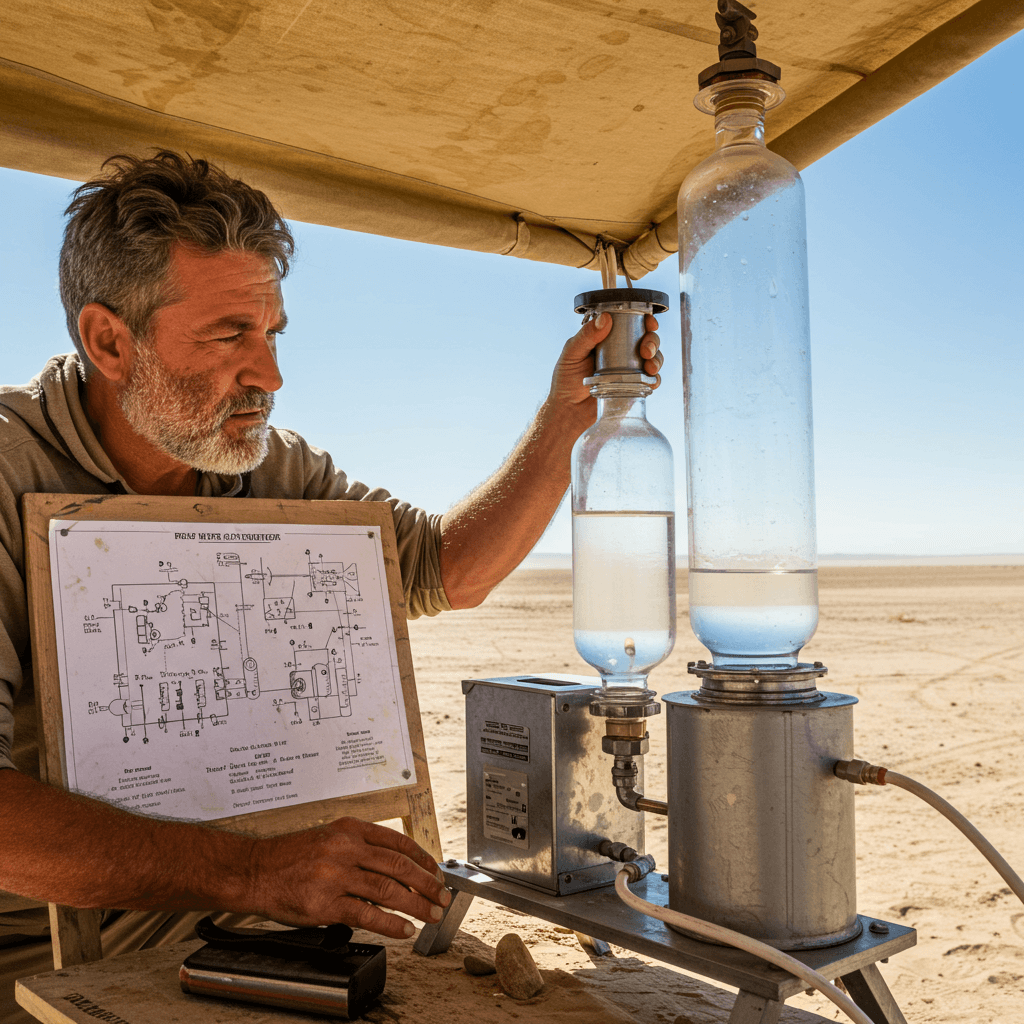
- Activate water purification systems and prepare filtration and treatment tools.
- Identify backup water sources—map accessible alternative water collection points.
- Implement water conservation protocols by establishing strict usage guidelines that prioritize drinking and minimal hygiene.
Communication Network Establishment
Access to information determines the quality of your decisions. During these hours:
- Set up communication schedules for radio monitoring.
- Create a logging system to document critical information.
- Use alternative communication methods if traditional systems are unavailable or fail.
- Establish community information-sharing protocols with trusted neighbors.
Resource Inventory Finalization
In addition to your immediate supplies, conduct a detailed inventory:
- Complete a food supply assessment and establish a consumption schedule.
- Organize medical supplies by category of injury or illness for quick access.
- Catalog tools and equipment relevant to the current scenario.
- Document all fuel sources and calculate operational duration.
This excellent approach transforms anxious uncertainty into manageable tasks, making everything seem easier!
Hours 6 to 24: Strategic Implementation and Community Connection
As the first day unfolds, it becomes essential to expand your preparation from immediate needs to sustainable operations.

Energy Conservation Strategy
Power management determines your technological capabilities:
- Implement established priorities for electricity usage.
- Create protocols for battery rotation and charging.
- Utilize solar or alternative charging systems.
- Calculate essential power requirements and duration estimates.
Comprehensive Security Implementation
As situational awareness increases, enhance security measures:
- Establish watch schedules if security concerns necessitate monitoring.
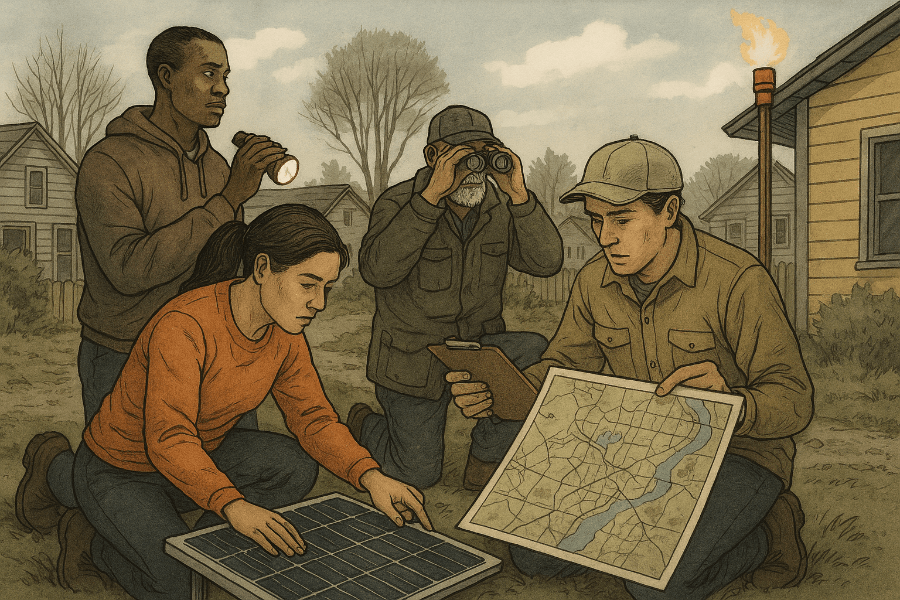
- Create observation posts at strategic locations.
- Implement predetermined alert signals for household communication.
- Evaluate and address vulnerabilities identified during the initial assessment.
Local Resource Mapping
Understanding the potential resources in your immediate area provides crucial options:
- Conduct a comprehensive assessment of natural resources (water, food, and shelter materials).
- Identify locations for potential community assistance.
- Map hazardous areas to avoid.
- Ensure that you document possible evacuation routes in case the situation deteriorates.
Community Connection Protocol
Sometimes, isolated households can face some significant challenges. It's essential to consider these situations:
- Establish contact with nearby neighbors in accordance with predetermined protocols.
- Implement community resource-sharing agreements if previously arranged.
- Create a network to share information about updates on the situation.
- Assess community needs and capabilities to facilitate mutual assistance.
This interconnected approach significantly enhances the resilience of individual households through collective capabilities.
Hours 24-48: Sustainability Implementation and Adaptive Planning
As we enter the second day, we shift our focus from merely reacting to actively embracing proactive sustainability!
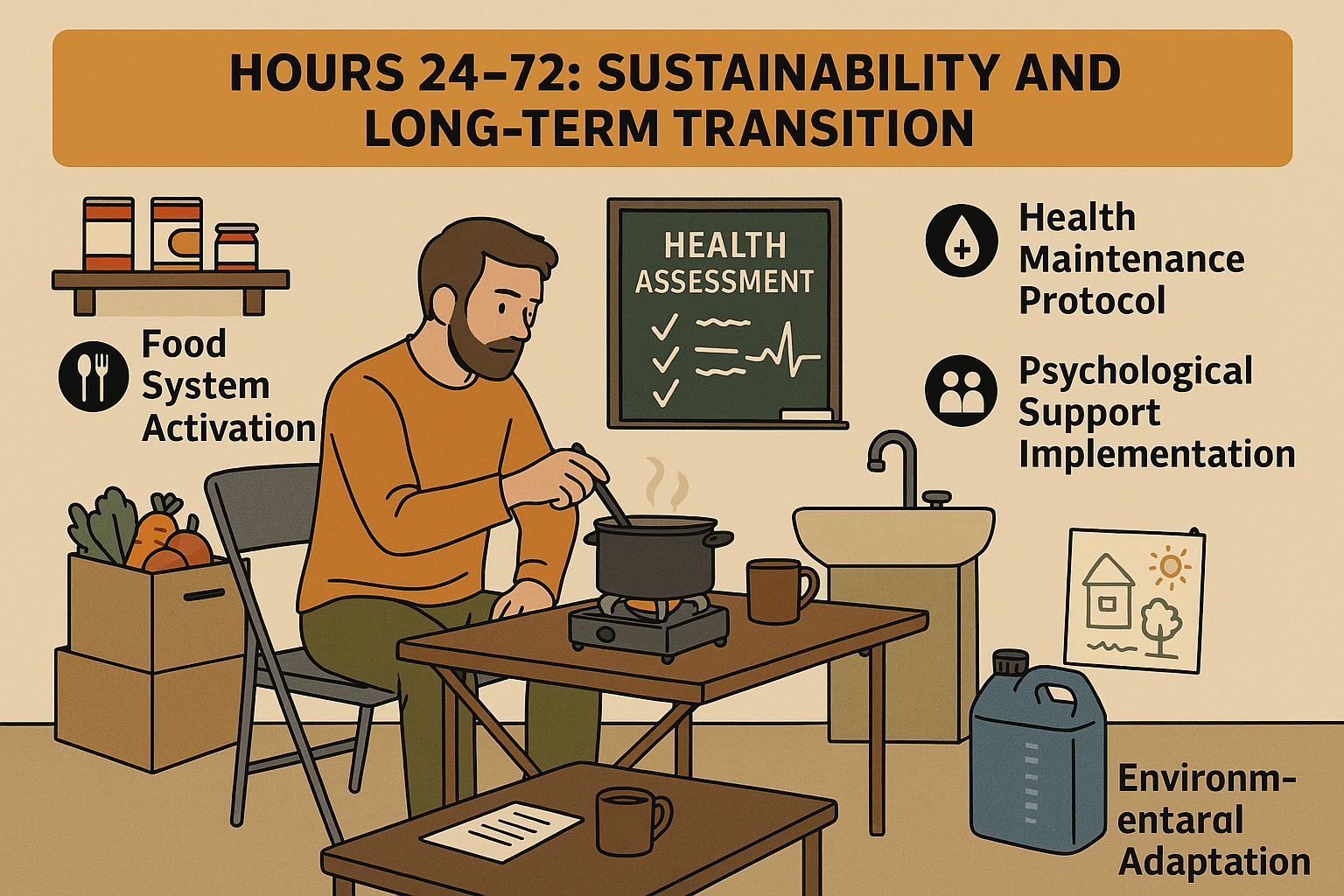
Food System Activation
Shifting from convenient, ready-to-eat options to more sustainable food systems:
- Implement a meal preparation schedule using minimal resources.
- Begin food preservation measures for perishable items.
- Activate alternative cooking methods if conventional systems are unavailable.
- Calculate consumption rates and adjust rationing as necessary.
Health Maintenance Protocol
Taking care of our health in advance has become more crucial than ever!
- Establish hygiene stations and sanitation procedures
- Implement waste management systems to prevent the spread of disease.
- Conduct regular health assessments for all household members.
- Address minor medical issues before they escalate into serious complications.
Psychological Support Implementation
One should not undervalue the psychological impact of prolonged emergencies.
- Establish structured daily routines to maintain a sense of normalcy.
- Establish recreational activities, particularly for children.
- Implement stress-reduction practices and regular rest periods.
- Maintain morale through group problem-solving and recognition of achievements.
Environmental Adaptation
Responding to changing conditions requires continuous assessment:
- Monitor weather patterns and adjust shelter as necessary.
- Implement temperature regulation measures (cooling/heating).
- Address insect and pest management to prevent disease vectors.
- Modify water collection systems based on available sources.
These adaptive measures transform short-term survival into sustainable resilience.
Hours 48-72: Expansion and Long-Term Transition
The final day of the critical period emphasizes the transition from emergency response to sustained operations.
Resource Acquisition Implementation
Moving beyond stored supplies is essential:
- Activate pre-established resource acquisition plans when safe and appropriate.
- Implement alternative methods for food procurement.
- Establish water collection systems to ensure a renewable water supply.
- Initiate scavenging operations as needed, within established ethical boundaries.
Communication Expansion
Expanding your information network provides vital situational awareness.
- Increase communication efforts to wider geographical areas.
- Implement protocols for information verification to filter out misinformation.
- Establish a routine schedule for intelligence gathering.
- Document and map emerging situations to recognize patterns.
Advanced Security Measures
As the duration of the emergency lengthens, security concerns frequently escalate:
- Enhance perimeter security with additional measures.
- Implement counter-surveillance techniques as needed.
- Establish recognition signals for trusted individuals.
- Create contingency plans for different security scenarios.
Recovery Preparation Framework
Start preparations for post-emergency recovery:
- Record all damage for potential insurance or assistance claims.
- Preserve evidence of emergency-related expenses.
- Create an inventory of depleted resources that need replacement.
- Establish criteria for determining when emergency conditions have sufficiently improved.
This proactive strategy prepares you for a successful recovery as the threats lessen.
Conclusion: Beyond the 72-Hour Threshold
Successfully navigating the first 72 hours establishes the foundation for extended survival capability. The systematic implementation of these hour-by-hour protocols transforms chaotic emergency response into a structured, manageable process.
The most crucial element I've identified across numerous emergency scenarios isn't sophisticated equipment or extensive supplies—it's the methodical application of predetermined protocols that eliminate decision paralysis during a crisis. By following this comprehensive framework, you'll move through each phase with purpose and direction.
Remember that adaptability is essential, as no emergency follows a perfectly predictable pattern. Use this hour-by-hour guide as your foundation, but continuously assess and adjust your approach as conditions evolve. Your survival depends not only on what you have but also on how effectively you apply what you know.
What's your most significant concern about the first 72 hours after a disaster? Have you implemented specific protocols for your household? I'd love to hear your thoughts and experiences! Join our Facebook group "EMP Survival & Preparedness Guide" to share your protocols, ask questions, and connect with like-minded preparedness enthusiasts. Our community members regularly share valuable insights, equipment recommendations, and regional adaptation strategies that might save lives when disaster strikes.
Remember—collective wisdom and community support dramatically improve everyone's preparedness!