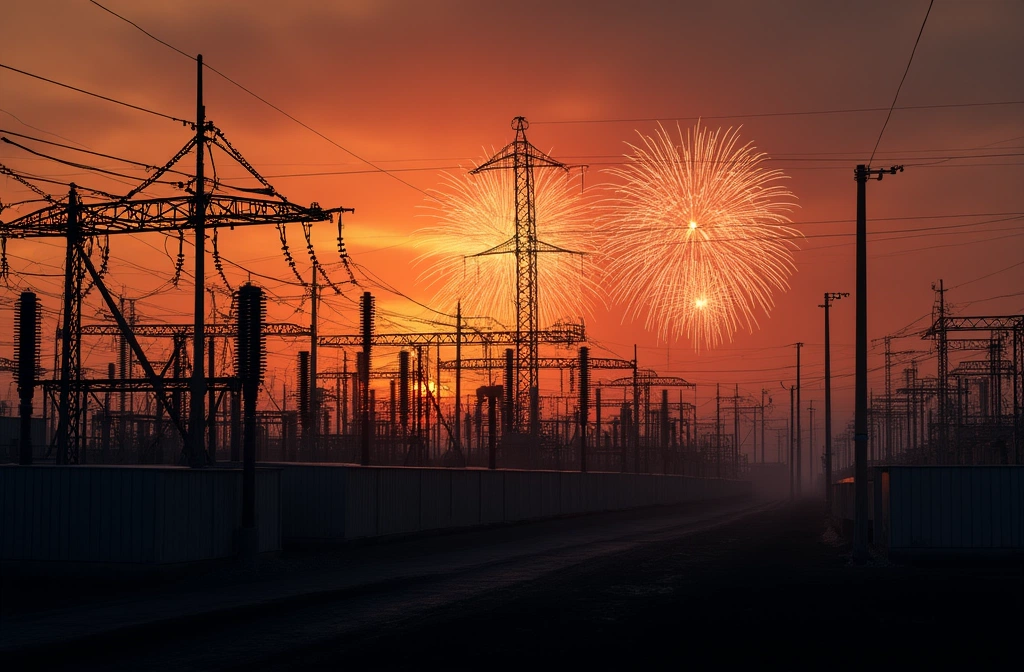
According to Shore News Network, widespread blackouts affected more than 1.1 million U.S. customers on July 4th, with New Jersey experiencing significant damage to trees and power lines. Thousands of residents lost air conditioning as temperatures climbed toward 100 degrees—a critical condition during peak summer demand.
PJM Interconnection, which operates the electric grid serving the affected region, issued an alert in response to the cascading outages. The incident occurred during one of the year's highest-demand periods: a holiday weekend with extreme heat driving residential cooling load to maximum levels.
This event signals a pattern worth monitoring. Summer weather—severe storms, extreme heat, vegetation overgrowth—consistently tests grid infrastructure at its most vulnerable moment: peak demand. When trees fall on transmission and distribution lines during high-stress conditions, the grid has less capacity to reroute power or absorb the load shift. The speed at which 1.1 million customers went dark suggests the outage was not localized to one facility but cascaded across multiple service areas.
For infrastructure analysts, this underscores a recurring vulnerability: the grid's dependency on weather-dependent vegetation management and its narrow margins during summer peaks. Each year, severe convection events cause similar damage; each year, crews work to restore service before the next weather system arrives.
The convergence of storm damage and heat stress is not anomalous—it's the operating environment. What matters is whether grid operators are reducing restoration time and hardening critical nodes. Watch for PJM's post-event analysis: restoration timelines, cascading failure triggers, and any indication of resource constraints during peak season. These details reveal whether the grid is becoming more resilient or remaining trapped in a cycle of reactive repair.
