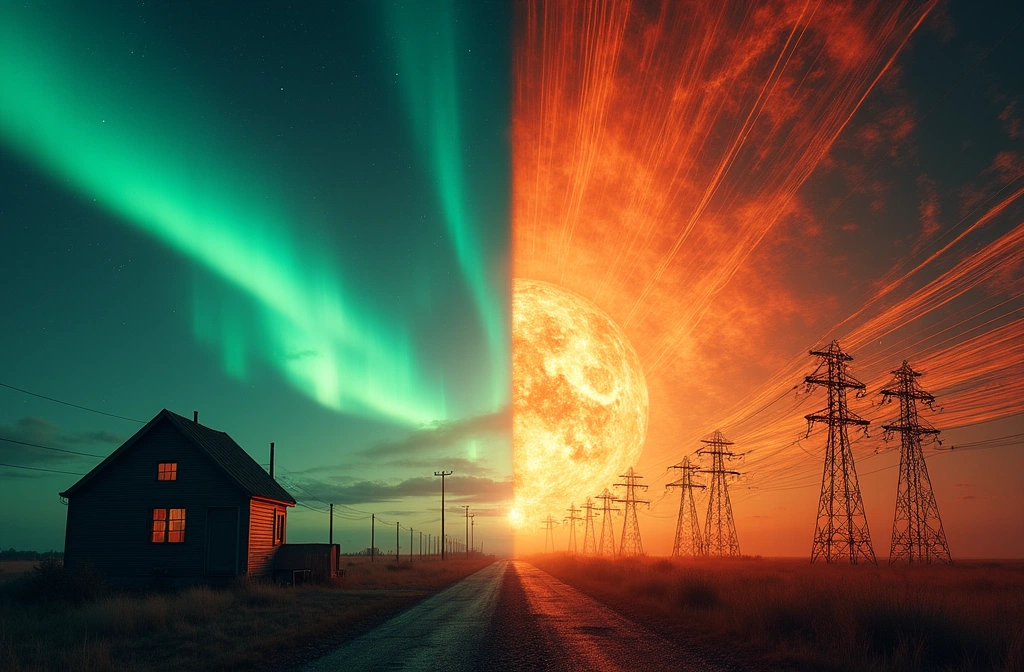
On 1 September 1859, a powerful solar storm struck Earth with enough force to generate auroras visible over Cuba and produce electrical currents strong enough for Boston telegraph operators to disconnect their batteries and continue sending messages for two hours using only the sky-induced current.
This historical event matters because it establishes a clear precedent: large geomagnetic storms can induce electrical currents in conductive infrastructure. The 1989 Hydro-Québec blackout demonstrates how this translates to modern grid failure. According to available reporting, the March 1989 geomagnetic storm caused the Hydro-Québec power system to lose electricity within approximately 90 seconds of protective equipment beginning to trip, leaving six million people without power for nine hours.
The gap between 1859 and 1989—130 years—reveals a critical pattern: these events recur on timescales that exceed individual infrastructure lifespans. Modern power grids operate on similar electromagnetic principles as 19th-century telegraph systems, but at vastly greater scale and with higher consequences for cascading failures in communications, water treatment, fuel distribution, and medical systems.
Since the 1989 event, operators and space-weather agencies have improved monitoring, modelling, and mitigation protocols. These investments matter. However, the 1859 baseline and 1989 validation together suggest that geomagnetic risk remains a legitimate threat vector for infrastructure planners and households alike.
The preparedness calculus is straightforward: solar storms follow natural cycles, not human timelines. Improvements in detection and response reduce but do not eliminate risk. Historical data shows recurrence is possible, not speculative.
