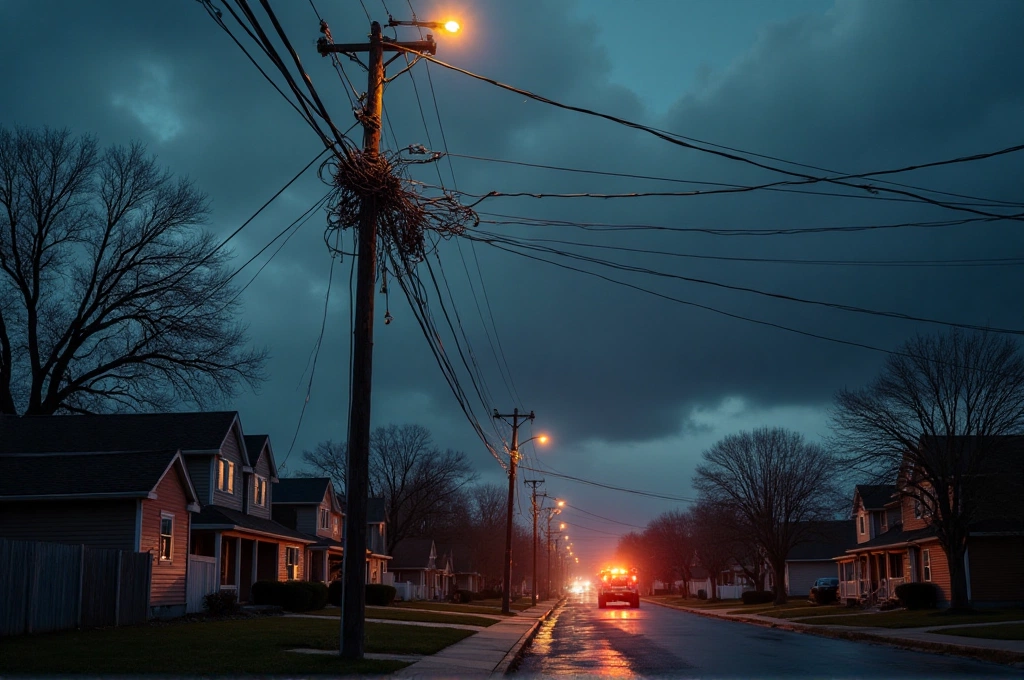
More than 30,100 NIPSCO customers in Gary, Indiana remained without electricity following deadly storms that struck the region, according to reporting by Today News. The prolonged outage has prompted residents to file a lawsuit against the utility company, with allegations centered on inadequate vegetation management—a known vulnerability in grid stability during high-wind events.
Vegetation encroachment on power lines is a documented cause of cascading failures during severe weather. When trees and branches contact transmission or distribution lines during storms, they can trigger localized outages that spread across broader network sections if protective systems are inadequate or if response protocols are slow. The fact that residents moved to legal action suggests frustration with recovery speed and underlying grid maintenance practices.
The scale matters. Thirty thousand plus customers without power for multiple days indicates either widespread infrastructure damage, recovery resource constraints, or both. In regions dependent on single-utility service models, prolonged outages create secondary risks: fuel pump failures at gas stations, refrigeration loss, medical device battery depletion, and supply chain friction.
What to watch next: monitor whether NIPSCO issues public statements on root cause analysis, estimated restoration timelines, or announced vegetation management upgrades. Utility transparency—or lack thereof—often signals confidence in their response capacity. Watch also for patterns: if Gary experiences another major outage within 12 months, it suggests systemic vulnerabilities rather than isolated weather impact. Regional utilities often face budget pressures that delay preventive maintenance; litigation can either accelerate change or delay it while legal costs mount.
