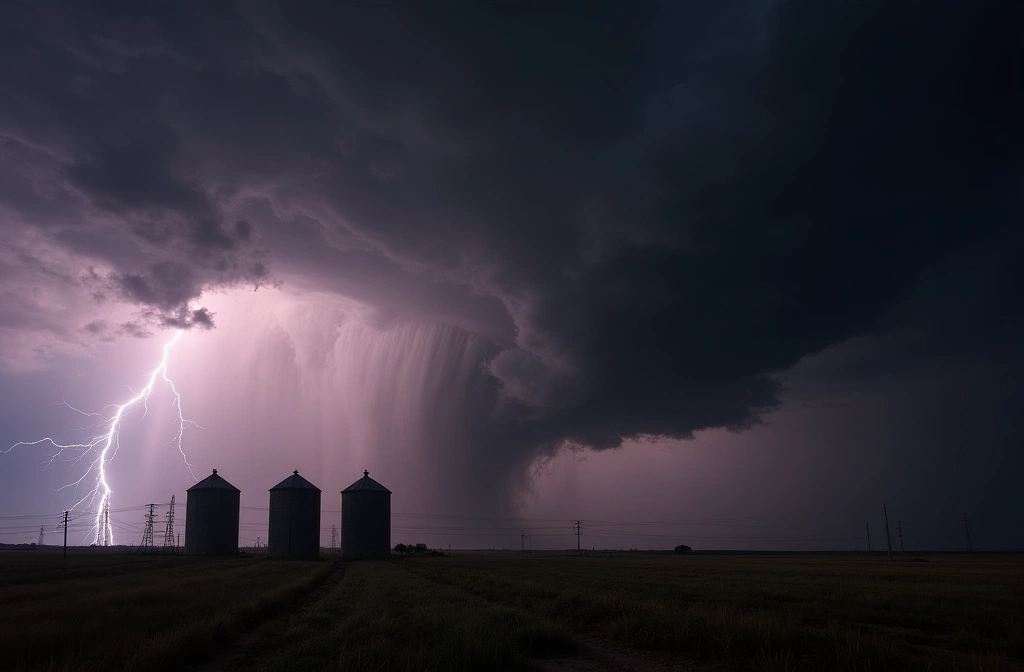
The Guardian reported on April 27, 2026, that severe storms pose a significant threat to nearly 50 million people across the Midwest and Mississippi Valley region, with forecasts calling for tornadoes, hail, and high winds. The timing is critical: this system arrives on the heels of a deadly weekend that included at least one confirmed tornado fatality in Texas.
For preparedness professionals, this sequence matters. Back-to-back severe weather events stress emergency response systems—personnel fatigue, resource depletion, and communication saturation compound across multiple days. County emergency management agencies may be operating with reduced reserve capacity when the second system hits.
The specific impacts to watch: widespread power disruptions from high winds and lightning, potential communication delays in affected counties, and cascading effects on supply chains and fuel distribution if multiple highways or corridors face closure simultaneously. Hail damage to infrastructure—transformers, transmission lines, vehicle fleets—adds secondary restoration burden.
Historically, the spring severe weather season (March–June) regularly produces multi-system outbreak patterns where one event clears before the next system arrives. This compressed timeline increases the statistical likelihood of overlapping damage zones and stretched response. The 50-million-person exposure footprint suggests multiple states are in the path; even if only a fraction experiences severe impacts, the absolute number of affected households could be substantial.
The key indicator to track: whether this system produces isolated supercells or a organized squall line with damaging wind swaths. Organized systems tend to cover wider geographic areas with more uniform impacts, increasing the probability of regional-scale power loss rather than scattered outages.
For household-level preparedness, this is a routine but valid reminder to verify backup power capacity, secure loose outdoor items, and confirm emergency contact plans before severe weather arrives. No extraordinary measures needed—standard spring tornado season readiness applies.
