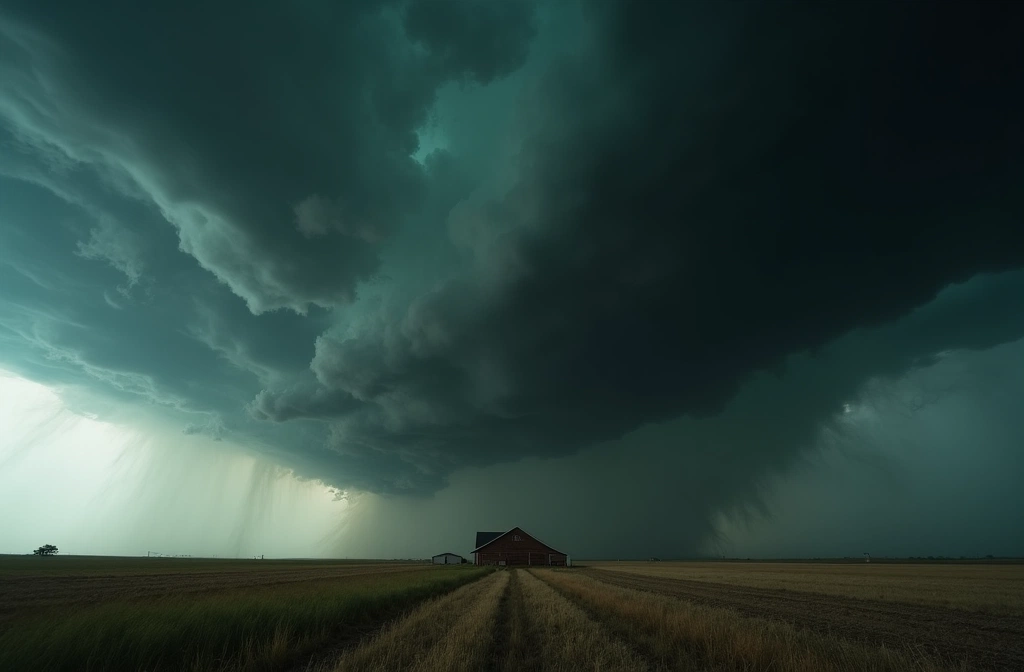
According to ABC News, approximately 50 million people spanning the Plains and Midwest regions are under alert for severe weather outbreaks, with tornadoes specifically identified as a threat vector from Sunday through Monday.
This scale of alert affects critical infrastructure concentration zones—power distribution networks, water treatment facilities, and communication nodes are densely distributed across these regions. Rapid-onset severe weather, particularly tornadoes, creates unpredictable failure cascades: localized power loss can degrade water pressure, disable cellular tower backup systems, and fragment situational awareness precisely when coordination is most critical.
The timing matters. A Sunday-into-Monday event window spans a transition period when some municipal emergency operations may be at reduced staffing, and supply chains (fuel, medical, repair crews) may experience coordination friction across state lines.
What separates this from routine weather alerts: the affected population scale (50 million) suggests meteorological models are flagging widespread, not isolated severity. This isn't a single supercell—it's a multi-state outbreak pattern. Regional grid operators will likely activate contingency protocols; backup fuel consumption will increase; emergency services across multiple states will move to higher readiness.
For preparedness-aware households and small organizations in the alert zone, the critical variable is response lag time. Tornadoes offer minimal warning, but the alert window allows for discrete actions: fuel topped off, backup power systems tested, critical documents secured, shelter routes identified. Communities should verify that local emergency alert systems (sirens, wireless emergency alerts) are functional—these fail more often than publicly acknowledged.
Historically, multi-state severe weather outbreaks stress mutual aid agreements. If damage spans state lines, resource allocation becomes politically negotiated rather than logically sequential. That's not a prediction—it's a structural observation from past events. Preparedness at the household level fills that lag gap.
