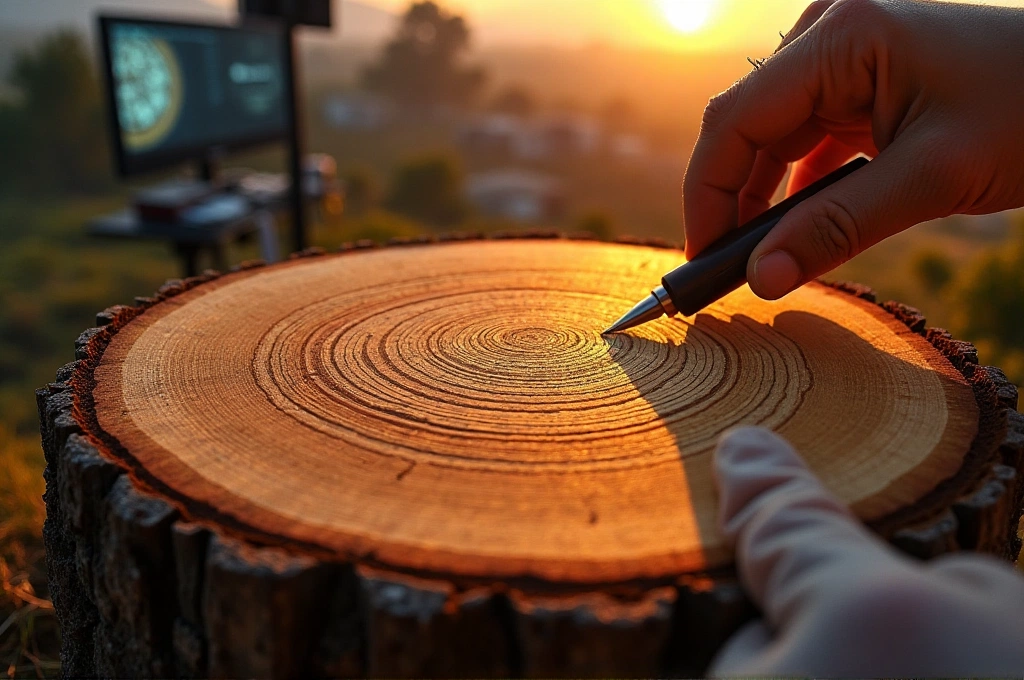
According to reporting from Phys.org and New Scientist, scientists are using tree ring analysis to reconstruct a longer history of solar activity than instrumental records provide. The research indicates that the sun is capable of generating storms significantly more powerful than those documented since modern solar monitoring began in the mid-1800s.
Tree rings contain carbon-14 isotopes that are affected by solar radiation during extreme solar events. By examining ancient trees, researchers can identify signatures of past coronal mass ejections and geomagnetic storms that occurred centuries or millennia ago—events that left no written record but left their mark in wood.
Why this matters: Our grid, telecommunications, GPS systems, and satellite infrastructure were built and hardened during an unusually quiet period of solar activity. A major solar storm—comparable to the largest events revealed in the tree ring record—could exceed the tolerance thresholds of modern power transformers, long-distance transmission lines, and sensitive electronics. Unlike the 1859 Carrington Event, which occurred when the electrical grid barely existed, a comparable event today would face a vastly more complex and interdependent infrastructure.
The research does not specify an imminent timeline, but it does establish that extreme solar storms are a recurring natural phenomenon, not a theoretical edge case. This shifts the risk from "unlikely" to "inevitable given enough time."
What to watch: Monitor NOAA's Space Weather Prediction Center for real-time solar activity data, particularly Kp index readings and coronal mass ejection warnings. Watch for any official updates to grid resilience standards or transformer stockpiling initiatives—early indicators that critical infrastructure operators are responding to this longer-term risk assessment.
