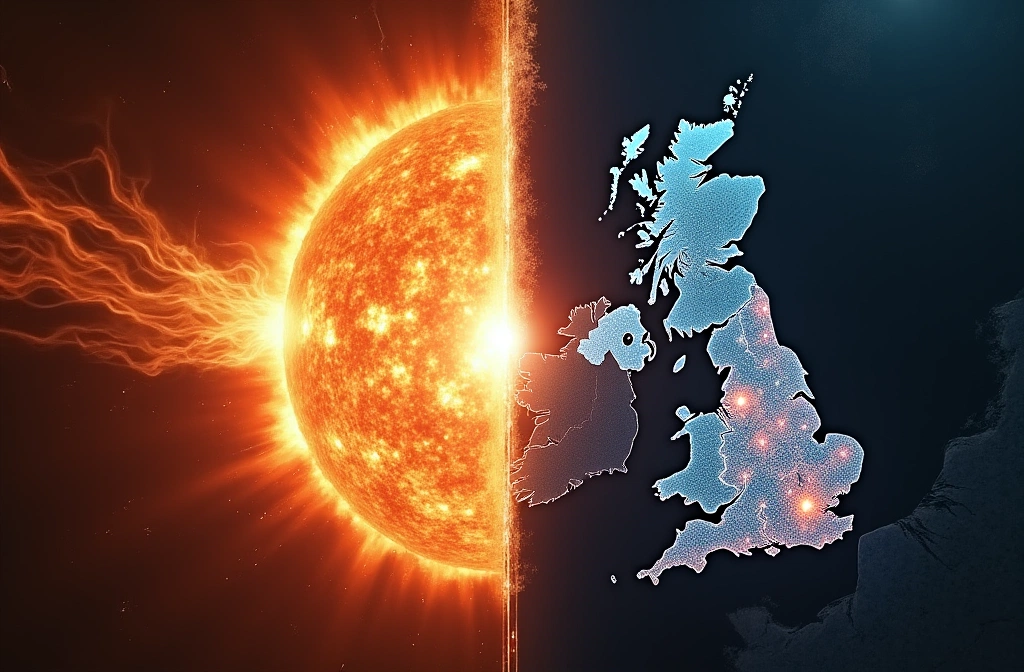
According to The Debrief, recent research has identified a critical blind spot in Britain's power grid defenses against extreme solar storms. The analysis emerged in response to a G5-rated geomagnetic storm—the highest level on NOAA's scale—triggered by five coronal mass ejections reaching Earth within two days.
G5 storms represent the most severe category of geomagnetic disturbance. NOAA's classification system uses these ratings to measure storm intensity based on impacts to Earth's magnetosphere. The convergence of multiple coronal mass ejections in a 48-hour window is the mechanism that produced this extreme event.
Why this matters: Power grids are vulnerable to geomagnetic storms through induced currents in transmission lines and transformer saturation. Britain's vulnerability is not theoretical—it's documented in current research. A G5 event striking a grid with known defensive gaps could produce cascading outages across interconnected systems. Unlike localized failures, a geomagnetically-driven blackout would affect generation, transmission, and distribution simultaneously, making rapid restoration difficult.
The significance extends beyond UK borders. Britain's grid is integrated with European systems through interconnectors. A major failure could propagate across networks, affecting supply to continental markets and vice versa. Critical infrastructure dependent on continuous power—hospitals, water treatment, fuel supply chains—would face immediate stress.
The research underscores a systemic risk: protective infrastructure (Faraday cages, surge suppression, grid hardening) requires capital investment and advance planning. Reactive measures after a major storm arrive too late. The window for upgrades and redundancy exists now, during calm conditions.
What to watch: Monitor whether British grid operators or regulators issue response statements or announce infrastructure upgrades in the coming weeks. Watch for similar research emerging in other nations' vulnerability assessments—this may signal a broader recognition of the threat. Track NOAA's solar forecasting for any G3+ storm warnings, which provide real-time testing of current defenses.
