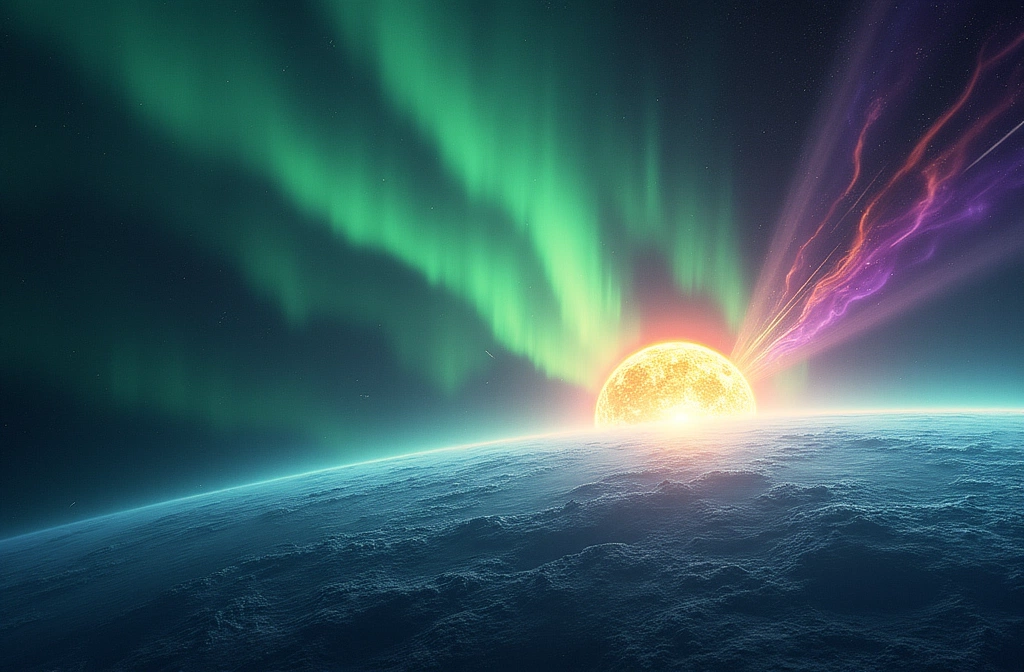
According to reporting on NOAA solar data, geomagnetic conditions over the past day ranged from quiet to unsettled, with the Kp index fluctuating between 2–3. No geomagnetic storm thresholds have been crossed as of the most recent update. However, the Kp index currently sits just below level 3, and a cannibal CME—a coronal mass ejection that has caught up to and merged with preceding solar wind—is forecast to arrive.
Once this merged event reaches Earth's magnetosphere, the Kp index could climb rapidly. A G2-level storm (Kp 6) would produce minor to moderate impacts to power grid operations, satellite communications, and high-frequency radio systems. GPS signals may degrade in isolated pockets, and power utilities operating near capacity margins could face voltage instability.
A cannibal CME forms when a faster solar wind stream overtakes slower material ejected earlier, compressing and amplifying the magnetic field in the collision zone. This compression effect can amplify geomagnetic impact beyond what either event would produce alone.
For preparedness planning, the critical variable is timing and actual Kp intensity upon arrival. The difference between a G1 (minor) and G2 (moderate) event carries real operational weight—utilities classify response protocols by storm level, and G2 typically triggers active mitigation measures at grid control centers.
What to watch: Monitor NOAA Space Weather Prediction Center updates for the actual Kp forecast once impact begins. Watch for any alerts from your utility provider, particularly if you operate backup power systems or critical infrastructure. A G2 storm is manageable but not invisible; it demands attention from grid operators and is worth tracking in real time once the CME makes contact.
