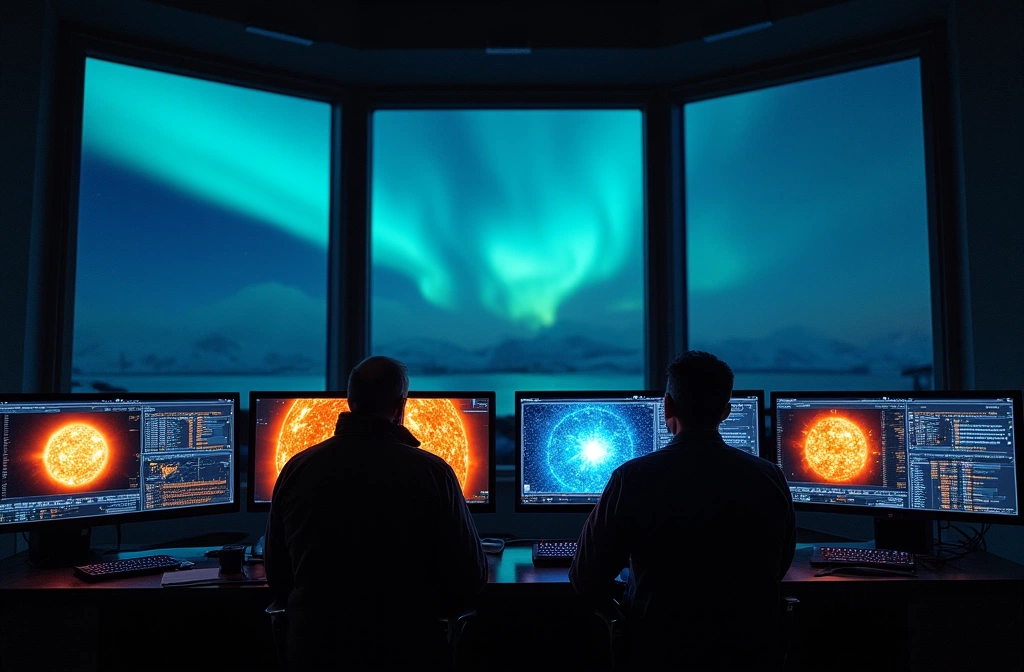
According to EarthSky reporting on NOAA data, a coronal mass ejection (CME) that departed the Sun on July 10, 2026 did arrive at Earth as expected. However, the event failed to escalate into G1 (minor) geomagnetic storm territory—the baseline threshold for measurable impacts on power grids, satellite operations, and radio communications.
This outcome is worth understanding clearly: it's neither a non-event nor a close call. A fast, dense solar wind stream arrived and was tracked by NOAA. The miss—arriving below G1—tells us the ejection either weakened during transit, arrived at a glancing angle, or carried insufficient magnetic field intensity to trigger sustained geomagnetic disturbance.
For preparedness-minded readers, the operational lesson is straightforward. The sunspot region that produced this CME remains active and positioned such that future ejecta could reach Earth. Solar activity is inherently probabilistic; one miss doesn't reset the risk clock. NOAA continues monitoring this region as it rotates across the Sun's disk.
What matters for infrastructure planning: G1 storms are routine—several occur annually without causing widespread outages. G2-G3 events (moderate to strong) create measurable grid stress, particularly at high latitudes and in systems already running near capacity. G4-G5 events cascade into transformer saturation, voltage collapse, and hours-to-days of regional blackouts. We remain well short of that risk floor based on this single event.
The signal here is not alarm—it's attention. Sunspot regions with CME-producing capability deserve continued monitoring. If this region produces additional ejecta, each new event carries independent probability of impact. Historical data shows active sunspot regions often generate multiple significant events over weeks, not just one.
Watch for NOAA updates on this sunspot region's magnetic complexity and any new CME warnings. If subsequent ejectas show stronger magnetic field signatures or more direct Earth-targeting geometry, that's the escalation indicator worth noting.
