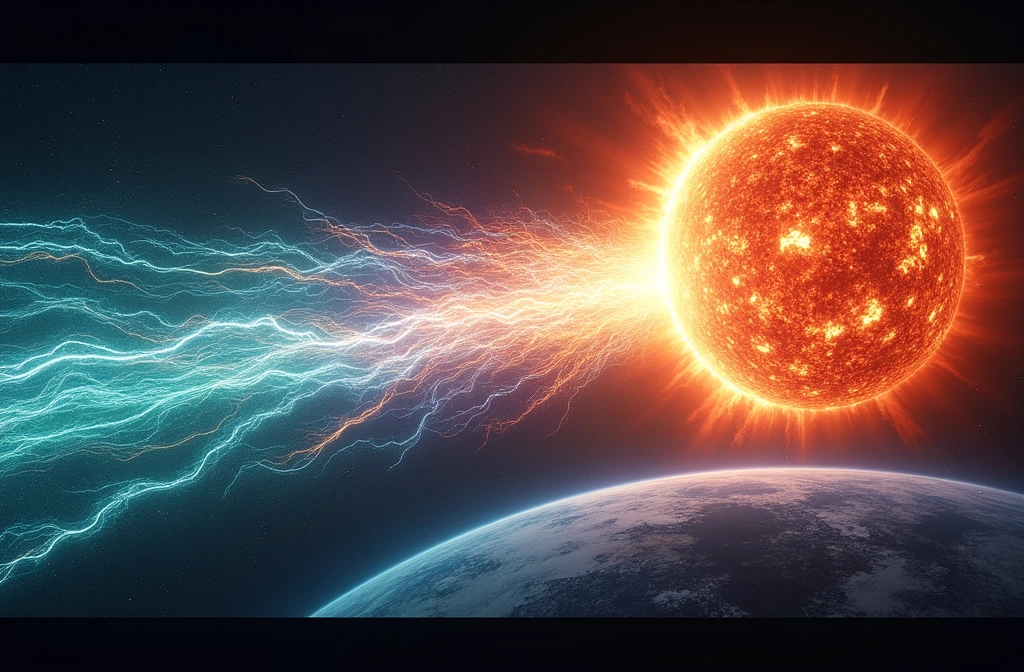
According to EarthSky, a coronal mass ejection (CME) is traveling toward Earth following an M1.9 solar flare detected on August 1. Forecasters anticipate the CME will arrive very early on August 2 and may trigger up to G2 (moderate) geomagnetic storming.
G2-level geomagnetic storms fall in the middle range of NOAA's 5-point scale. At this level, power grid operations may experience voltage irregularities, high-latitude power systems could face temporary protective action, and HF radio propagation can degrade. Satellite operations may see minor effects, and auroras become visible at high latitudes.
What distinguishes this event: confirmation of CME arrival timing allows grid operators and utility companies a narrow but actionable window to implement precautions. Unlike unpredicted events, forecasted geomagnetic activity permits coordinated response.
For infrastructure-dependent systems—hospitals, data centers, communications networks operating in high-latitude regions—G2 events require monitoring. While G2 is not catastrophic, it serves as a diagnostic: it tests whether monitoring systems are active, whether backup protocols are known, and whether staff understand escalation procedures.
The historical context matters. G2 storms occur regularly (roughly 100+ per solar cycle) and are managed routinely by grid operators. They are neither rare nor negligible. The August 2 event will provide real operational data on how current infrastructure performs under known geomagnetic stress—a useful baseline as solar activity continues through this cycle.
Watch for NOAA Space Weather Prediction Center updates in the next 12 hours. If the CME arrival time shifts or intensity forecasts change, that signals evolving conditions. Secondary indicators: HF radio operators will report propagation changes; magnetometer readings will show when the disturbance begins arriving at Earth's magnetosphere.
