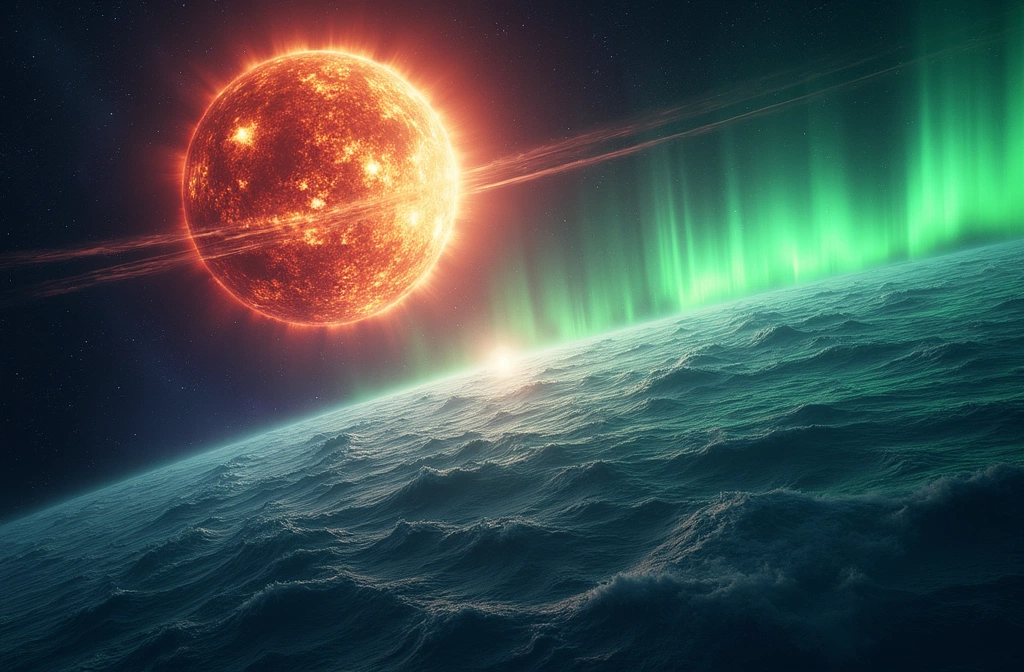
On August 2, 2026, a coronal mass ejection (CME) — a massive blast of solar material and magnetic fields — impacted Earth's magnetosphere and lit up the planet's magnetic field, according to NOAA reporting. Forecasters have traced the source to either a slow-moving CME launched on July 27 or a glancing blow from a July 30 eruption. This represents a lag of 3–6 days between solar event and atmospheric impact — a critical window for space weather prediction.
Why this matters: CMEs drive geomagnetic storms that can degrade high-frequency radio communications, disrupt satellite operations, and stress the electrical grid. Transformer damage, GPS signal degradation, and signal loss on critical infrastructure systems are the real-world consequences. NOAA's confirmation that a major solar event reached Earth underscores that our magnetosphere is not a guaranteed shield — timing, angle, and solar wind intensity all determine impact severity.
The detection lag is instructive. A 3–6 day warning window exists for forecasters and grid operators, but only if solar observation systems function and alerts propagate to operators quickly. Space weather prediction remains probabilistic: NOAA's forecast that this was "either" a July 27 or July 30 event reflects the inherent uncertainty in coronal mass ejection tracking.
What to monitor: Watch for NOAA space weather alerts and K-index readings above 5 (minor geomagnetic storm threshold). Check whether utilities issue public grid stress advisories during future solar events — this signals infrastructure operators are acting on forecasts. Track whether this event triggers any documented equipment failures in the power or telecom sectors; real-world failure data is rare and valuable for assessing actual grid vulnerability.
