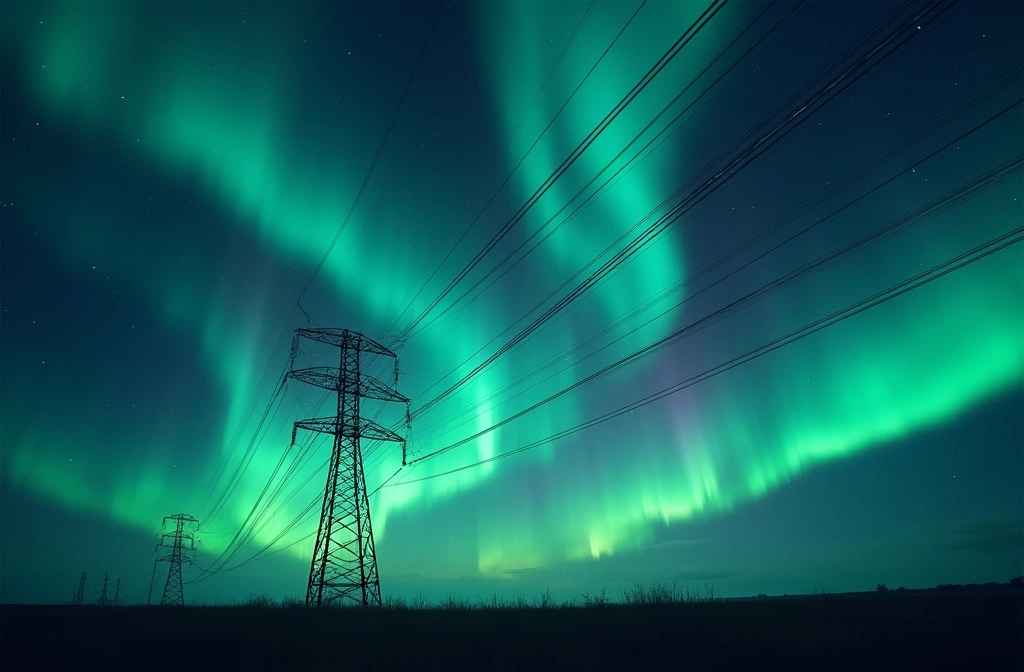
A coronal mass ejection (CME) impacted Earth's magnetosphere around midday on August 2, 2026, according to reporting from EarthSky. The impact drove geomagnetic storm conditions to G2 (moderate) levels—the middle band of the standard 5-tier scale.
Forecasters believe the CME originated from one of two solar eruptions: either a slow-moving event launched on July 27, or a glancing blow from a July 30 eruption. The lag between launch and impact is consistent with typical CME transit times of 1–4 days, depending on solar wind speed and trajectory.
Why this matters: G2 storms are generally non-critical for modern infrastructure. Most power grids, satellites, and communication systems are designed with G2 events in the baseline risk model. However, G2 conditions can degrade GPS accuracy, disrupt high-frequency radio communications, and cause minor transformer heating in vulnerable sections of aging grid infrastructure. Operators of critical systems—including aviation, maritime navigation, and utility control centers—monitor these events as routine operational updates.
The key variable here is what comes next. CMEs often cluster: one event may indicate additional solar activity in the same active region. If the source region remains geoeffectively positioned, additional eruptions could follow within days to weeks—potentially with different trajectories or speeds.
What to watch: Monitor NOAA Space Weather Prediction Center (SWPC) alerts for updates on the source region's rotation and any new eruptions. If a second or third CME launches from the same sunspot group and tracks toward Earth's magnetic field, impact timelines become relevant. Secondary impacts could push conditions toward G3 (strong) or higher, which begins to stress transformer capacity and satellite operations more meaningfully.
This is not an emergency—it's active space weather. Treated as a data point, not a headline.
