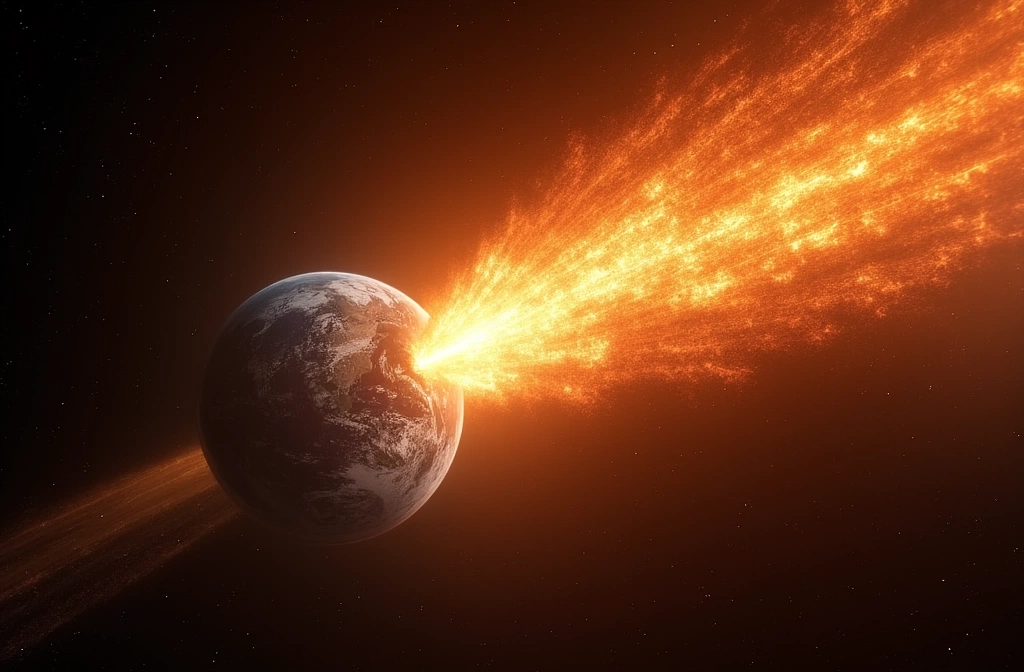
According to reporting from EarthSky, a coronal mass ejection (CME) that originated from the sun on July 10, 2026, did reach Earth as anticipated. However, the arrival did not escalate to G1 (minor) geomagnetic storm levels—the threshold at which power grid operators, satellite operators, and communications networks typically activate heightened monitoring protocols.
This outcome matters because it highlights a critical distinction: not all solar material reaches Earth with the energy forecasters predict. NOAA and other monitoring agencies track shock wave density and velocity to estimate arrival impact. In this case, the stream's characteristics—described by EarthSky as a "fast, dense stream"—were insufficient to breach G1 thresholds, despite initial expectations.
For preparedness planning, this underscores an operational reality: solar forecasting has improved significantly, but remains probabilistic rather than deterministic. A CME can be "on track" and still deliver sub-threshold effects. This is neither failure nor success—it's the normal distribution of solar weather.
What matters now is pattern recognition. High-activity sunspot regions remain visible. EarthSky's mention of a "fiery sunspot region" suggests continued source activity. Solar cycles don't announce major events in advance; they produce multiple smaller events interspersed with occasional severe ones. The July 10 CME was correctly detected and tracked, but its modest impact should not anchor expectations for future activity from the same source.
The relevant signal is this: monitoring systems functioned. Forecasts were issued. Impact was contained below operational disruption thresholds. That baseline holds until conditions change. Watch NOAA's Space Weather Prediction Center for updates on active sunspot regions and any shift toward higher-energy ejections. Escalation typically shows in velocity and density measurements before it shows in ground-level effects.
