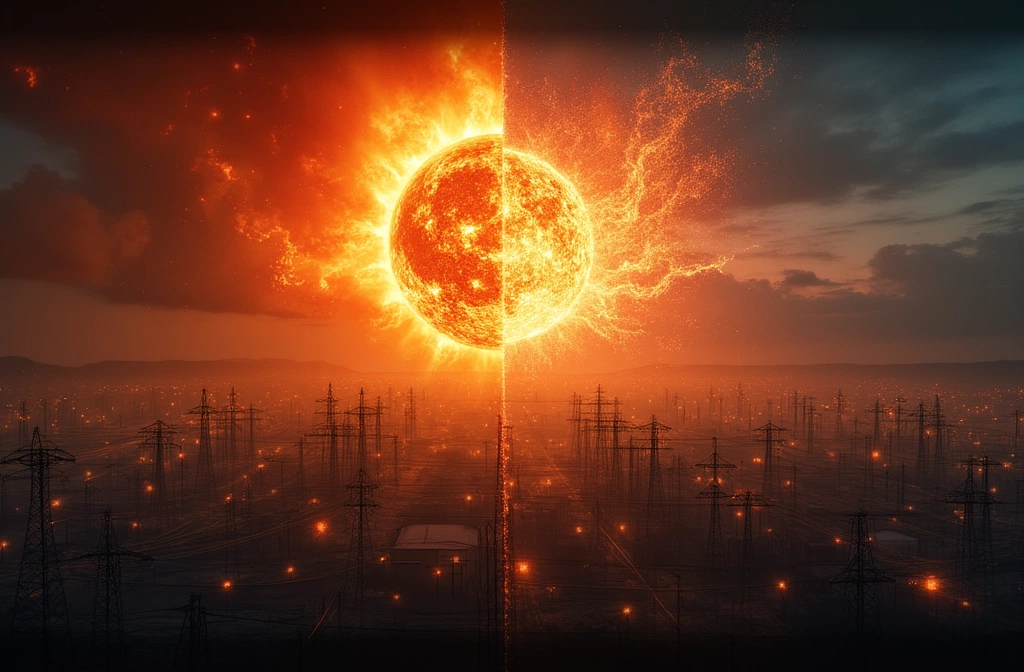
Space Daily has highlighted a critical vulnerability in solar event response: coronal mass ejections (CMEs) — events weighing roughly a billion tons and traveling at millions of miles per hour — reach Earth within one to three days of solar eruption. This warning window is too narrow to rebuild, repair, or reinforce critical infrastructure systems once detection occurs.
The implication is straightforward: detection is not defense. Unlike hurricanes or conventional threats where 3-7 day warning windows allow evacuation, supply-chain hardening, and equipment repositioning, a CME impact leaves no time for reactive mitigation. Power grids, transformers, communications networks, and satellite systems cannot be strengthened, shielded, or brought offline fast enough to prevent damage if the warning arrives within hours of impact.
This reality reshapes the preparedness calculus. It means:
Hardening must be preemptive, not reactive. Grid operators cannot wait for a CME warning to upgrade vulnerable transformer capacity or redundancy. Satellite operators cannot suddenly move assets. Communication backups cannot be provisioned in 24 hours.
Early detection remains valuable but limited. Space weather monitoring (NOAA's Space Weather Prediction Center, DSCOVR satellite) can provide hours of additional planning time, but not enough to rebuild physical infrastructure. The window allows for alert issuance, system shutdown sequencing, and emergency protocol activation — not comprehensive hardening.
Existing vulnerability persists. Critical infrastructure rated for solar storm resilience typically assumes higher warning time. A 1-3 day window may exceed the assumptions built into current contingency planning.
This is not new threat intelligence — solar physics has been consistent. It is, however, a grounding reality check: CME preparedness is a pre-event problem, not a response problem. Organizations and individuals must assume detection will come late, not early.
