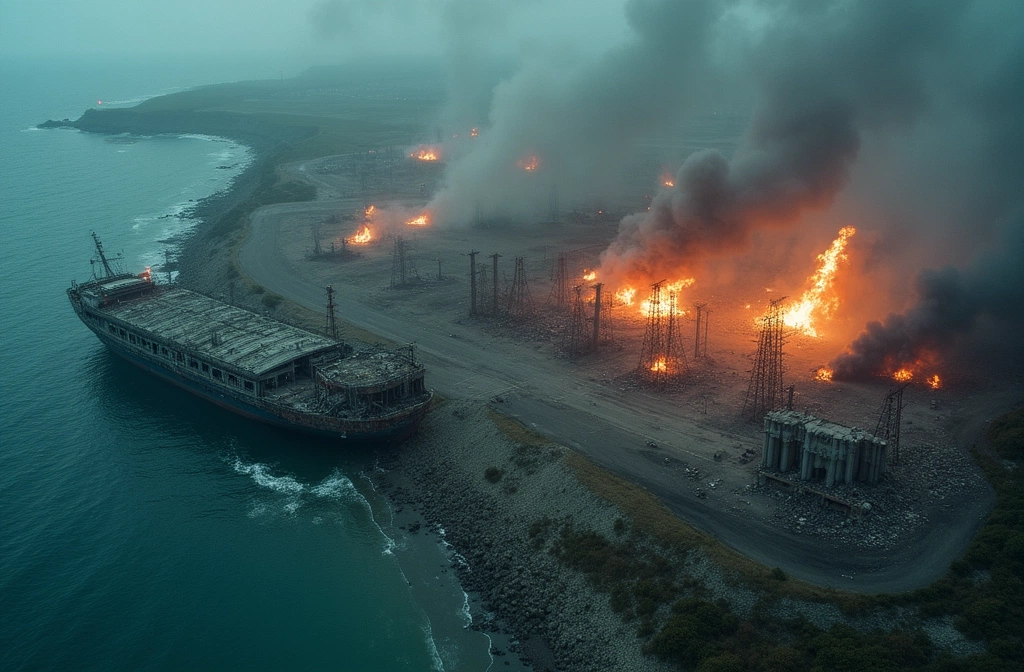
According to Ukrinform, a ferry terminal, military airfield, and electrical substation in temporarily occupied Crimea are reportedly on fire following attacks by Ukraine's Armed Forces. The report, dated July 4, 2026, identifies three distinct target classes: transportation (ferry terminal), military (airfield), and civilian grid infrastructure (electrical substation).
Why this matters: Power substations are critical nodes in electrical distribution networks. Even localized damage can cascade across regional grids if not rapidly isolated. Airfield strikes degrade military logistics and transport capacity. Ferry terminal damage affects civilian supply chains and evacuation routes—infrastructure most civilians depend on with minimal redundancy.
The pattern here warrants attention: strikes on mixed-use infrastructure (military + civilian grid assets) in the same operational window suggest targeting strategy that may stress both defense and civilian services. This is not unique to this conflict, but it underscores a broader vulnerability: critical infrastructure in active conflict zones often lacks geographic dispersal and has limited failover capacity.
For preparedness-minded readers in regions near major electrical substations, military installations, or transportation hubs, this serves as a case study in how quickly multi-system failures can occur when infrastructure becomes a target. A single strike on a substation can leave tens of thousands without power for days or weeks—longer if repair supply chains are disrupted.
What to watch: Monitor whether strikes on electrical infrastructure in the region increase in frequency or precision. Watch for reports of civilian grid outages lasting more than 48 hours, which may indicate systemic damage rather than temporary disruption. Track whether transportation (rail, ferry, road) alternatives are being activated—a sign planners expect sustained infrastructure strain.
Source: Ukrinform (Ukrainian state information agency), July 4, 2026.
