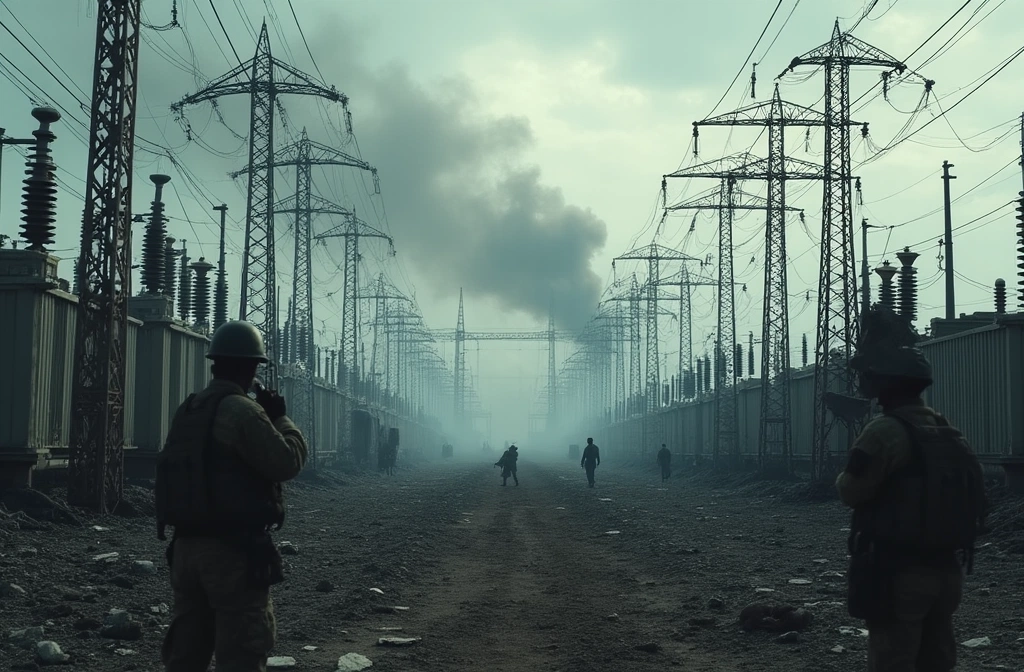
Kyiv Post reports that Ukraine has targeted three more power generation hubs in Crimea, contributing to widening blackouts across the occupied region. Simultaneously, Russian authorities have begun installing emergency street phones—a reversion to analog-era communication infrastructure.
This dual signal matters: sustained grid strikes combined with fallback comms deployment suggests Russia anticipates prolonged infrastructure stress. When a state apparatus activates pre-digital communication systems, it indicates either (a) confidence that modern networks will remain unavailable for an extended period, or (b) hedging against further degradation.
For infrastructure analysts, this is a critical data point. Energy grids designed with redundancy typically weather single or even double strikes. The Kyiv Post reporting of "worsening" blackouts across multiple strikes suggests either cumulative damage to interconnected systems, or degradation of repair/restoration capacity. The street phone installation appears to indicate Russian planners expect the latter to persist.
What distinguishes this from routine wartime damage reporting: the deliberate shift to 19th-century communication infrastructure implies systemic loss of confidence in grid-dependent systems (cellular, internet, landline). In conflict zones, such reversions are usually temporary. But if they persist, they signal normalized expectation of ongoing grid unreliability.
For readers in infrastructure-dependent regions: this illustrates a real cascading risk. Power grid strikes don't occur in isolation—they degrade water treatment, fuel distribution, medical systems, and emergency response. Communities with hard-wired communication backups (shortwave, CB, landline infrastructure) and 72-hour supply chains perform measurably better during extended outages. The fact that a major combatant is institutionalizing pre-network communication is worth noting in your own contingency planning.
