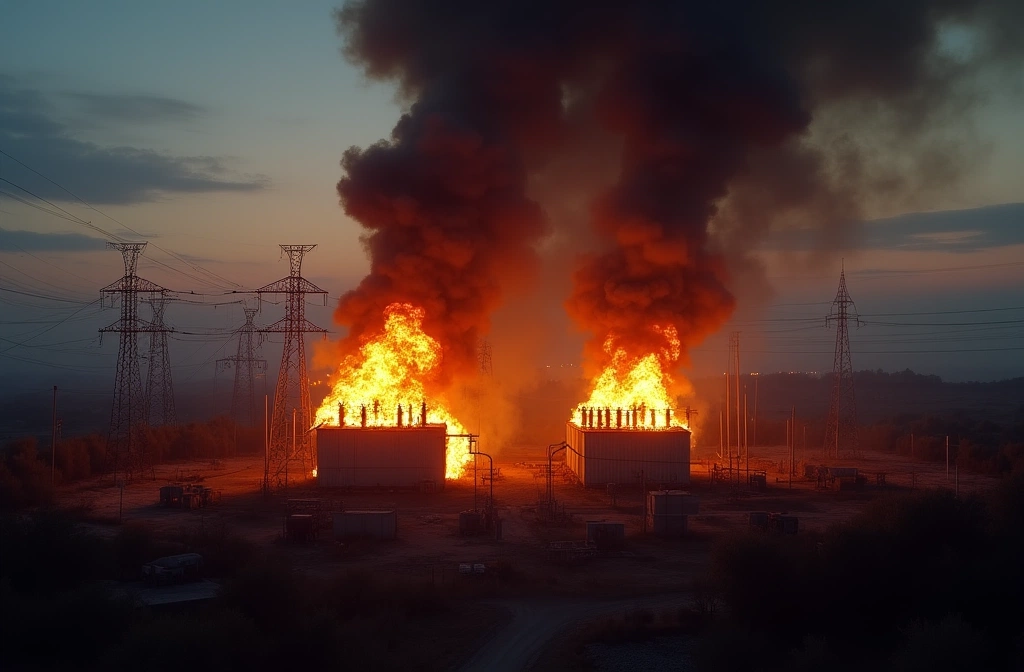
According to reports tracked across multiple sources, Crimea experienced a fresh drone attack that resulted in fires at major power substations. Two substations were specifically reported to have caught fire in the aftermath of the strike.
This matters because power substations are critical nodes in electrical grids—damage or destruction cascades quickly. A substation fire can disrupt service across entire regions, affecting hospitals, water treatment, heating, communications infrastructure, and fuel distribution. In conflict zones, cascading infrastructure failures often persist longer than in peacetime because repair crews face security risks and supply chain disruptions.
The pattern here is significant: repeated strikes on energy infrastructure suggest systematic pressure on grid capacity rather than one-off tactical hits. When substations burn, replacement and repair timelines stretch from days to weeks, depending on equipment availability and operational security.
For preparedness-aware readers, this reflects a broader shift in modern conflict: critical civilian infrastructure—especially power systems—has become a high-value target. We've seen this pattern escalate in regional conflicts globally. The vulnerability isn't unique to Crimea; aging substations, limited redundancy, and supply chain fragility affect grids across Eastern Europe and beyond.
The fire indicator is also worth noting: substation fires often indicate either direct impact damage or secondary failures in equipment under stress. Either way, they signal sustained damage rather than temporary disruption.
What to watch: Frequency of attacks, which substations are targeted (population centers vs. military logistics), and repair timelines reported by regional authorities. If attack cadence increases while repair capacity lags, grid blackouts become more likely and longer-lasting. Monitor whether neighboring regions begin reporting load-shedding or brownouts, which would suggest cascading strain across the wider network.
