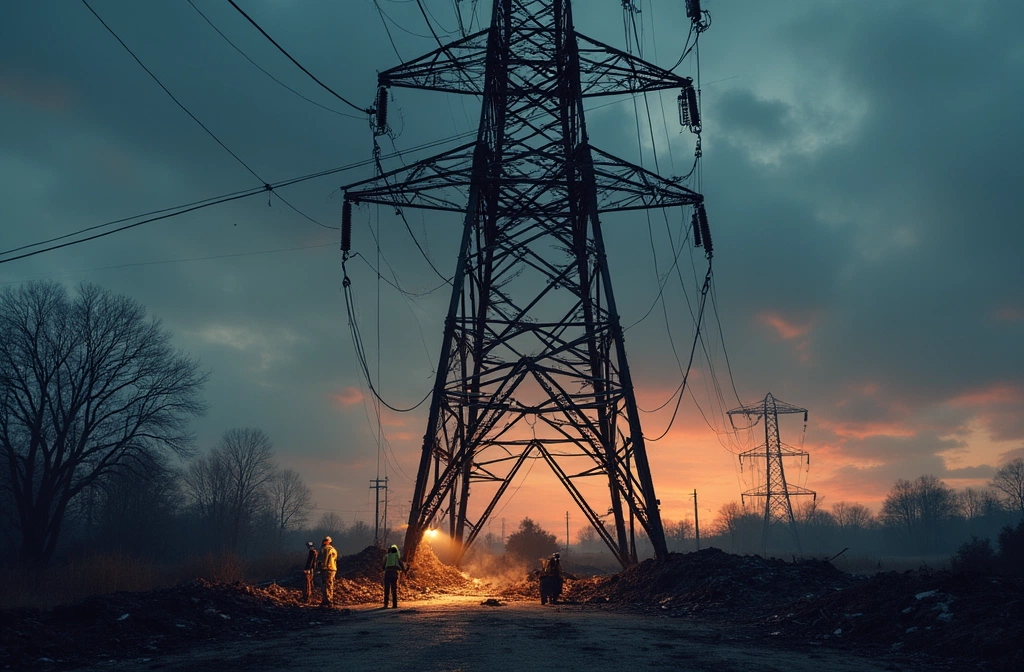
City Power has publicly raised concerns over escalating criminal attacks on its infrastructure and personnel in the Roodepoort area, according to The Citizen. The utility reports that at least one incident traumatized security officers and appears to be part of a broader pattern rather than an isolated event.
This matters because attacks on power infrastructure create two distinct operational problems: direct damage that requires repair, and secondary delays when personnel security becomes a limiting factor in restoration efforts. When security concerns slow down crew deployment or site access, restoration timelines extend—potentially keeping outages active longer than the physical damage alone would require.
South Africa has experienced prolonged grid stress in recent years. Criminal targeting of utility personnel and infrastructure, if it becomes a systematic obstacle to rapid repair operations, could degrade the system's ability to recover from both routine faults and larger disturbances. The Roodepoort incident suggests this may already be happening at operational scale.
WHAT TO WATCH: Monitor whether City Power publicly reports further incidents or announces security protocol changes that might slow restoration work. Track whether outage restoration times in affected areas begin to lag compared to historical baselines—a sign that security constraints are materially impacting grid recovery capability. Watch for utility statements about increased security costs or personnel availability issues.
The significance here isn't that one incident occurred—it's that City Power deemed the pattern notable enough to flag publicly. That suggests internal data showing a trend, not a one-off. In infrastructure systems, when operational tempo declines because of security rather than technical capacity, it signals a systemic vulnerability that doesn't self-correct.
