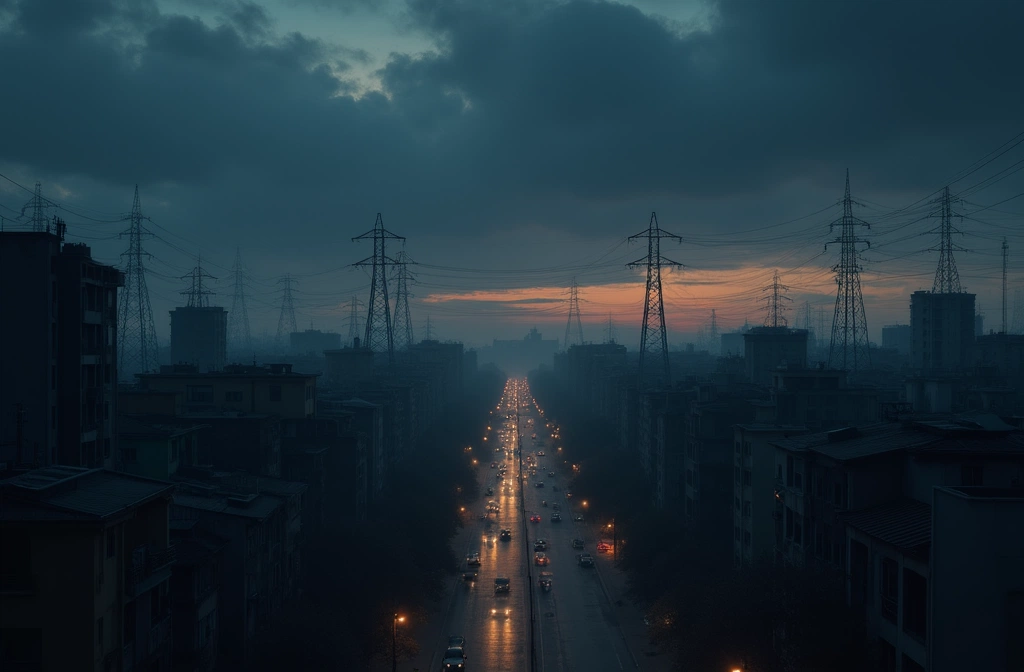
According to India Today, Cuba's national electric grid collapsed at midday on Monday, leaving about 10 million people without power. The blackout represents an escalation of an existing outage crisis driven by two compounding factors: a failing grid infrastructure and fuel shortages.
This matters because grid collapses at national scale—especially in island nations with limited interconnection redundancy—expose how quickly cascading infrastructure failures can isolate entire populations. Cuba's grid collapse occurred amid pre-existing stress, not as an isolated event. That pattern is instructive: grids don't typically fail suddenly in isolation. They fail after degradation accumulates.
The fuel shortage component is particularly significant for preparedness analysis. When grid operators cannot generate power due to fuel constraints, backup systems become critical. Cuba's apparent inability to manage the cascade suggests either insufficient reserve capacity, fuel distribution failures, or both.
What to watch: Monitor whether power restoration occurs in days or extends across weeks—that timeline will indicate whether the failure was a single point-of-failure event or a systemic capacity problem. Secondary watch: fuel supply reports from international sources. If external fuel imports cannot reach Cuba due to political, logistical, or economic barriers, recovery speed will be severely constrained.
For readers: This event illustrates a concrete infrastructure vulnerability: island nations and geographically isolated grids have minimal redundancy. If your region depends on centralized generation with limited geographic diversity, Cuba's experience suggests reviewing your household power independence—particularly backup fuel storage for generators (safely stored and rotated) and non-electric backup systems for critical needs like water, refrigeration, and heating/cooling. The failure also underscores why communications contingency planning matters: cellular and internet infrastructure depends on grid power.
