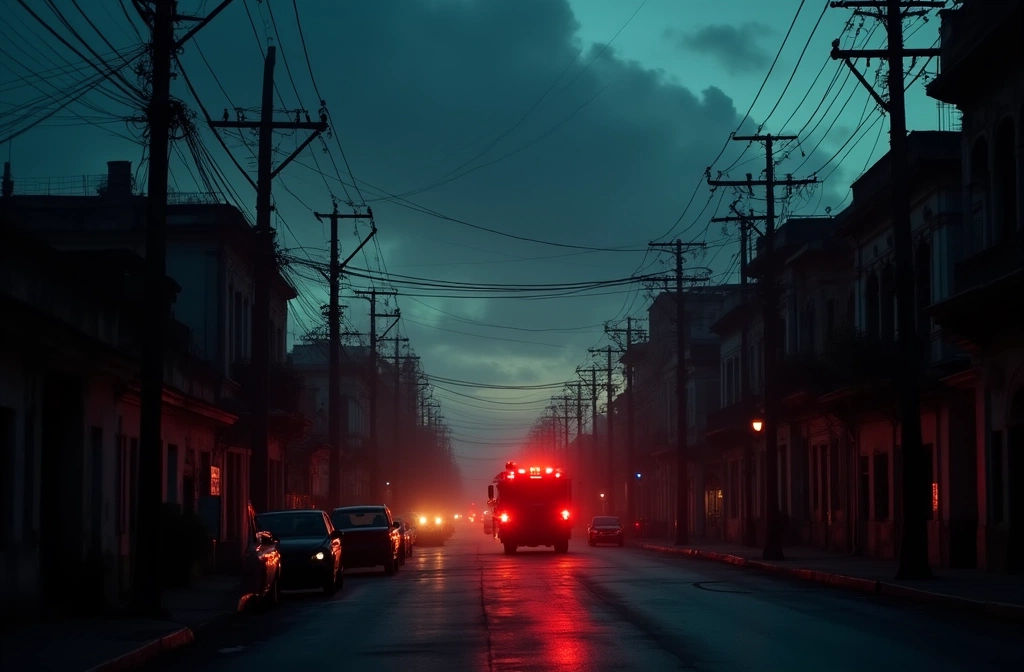
On July 9, 2026, Cuba experienced a significant power outage affecting 2,341 MW of generation, according to reporting from CubaHeadlines. The University of Energy (UNE) confirmed the peak impact, attributing the blackout to a critical shortfall in power generation capacity.
The underlying drivers are structural: Cuba's thermoelectric plants are aging and deteriorating, and fuel availability remains constrained. These are not transient problems. CubaHeadlines reporting notes that the Cuban government has been promoting solar energy expansion as a partial solution, but experts quoted in the same source argue that without significant upgrades to the thermoelectric grid itself, blackouts will likely recur.
Why this matters: A grid collapse driven by fuel scarcity and aging generation infrastructure is a slow-motion infrastructure failure—not a sudden shock. It reveals three critical vulnerabilities. First, lack of fuel redundancy means Cuba cannot sustain baseline generation even during normal demand. Second, aging thermoelectric assets cannot be quickly repaired or replaced. Third, solar expansion alone cannot substitute for baseload generation without simultaneous grid hardening and storage capability.
For preparedness professionals, this is a real-time case study in how infrastructure decay compounds. When generation capacity fails, backup systems (if they exist) come under stress. If those fail, cascades accelerate—water treatment, fuel distribution, medical facilities, communications infrastructure all depend on continuous grid power. Cuba's situation may suggest what cascading failure looks like in a resource-constrained environment.
The reporting indicates another critical day was expected to follow the initial outage, suggesting the problem is not episodic but reflects persistent generation shortfall. Watch for whether Cuban authorities implement rolling blackout schedules (a sign of managed degradation) or experience uncontrolled outages (a sign of system instability). Either pattern will indicate whether the grid can stabilize or continues deteriorating.
