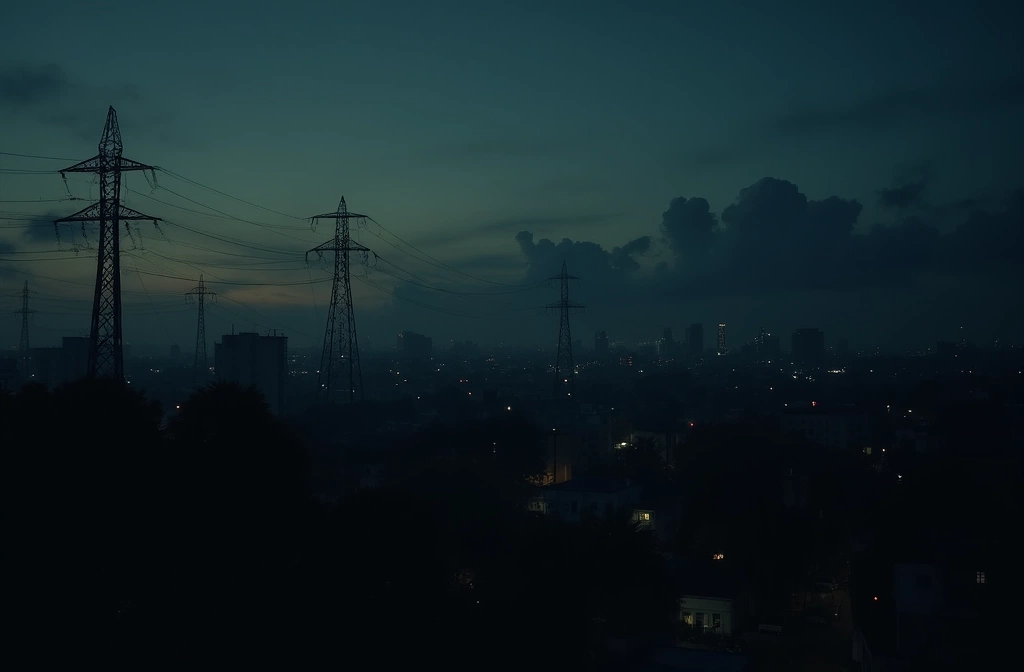
According to Al Jazeera and related reporting, Cuba's entire national electrical grid failed on Tuesday around 11am local time, leaving roughly 10 million people without electricity. This marks the third grid collapse in less than 10 days—a compressed failure cycle that suggests underlying system degradation rather than isolated incidents.
The significance here is straightforward: repeated total grid failures across a population center indicate either cascading damage to generation capacity, transmission infrastructure, or both. Single blackouts happen. Three in nine days implies the system is operating in a failure-prone state.
For preparedness analysis, this matters because it demonstrates how rapidly modern electrical grids can degrade when core components are compromised. Cuba's grid stress appears tied to energy constraints—one source references an "oil blockade" deepening the energy crisis—but the mechanism is secondary to the outcome: a system incapable of maintaining stable generation or load management.
The compressed timeline is the red flag. Wide-spaced failures allow for repairs and partial recovery. Clustered failures suggest repair capacity is also constrained, creating a feedback loop where each outage damages the grid further (thermal stress on equipment, transformer saturation cycles, control system strain). This pattern has appeared in other grid stress events: Texas 2021, Pakistan 2015, and rolling failures in Venezuela's system starting 2016.
Key signal to watch: whether Cuba experiences stabilization within the next 2-3 weeks, or whether the failure frequency accelerates further. Acceleration would indicate the grid has entered a critical degradation phase rather than a temporary crisis.
For readers, this is a live case study in how infrastructure systems fail under sustained stress. It's not a prediction for North American grids—those have very different architecture and redundancy. But it's a reminder that even modern power systems can reach tipping points faster than emergency response can address, leaving populations without electricity for extended periods. If you don't yet have a 72-hour power and water contingency plan, Cuba's current situation is the practical argument for building one.
