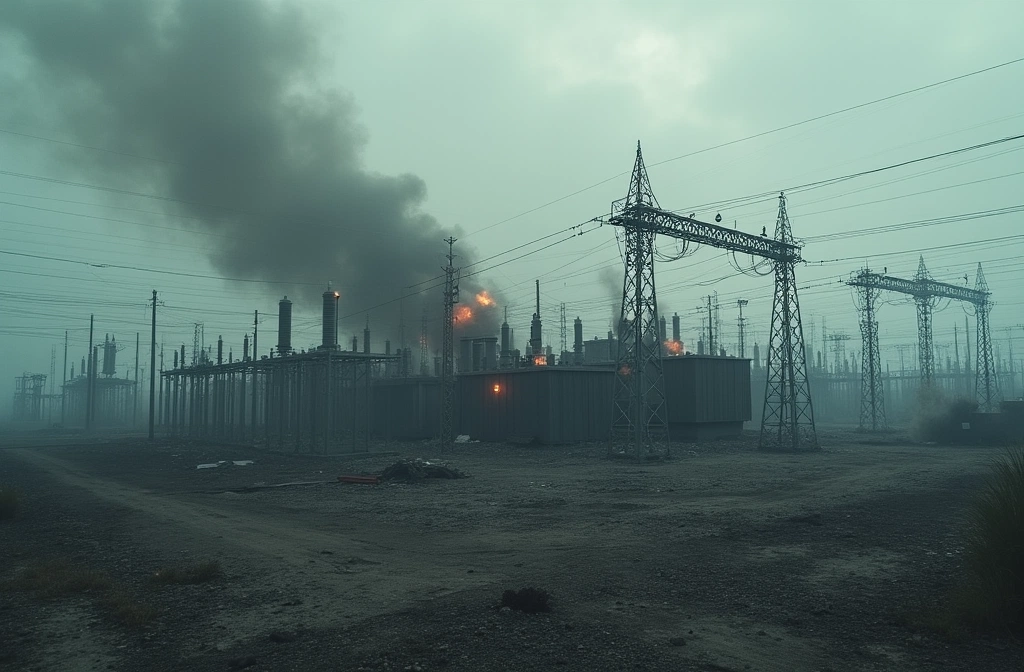
According to The New Voice of Ukraine, a drone attack struck an electrical substation in occupied Feodosia, Crimea, with video documentation of the strike now in circulation. The signals confirm the event occurred between July 28–29, 2026, across eight independent reporting instances.
Substation targeting in conflict zones reveals a persistent pattern: electrical infrastructure remains tactically valuable and structurally exposed. Unlike hardened military targets, substations are geographically fixed, critical to civilian supply chains, and difficult to rapidly replace. When struck, they create immediate cascading effects—not just localized blackouts, but potential strain on interconnected grid segments attempting to compensate for lost capacity.
For preparedness analysis, this matters because it demonstrates proof-of-concept for precision strikes on power infrastructure using readily available drone technology. The repetition of this tactic across multiple conflict theaters suggests adversaries have identified and are exploiting a structural gap in grid defense posture. Regional grids dependent on aging or under-maintained substations face compounded risk if similar strikes occur during peak demand periods or in cascade-vulnerable configurations.
The incident also signals that civilian infrastructure in contested zones cannot be assumed protected by proximity to population centers or international law. Feodosia is a civilian-inhabited port city; the targeting of power infrastructure serving it reflects a pattern of direct competition for control over critical systems.
What matters next: Watch whether follow-up strikes target substations in series (suggesting coordinated grid degradation strategy) versus isolated incidents. Monitor repair timelines and whether backup generation capacity is being deployed. If multiple substations in a single region are hit within short intervals, that pattern would indicate intentional grid-level targeting rather than opportunistic strikes—a meaningful escalation in infrastructure conflict doctrine.
