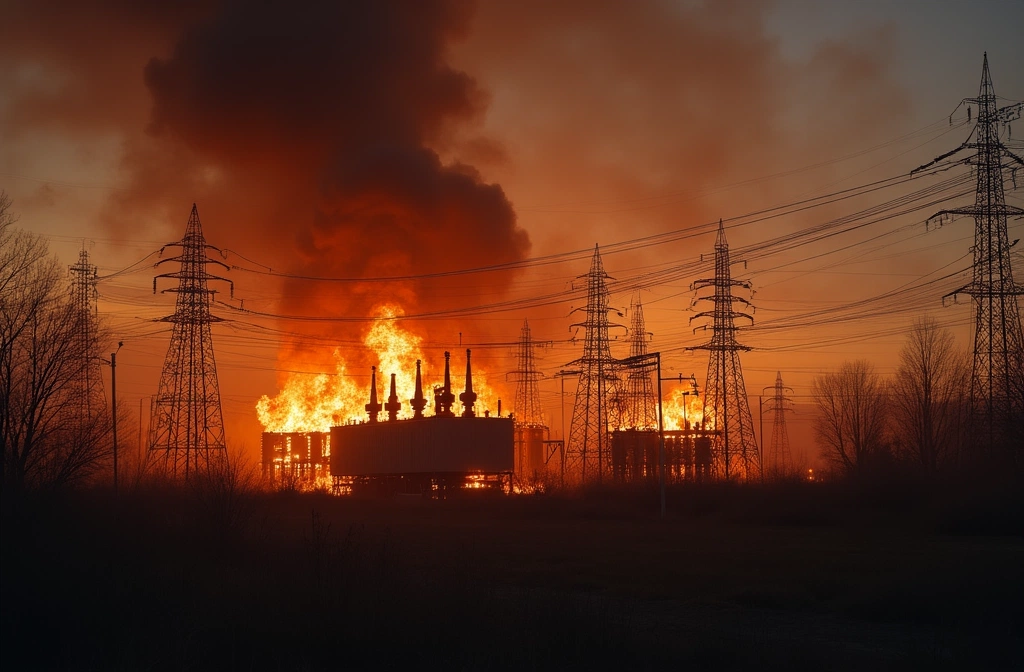
According to The New Voice of Ukraine, drones struck two power substations in Crimea, resulting in blackouts. The report identifies the target as energy infrastructure but does not specify the extent of damage, duration of outages, or number of civilians affected.
This incident is significant for grid resilience observers because it demonstrates a recurring pattern: critical power infrastructure in contested or conflict zones faces sustained targeting. Substation damage—whether from kinetic or drone-delivered strikes—disrupts electricity supply to civilian populations and complicates restoration efforts, particularly in regions with limited redundancy or pre-existing damage.
The timing and operational details remain limited to a single source at this stage. No statement has been released by Russian authorities, Ukrainian military officials, or international monitors confirming attribution, scale, or repair timeline.
What matters for preparedness: Substations are point targets. When two fail simultaneously in a region, load-shedding cascades and local backup systems become critical. Hospitals, water treatment, and communications networks dependent on grid power face immediate stress. In conflict zones, restoration timelines are measured in weeks or months, not hours.
For grid-dependent communities (essentially all modern ones), this serves as a data point confirming that infrastructure hardening and local resilience—backup power, fuel reserves, manual control protocols—remain asymmetric advantages. Nations and utilities with redundancy and distributed generation absorb these shocks. Those without do not.
Watch for: Pattern repetition. If strikes on Crimea substations continue at increasing frequency or coordination, it signals escalation in infrastructure targeting doctrine. Secondary indicator: official silence on repair timelines, which historically indicates longer outage windows than publicly acknowledged.
