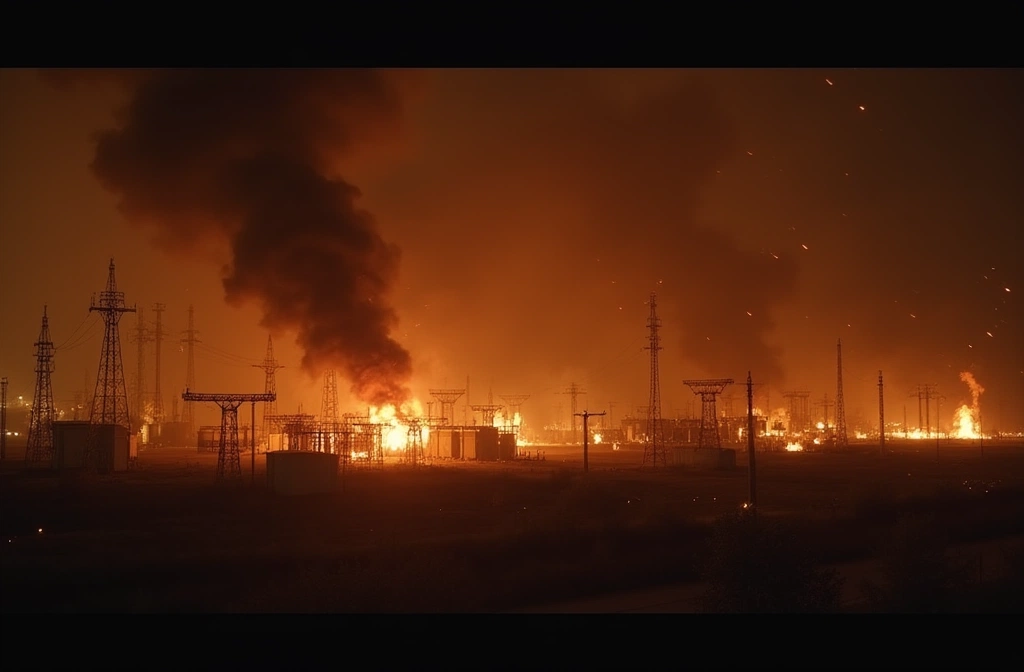
Kyiv Post reported that Ukrainian drone swarms have damaged power infrastructure in Crimea, with fires from the strikes visible from space. The report indicates sustained targeting of energy systems as part of ongoing conflict operations in the region.
For preparedness analysis, this event signals three core vulnerabilities:
Infrastructure Exposure. Power grids—especially those in conflict zones or border regions—face escalating risk from coordinated drone attacks. Drone swarms can overwhelm traditional air defense and distribute impact across multiple targets simultaneously, complicating repair and recovery.
Cascading Dependencies. Energy system damage triggers secondary failures: water treatment loses pumping capacity, hospitals shift to backup power, telecommunications networks degrade. In regions with fragile redundancy, even localized grid strikes can ripple across multiple sectors.
Detection and Response Lag. Visible fires suggest significant damage, but "visible from space" also means response was reactive, not preventive. Critical infrastructure operators in similar regions may lack early-warning systems or the defense architecture to counter swarm tactics at scale.
What to Watch. Monitor whether strikes expand to other critical nodes—water systems, fuel depots, communications hubs. Watch for reports of coordinated multi-target sequences rather than single-site hits. Escalation signals include strikes on civilian infrastructure or geographic expansion beyond current conflict zones. Track official damage assessments and repair timelines; extended outages indicate systemic vulnerability, not just tactical damage.
This pattern—distributed unmanned systems targeting critical nodes—is not unique to this conflict. It represents a repeatable operational template. Readers in regions with aging grid infrastructure, limited redundancy, or proximity to geopolitical tension should review personal resilience: backup power capacity, water storage, communication alternatives. Not panic—preparation.
