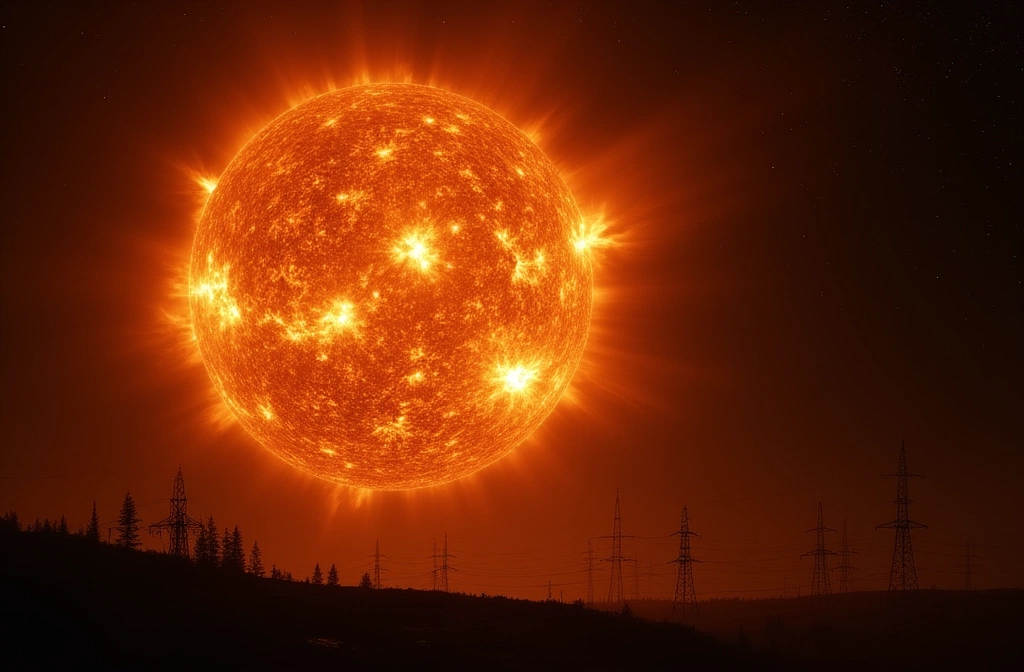
Reports circulating across multiple outlets indicate that NOAA is maintaining heightened alert status due to active giant sunspots with Earth-directed potential. The concern centers on the risk of geomagnetic disturbances that could affect power grid infrastructure and communications systems.
Solar storms of sufficient magnitude can induce geomagnetic currents in long transmission lines, potentially triggering protective relay responses and localized or cascading outages. The specific threat window, magnitude forecast, and expected arrival time are not detailed in available reporting, making real-time monitoring of NOAA's Space Weather Prediction Center essential for confirmation of intensity and probability.
Historically, major solar events have demonstrated the grid's vulnerability. The 1859 Carrington Event would today cause widespread prolonged outages across North America if it recurred. More recently, the 2003 blackout demonstrated how even moderate grid stress cascades rapidly. While modern forecasting has improved significantly, grid hardening against geomagnetic induced currents (GIC) remains incomplete across much of the U.S. infrastructure.
What distinguishes this alert cycle is the current phase of the solar maximum—we are in an active period where multiple large sunspot regions can produce successive storm events. Historical data shows clusters of activity rather than isolated incidents during solar maximum peaks.
For infrastructure operators and preparedness planners, the relevant watch points are: NOAA Space Weather Prediction Center's K-index and Kp forecasts (currently the authoritative real-time metric), any official G-scale geomagnetic storm watches or warnings, and grid operator communications regarding contingency activation. Consumer preparedness actions should remain proportional to confirmed threat level rather than speculative risk.
