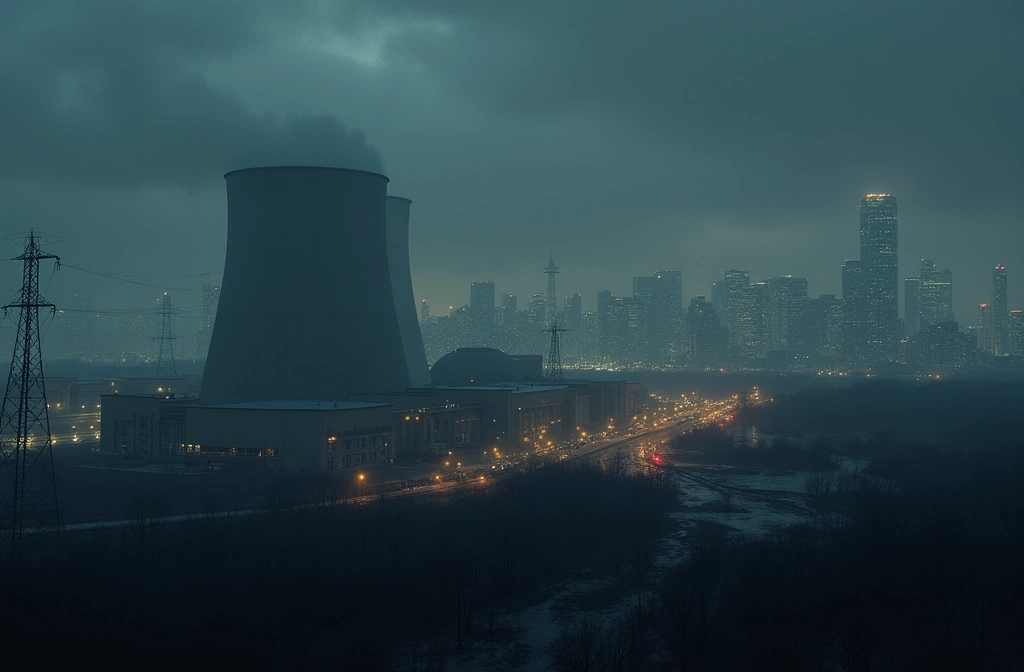
According to Pulse Nigeria, a major operational failure at Egbin Power Plc—identified as the largest electricity-generating plant on Nigeria's national grid—occurred simultaneously with a transmission line outage affecting power supply into Lagos State. The dual failure has triggered a prolonged blackout affecting residential areas across the region.
This event exposes a structural weakness in Lagos's power delivery: dependency on a single generation source without adequate redundancy or failover capacity. When Egbin falters, the transmission system lacks sufficient alternative supply to compensate. The concurrent transmission failure compounds this exposure—suggesting either cascading effects or insufficient distributed generation capacity to absorb the primary source loss.
For preparedness analysis, the significance lies in grid fragility under single-point-of-failure conditions. Lagos—Africa's largest megacity by some measures, with roughly 15 million residents and critical financial infrastructure—relies on centralized generation feeding through vulnerable transmission nodes. Extended blackouts in such urban centers trigger downstream effects: water system failures (pump-dependent distribution), fuel distribution disruption, communications degradation, and economic friction.
The duration remains undefined in available reporting. Pulse Nigeria notes the blackout is "possible prolonged," but provides no restoration timeline, maintenance scope, or load-shedding strategy from grid operators. This information gap itself is operationally significant—it suggests either uncertainty at the operator level or delayed public communication.
What to watch: Pulse Nigeria will likely publish updates on restoration timelines, load-shedding protocols, and whether Egbin's failure was equipment-based (mechanical/electrical) or operational (staffing, maintenance). Secondary indicators include whether competing generation sources (natural gas, hydro, or independent power producers) can backfill supply and whether transmission repairs are underway. Extended outages beyond 48 hours would suggest deeper infrastructure issues requiring structural intervention.
