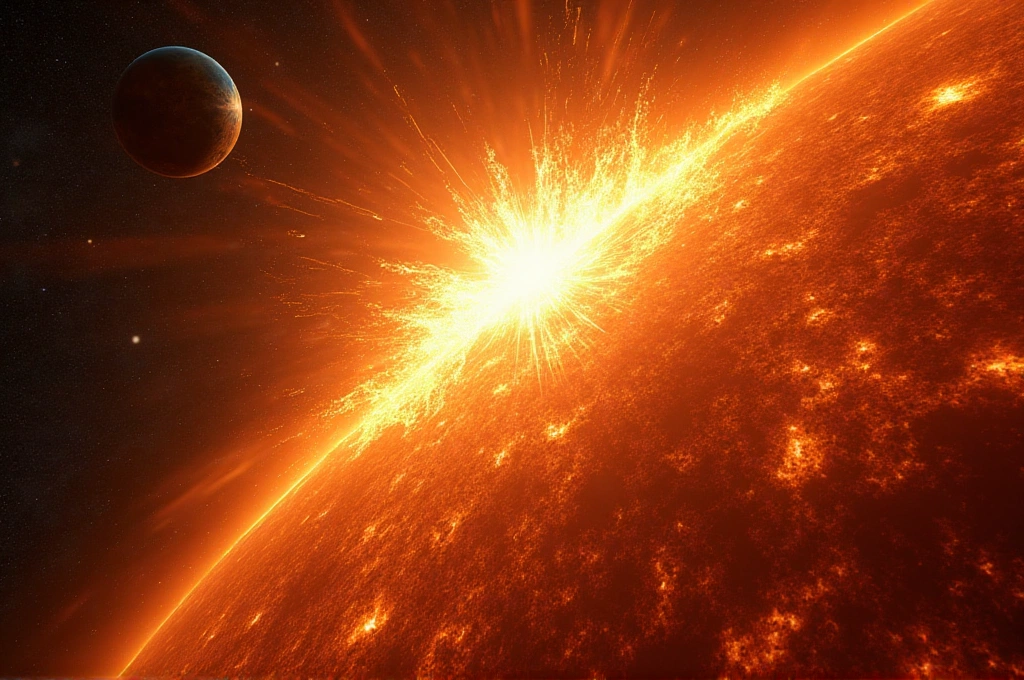
Solar material ejected from the Sun on August 14 is expected to trigger a G1-class geomagnetic storm on Monday, according to forecasts cited by India Today. The British Geological Survey has warned that the incoming event could disturb Earth's magnetosphere and produce aurora displays at high latitudes.
Context matters here. NOAA's geomagnetic storm scale runs from G1 (minor) to G5 (extreme). A G1 event sits at the lowest tier of severity, making widespread infrastructure disruption unlikely. However, the distinction between "unlikely" and "impossible" is critical for preparedness analysts.
G1 storms can produce minor impacts on high-frequency radio propagation and may cause slight fluctuations in power grid voltage. Satellites in low Earth orbit experience minimal drag increases. For most critical infrastructure — power distribution, communications backbone, financial systems — a G1 event represents background noise, not a cascading failure scenario.
That said, this event provides an operational test case. Real geomagnetic storms don't announce themselves by severity level. They arrive, and infrastructure response teams either manage them or they don't. Utilities in regions with aging transformer stocks or legacy SCADA systems without filtering should use this as a low-stakes dry run to verify monitoring and response protocols.
The aurora displays mentioned by the British Geological Survey are worth noting: they're a visible indicator of magnetospheric disturbance. If auroras extend unusually far south of high latitudes, that signals storm intensity may be tracking higher than forecast — useful ground-truth data if you're positioned to observe it.
For preppers, this is a calibration event. Stock your baseline supplies regardless of storm class. If a G1 causes measurable system strain in your region, that's data suggesting your infrastructure has tighter margins than assumed. If it passes unnoticed, that's also data — but don't let it breed false confidence. The next event won't be a G1.
