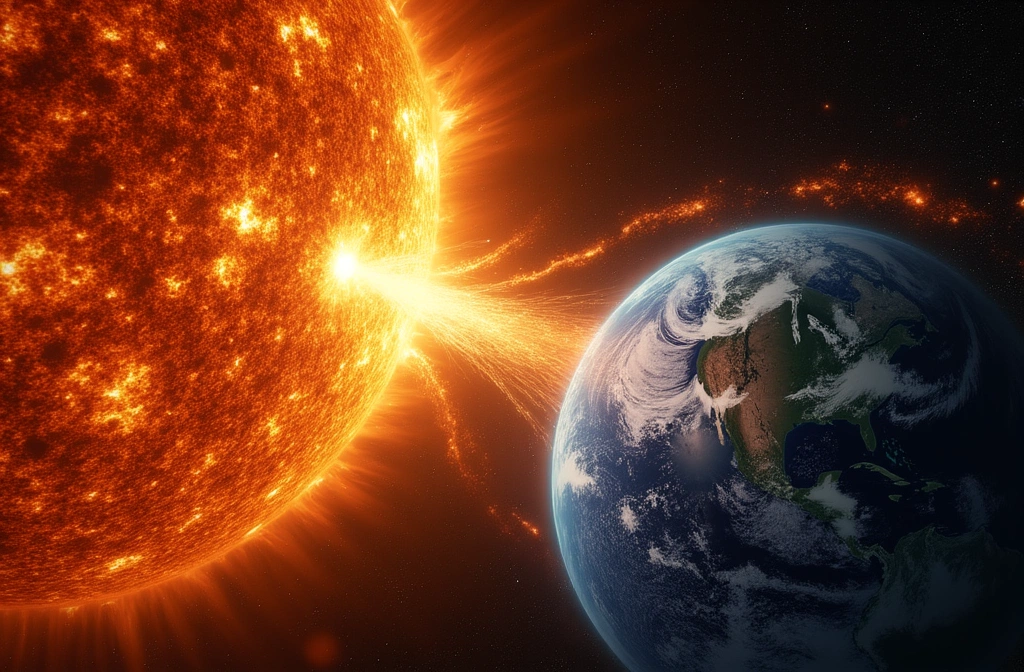
On July 12, 2026, Earth's magnetosphere reached G1 (minor) geomagnetic storm conditions—the threshold at which weak power grid fluctuations become measurable—according to NOAA's geomagnetic storm scale. The event was triggered by the combined arrival of a waning coronal hole high-speed stream and a glancing CME (coronal mass ejection) launched July 9, according to the source reporting.
The significance of this event is compounded by concurrent developments in solar observation. Recovered solar flare imagery from the Solar Dynamics Observatory (SDO) has unlocked 16 years of archived data, suggesting that gaps exist in our real-time solar monitoring capability. This timing raises a critical preparedness question: during periods when observation infrastructure is compromised or data recovery is underway, how much warning do we lose before geomagnetic impacts reach critical infrastructure?
G1-level storms are classified as minor, but they represent the operational threshold where power grid operators report measurable effects. While the July 12 event did not escalate into the G2–G5 range that poses severe infrastructure risk, the combination of a coronal hole stream and a CME impact demonstrates how multiple solar drivers can compound. Coronal holes produce persistent high-speed solar wind; CMEs add sudden, concentrated energy. When they arrive in sequence or overlap, the magnetosphere's response intensifies.
For infrastructure and communications, the practical concern is real but proportional at G1: satellite operations may experience minor effects, aurora visibility extends to higher latitudes, and grid operators activate monitoring protocols. The greater risk lies in escalation—G2 and above represent material risk to transformers, long-distance power lines, and satellite operations.
The recovery of SDO archival data is operationally positive for forecasting models, but it also signals that observational continuity cannot be assumed. Infrastructure operators and preparedness planners should treat gaps in solar monitoring data as a known systemic risk and ensure redundancy in early warning systems rather than relying on single-source space weather intelligence.
