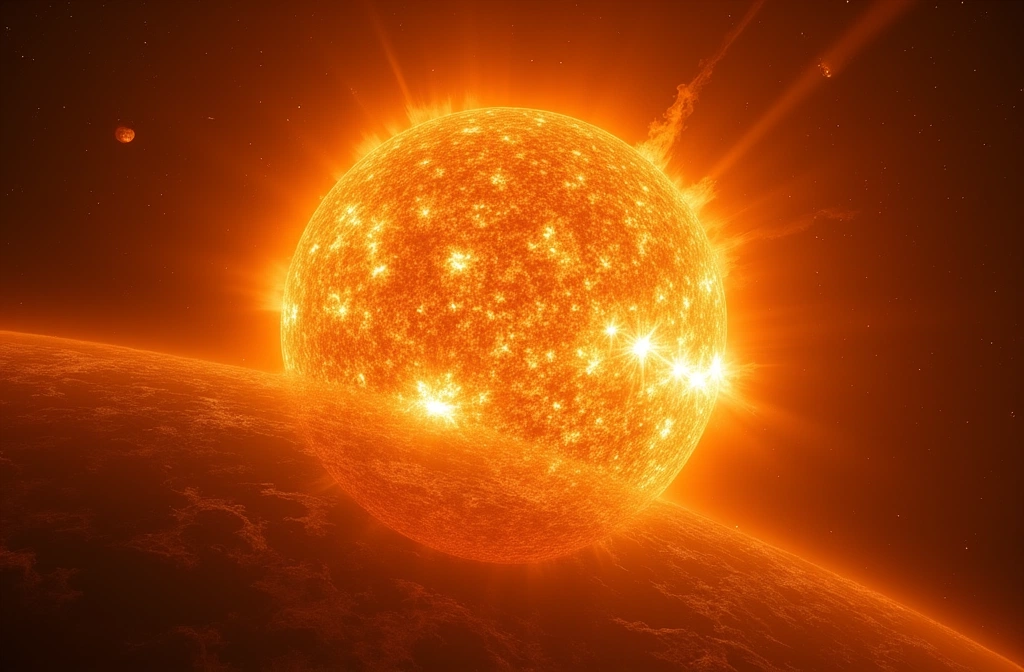
According to Earth & Sky reporting on current solar activity, April 15 forecasts unsettled-to-active geomagnetic conditions with Kp indices ranging from 3–4, and a chance of reaching G1 (minor) geomagnetic storm levels. The driver remains a coronal hole high-speed stream — a region of open magnetic field lines on the sun that releases faster solar wind into space.
Why this matters: G1-level storms are classified as minor but can produce measurable effects on power grid operations, particularly in high-latitude regions. They can degrade high-frequency radio communications, affect GPS accuracy in precision applications, and trigger localized voltage regulation issues on long transmission lines. Satellite operators also monitor these conditions closely for potential orbit degradation.
The source data shows the sun is currently in a quieting phase — "the sun quiets down" as wind eases — but that transition itself creates variability. Coronal hole effects can persist and recur, meaning conditions may stabilize or fluctuate over the next 24–48 hours.
What to watch: Monitor NOAA's Space Weather Prediction Center for any Kp index escalation beyond 4 or confirmation of G1 conditions. If minor storm activity does occur as forecast, it will provide a real-time test case for how your region's grid responds and whether any communications redundancies hold. Grid operators typically have protocols for G1 events, but distributed outages or cascading effects in under-maintained sections remain possible.
This is not a crisis scenario — G1 storms occur multiple times per solar cycle. But it is a live opportunity to validate your preparedness assumptions: Do you have current battery backups? Can you verify critical systems if grid power flickers? Do you have offline navigation capability if GPS signal degrades? Low-consequence events like this are intelligence gifts for stress-testing your setup before higher-severity weather arrives.