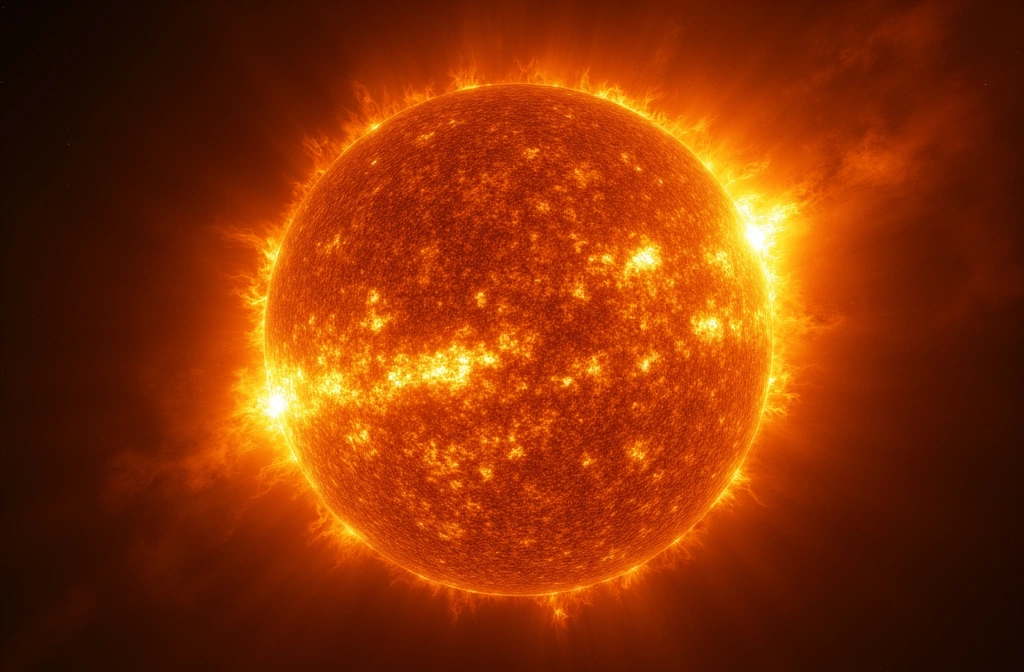
According to EarthSky reporting on NOAA data, a powerhouse sunspot region is returning to Earth-facing position, bringing renewed solar activity. The forecast indicates a slight chance of G1-level (minor) geomagnetic storm conditions, with aurora visibility possible at high latitudes. The geomagnetic disturbance is expected to ease from quiet to unsettled levels by May 9 (Saturday) as effects from fast solar wind diminish.
Here's why this matters: G1 storms are classified as minor, but they can still produce measurable effects on power grid operations, HF radio propagation, and low-earth-orbit satellite performance. While widespread infrastructure failure is not expected at G1 levels, localized grid stress and communication degradation at high latitudes are documented risks. The return of an active sunspot region—especially one described as a "powerhouse"—signals that solar activity is not diminishing; it may be intensifying as we move deeper into solar cycle 25.
The operational reality: We are in an extended period of elevated solar activity. Each return of an active sunspot region represents a fresh data point on the intensity and frequency of solar output. A G1 event is a calibration moment—it tells us the current state of our power infrastructure's vulnerability and provides real-world evidence of how systems respond under moderate stress.
What separates this from background noise is the explicit descriptor "powerhouse" attached to this sunspot region. That language suggests this is not a minor feature; it's generating concern among solar forecasters. The narrow window (through May 9) makes this a useful operational test case. Grid operators and emergency management officials will be monitoring real-time impacts. So should you.
Watch whether this region produces X-class or M-class solar flares as it rotates fully Earth-facing. That would escalate the risk profile significantly. Secondary indicators: elevated solar wind speeds, fluctuations in the Earth's magnetosphere, and any official upgrade to G2 (moderate) storm watches.
