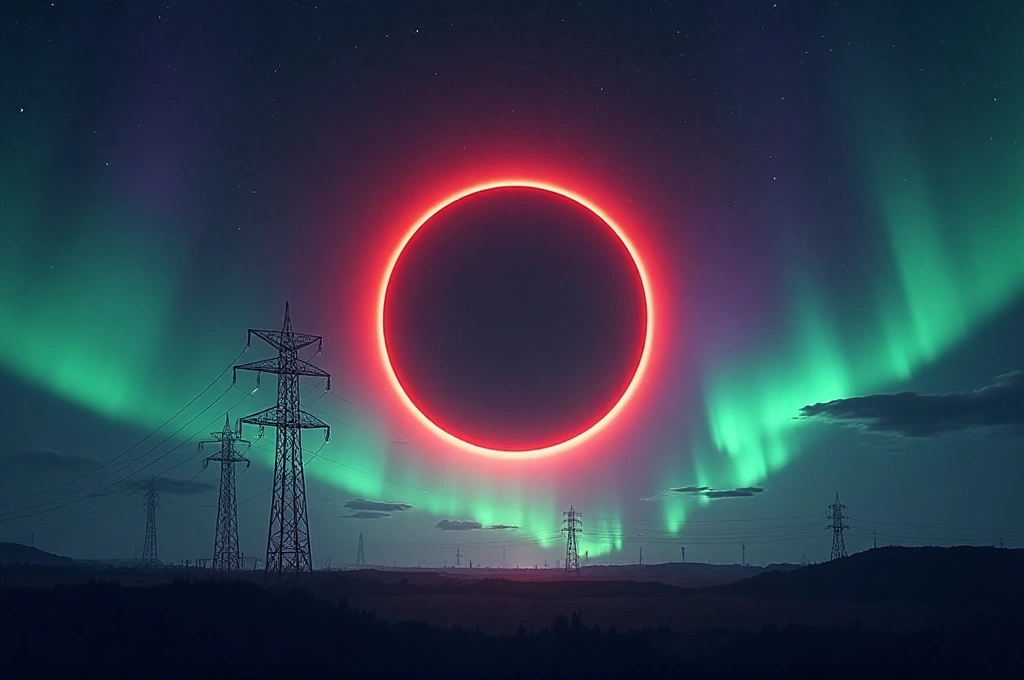
NOAA has forecasted geomagnetic storms reaching G2 intensity on Thursday, August 27, and Friday, August 28, 2026, with aurora visible during a deep partial "blood moon" lunar eclipse across approximately 20 U.S. states.
G2 storms are classified as "moderate" on the five-tier geomagnetic storm scale. At this level, minor impacts are possible: high-latitude power grid systems may experience voltage irregularities, HF radio propagation can degrade, and satellite operations may see minor effects. These are not grid-wide threats, but they merit monitoring by infrastructure operators.
The convergence of a lunar eclipse and elevated geomagnetic activity is primarily an observational novelty—the eclipse itself has no direct bearing on the storm's severity. However, the timing does provide a visible natural reference point for tracking space weather in real time, which may help the public and non-specialists understand geomagnetic activity as it occurs.
For preparedness-minded readers, G2 storms are well within normal operational parameters for modern grid infrastructure, which has been hardened since the 1989 Quebec blackout. Power utilities and satellite operators have operational protocols for moderate storms. Communications disruptions are unlikely except in polar regions.
The key distinction: this is not a crisis event. It is, however, a recurring natural phenomenon that deserves attention as baseline space weather literacy. If geomagnetic forecasts escalate to G4 or G5 levels—which are rare but documented—the implications shift materially. This event serves as a useful reminder to track NOAA Space Weather Prediction Center alerts as a routine intelligence feed, not as a one-time curiosity.
Watch the NOAA forecast updates through Friday. If activity remains at G2 or below, systems perform normally. If forecasts revise upward mid-event, that signals a shift in solar activity patterns worth noting for Q4 preparedness planning.
