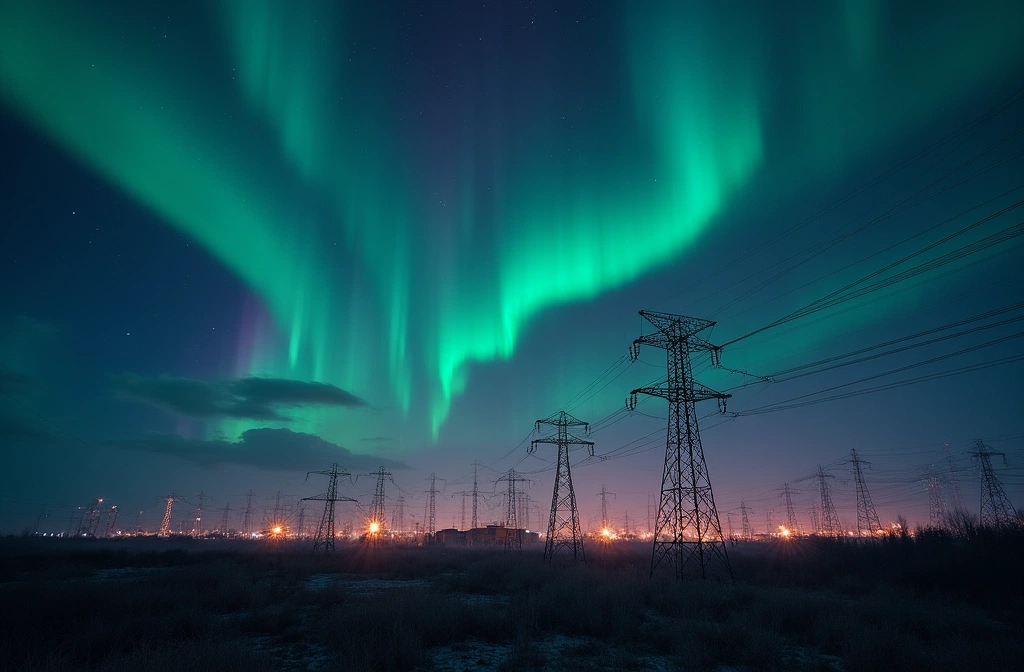
A G2-class (moderate) geomagnetic storm impacted Earth's magnetic field overnight on May 5-6, 2026, according to reporting by EarthSky and NOAA data. The event triggered auroral displays across predictable latitudes, as shown in NOAA's auroral oval visualization.
G2 storms sit midway on the five-tier geomagnetic storm scale. At this classification, operational risk to critical infrastructure is limited but measurable: some high-voltage transmission line effects and minor spacecraft navigation degradation are possible, though not guaranteed. Power grid operators and satellite operators monitor these events closely, and there is no indication of cascade failures from this particular storm.
What matters here is not drama—it's pattern. G2 events are not rare; they occur multiple times per solar cycle. However, they serve as live operational tests of grid hardening investments made since the 2003 Halloween storms and earlier vulnerability assessments. The fact that overnight detection and transparent reporting occurred (NOAA's monitoring, EarthSky's public communication) reflects institutional maturity in solar monitoring, though gaps in real-time alerting to distributed grid operators remain documented gaps in industry literature.
For preparedness practitioners, this is a data point, not a trigger. The event did not cascade. Ground-truth confirmation that moderate solar storms no longer cause widespread outages in 2026 is actually useful negative evidence—it suggests targeted hardening has worked on critical circuits. That said, the underlying physics hasn't changed: a G4 or G5 event remains theoretically possible, and preparedness-grade redundancy (backup power, offline comms plans, water storage independent of grid) remains rational regardless of May 2026 performance.
Watch forward indicators: solar wind speed, magnetometer K-index trends, and NOAA Space Weather Prediction Center 3-day forecasts. These remain your primary early-warning system for escalation.
