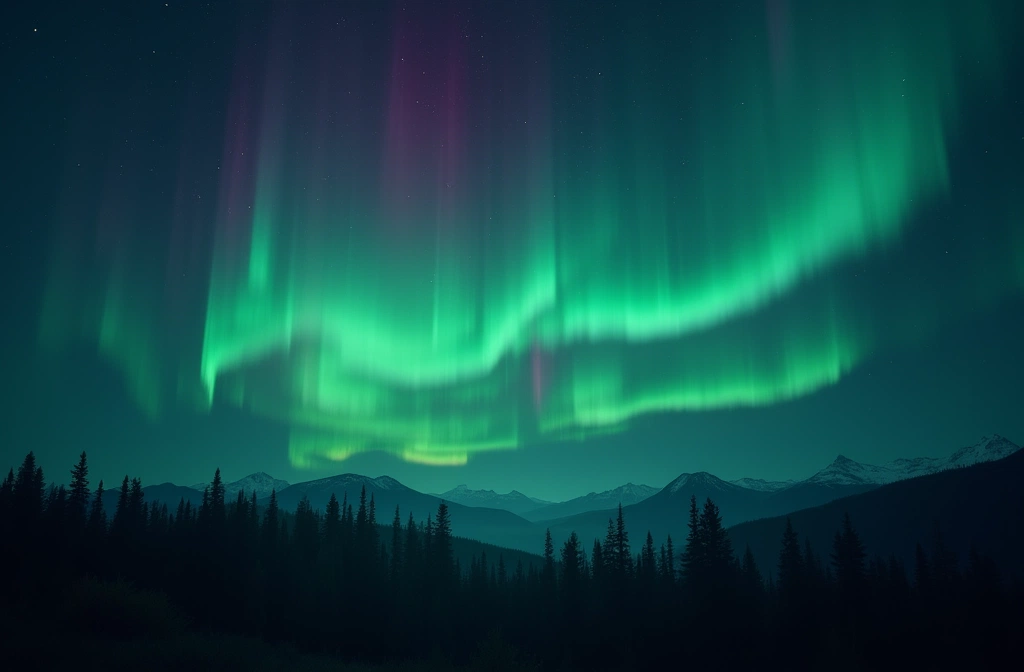
According to Forbes reporting on NOAA forecasts, a potential G2-level geomagnetic storm developing Wednesday night could extend aurora visibility beyond traditional high-latitude zones into 10 states: Oregon, Wyoming, Nebraska, Iowa, Illinois, Indiana, Ohio, New York, Vermont, and New Hampshire. The forecast hinges on storm development—if conditions materialize, the southern reach of the aurora becomes a useful real-time indicator of magnetospheric disturbance.
Why this matters: Geomagnetic storms at G2 intensity typically cause minor to moderate impacts on satellite operations and can induce currents in long-distance power transmission lines. While widespread blackouts from a G2 event are unlikely, the storm itself reveals the scale of solar wind pressure hitting Earth's magnetosphere. For infrastructure operators and grid managers, this is observational data—the aurora is essentially a visible marker of the same energy affecting electrical systems.
The visibility forecast offers a practical secondary benefit: widespread public observation in populated U.S. regions means more eyes on the phenomenon. Real-time aurora tracking using NOAA's 30-minute forecast and apps like Aurora Now, My Aurora Forecast, or Glendale Aurora can help you confirm local sky conditions and correlate visual aurora intensity with reported space weather indices.
What to monitor: Watch NOAA's official space weather alerts for the actual Kp index and storm classification as Wednesday approaches. If the G2 develops as forecast, pay attention to whether visibility extends as far south as predicted—deeper southern penetration suggests stronger magnetospheric coupling and more significant ground-level effects on infrastructure. Grid operators will be monitoring; you should too. Download one of the aurora tracking apps now to have baseline familiarity before Wednesday night. If you have critical infrastructure dependencies (medical equipment, backup power systems, communications gear), use this event window to verify your contingency readiness.
