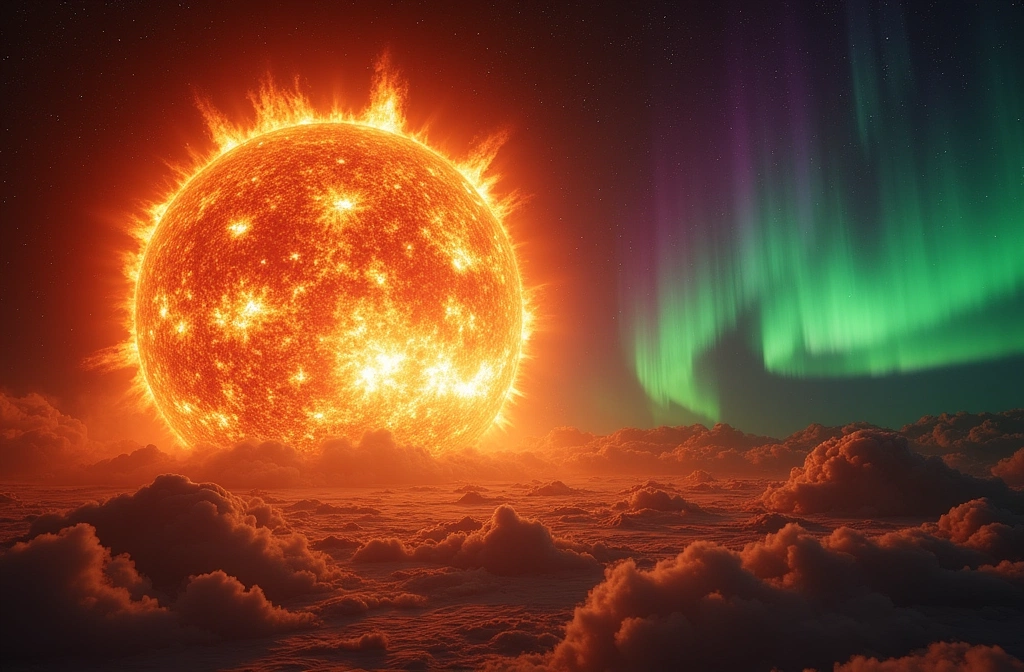
On May 5, 2026, a G2-level geomagnetic storm disrupted Earth's magnetic field, according to NOAA data cited by EarthSky. The storm followed an M-class solar flare originating from the far side of the sun—a region not directly visible from Earth until the sun's rotation brings it into view.
Geomagnetic storms at G2 severity are classified as "moderate" on NOAA's five-tier scale. At this level, impacts on critical infrastructure are generally localized rather than systemic: high-latitude power systems may experience voltage irregularities, some satellites may require temporary operational adjustments, and auroral displays extend into mid-latitudes—the visible side of space weather that can be tracked via NOAA's auroral oval monitoring.
What makes this event noteworthy is its source. Far-side solar activity is inherently harder to forecast because it remains obscured until it rotates into Earth-facing view. This means detection windows are compressed, and surprise geomagnetic impacts become possible even without advance warning from solar observatories.
For preparedness-minded readers, the operational takeaway is straightforward: baseline grid and communications vulnerabilities that exist under normal conditions become more acute during geomagnetic storms. Voltage transients, GPS signal degradation, and HF radio propagation changes are documented at G2 levels, particularly in sensitive sectors like aviation, finance, and energy dispatch.
The broader signal here is not panic—G2 events occur multiple times per solar cycle—but calibration. This event demonstrates that space weather risk is not theoretical. It occurs, it has measurable effects, and it arrives with variable notice. The far-side origin of this flare also reinforces why continuous solar monitoring remains critical infrastructure in its own right.
Watch for NOAA space weather bulletins if G3 or higher storms are forecast. At that threshold, operational impacts expand significantly. For now, this is a yellow-flag event: observable, documented, and a reminder that preparedness includes space weather awareness.
