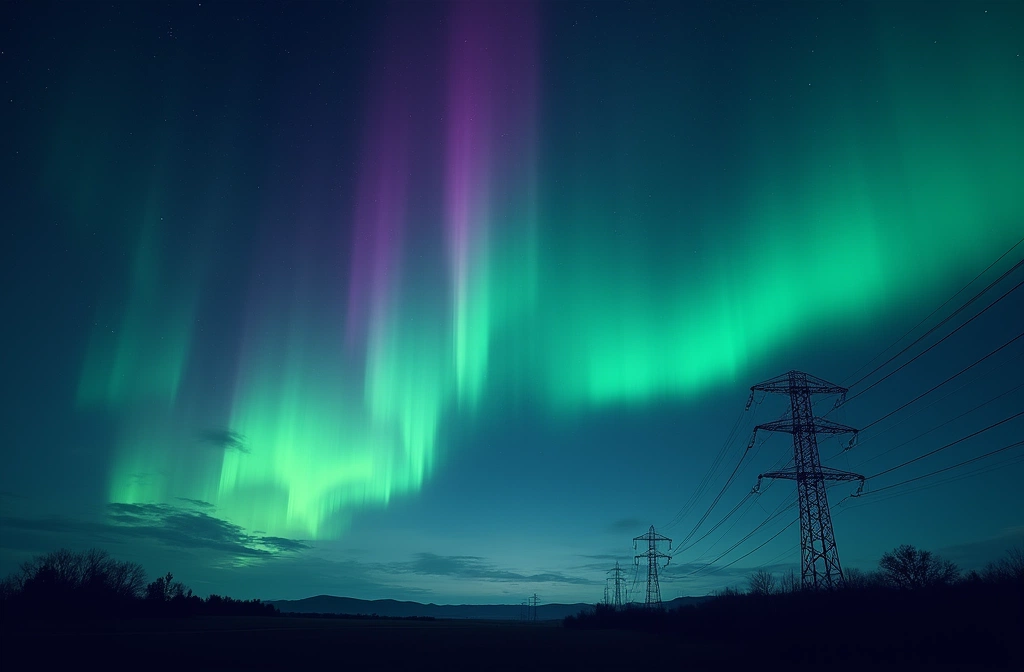
According to NOAA's Space Weather Prediction Center (SWPC), a G2-level geomagnetic storm watch is currently in effect. The trigger: arrival of high-speed solar wind that has set conditions for aurora visibility well south of typical northern latitudes. Tonight, April 17, 2026, the Northern Lights are forecast to extend into the continental U.S.—a visible indicator that Earth's magnetosphere is under real-time stress from solar activity.
Why this matters: G2 storms are moderate on the five-tier geomagnetic scale (G1 through G5), but they're not benign background noise. While tonight's display is primarily a visual event, geomagnetic storms of this class can degrade GPS accuracy, affect high-frequency radio propagation, and stress power grid operations—particularly transformers and long-distance transmission lines. For preparedness-focused readers, this is a live-action reminder that space weather is not theoretical; it's measurable, it happens in real time, and it affects critical infrastructure.
The broader signal: moderate geomagnetic storms are becoming more frequent as we move deeper into Solar Cycle 25. Visibility of auroras at lower latitudes serves as an early-warning indicator of magnetospheric conditions. If you can see green lights from your location tonight, your region's infrastructure is experiencing elevated geomagnetic stress—even if you don't see operational disruptions.
What to watch: Monitor NOAA SWPC for any escalation from G2 to G3, G4, or G5 status. Higher tiers correlate with wider geographic impact on grid stability, telecommunications, and GPS-dependent systems. Tonight's display is observable confirmation that solar activity cycles are active and capable of reaching populated U.S. zones. This is the infrastructure weather equivalent of a storm watch becoming a storm reality—visual, measurable, and operationally relevant.