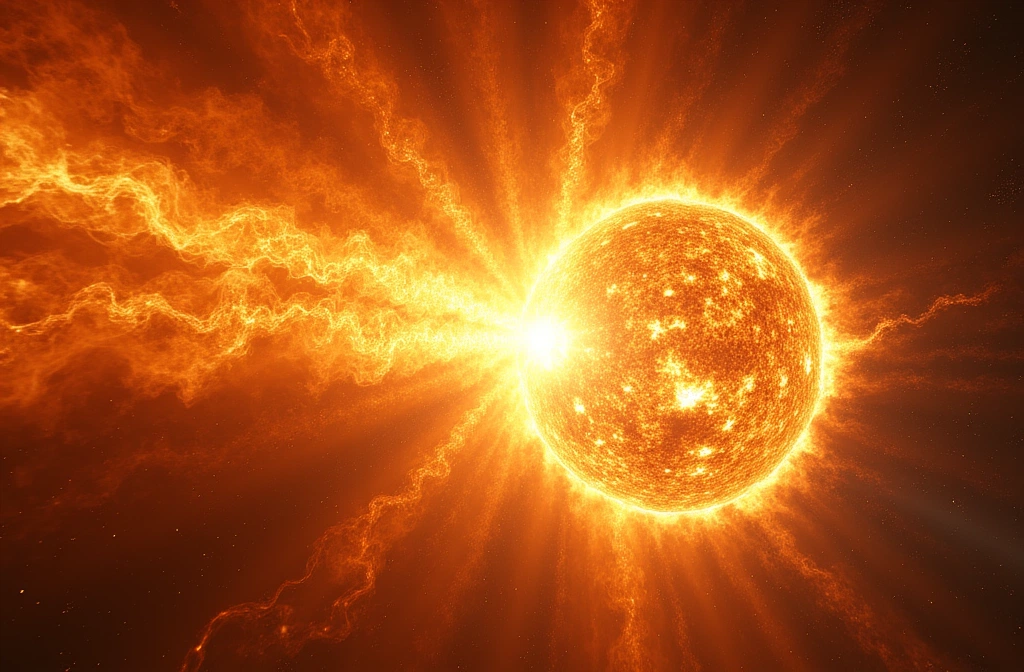
Multiple news outlets including MSN and Weatherboy confirmed a strong G3-level geomagnetic storm is underway following a fast coronal mass ejection (CME). The event was first reported around June 8–9, 2026, and remained active through at least June 10.
G3 storms sit in the middle range of the space weather scale (G1–G5). At this level, power systems may experience voltage control problems, and protection systems may need manual intervention. Wide area power outages are not typical, but localized and scattered outages remain possible—particularly in high-latitude regions where Earth's magnetic field is most vulnerable.
Satellite operators typically experience intermittent problems with low-Earth orbit spacecraft. GPS accuracy degrades measurably, affecting not just consumer navigation but precision agriculture, financial transaction timestamping, and emergency services dispatch. High-frequency radio communications may become unreliable, especially over polar routes.
This is not a black swan event. G3 storms occur several times per solar cycle and most infrastructure holds. However, the speed of the CME (described as "fast" in reporting) suggests higher-energy particle injection, which means impact onset was rapid and warning time was compressed—a factor worth noting for facilities that rely on manual intervention windows.
The storm's duration and decay profile will determine when normal operations resume. These events typically resolve within 12–24 hours after peak, though recovery can be uneven.
What to watch: Monitor NOAA Space Weather Prediction Center alerts for any upgrade to G4 conditions (severe) or persistence beyond expected windows. Facilities dependent on GPS, satellite uplinks, or grid voltage stability should confirm backup procedures are current and staffing is alert. High-latitude power utilities and airlines operating polar routes are already in heightened awareness posture.
