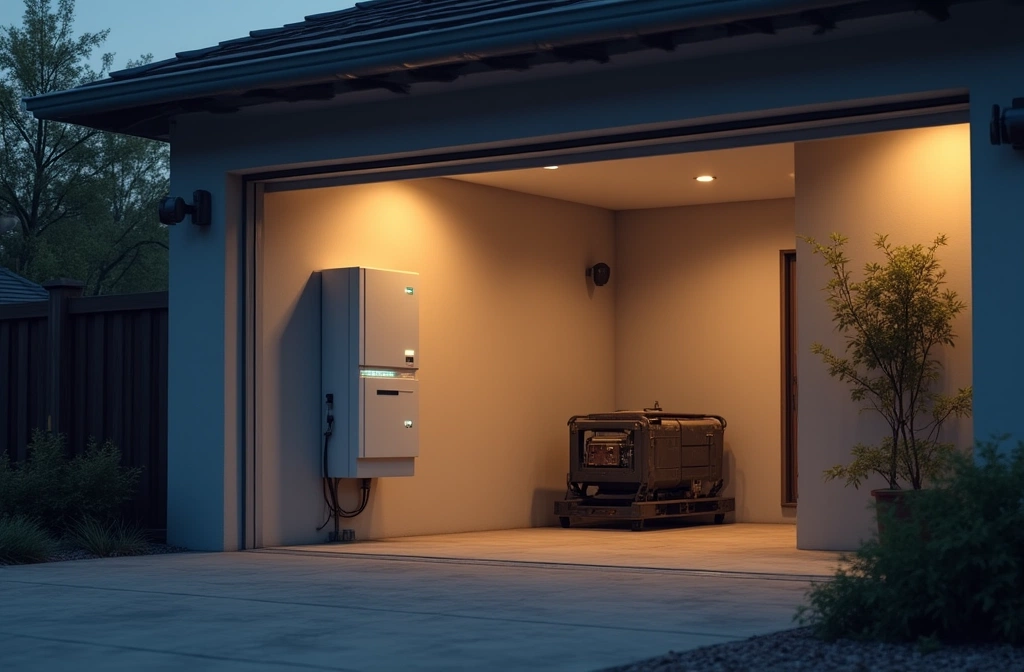
According to reporting from The Cool Down, a growing segment of American homeowners is moving away from traditional gasoline generators as their primary backup power source. The shift reflects real operational friction: gas generators are loud during blackouts, require ongoing fuel supply chains, and frequently fail to start when called upon after sitting idle.
This matters because generator failure represents a hard infrastructure gap. When the grid goes down, backup power isn't optional—it's the difference between maintaining critical loads (refrigeration, medical devices, heating/cooling, communications) and cascading household failures. A generator that won't start isn't equipment; it's a liability.
Home battery systems address three specific pain points that generators don't: they operate silently (removing noise during community-wide outages), they have no fuel dependency (eliminating supply chain vulnerability), and they're pre-charged and ready on demand. This suggests a possible infrastructure implication: as adoption grows, household resilience may increasingly depend on battery capacity rather than fuel logistics.
The timing is significant. Grid reliability is under pressure from aging infrastructure, weather extremes, and rising peak demand. Distributed home battery backup could theoretically absorb some load during rolling outages—or it could fragment household preparedness into a two-tier system where battery-equipped homes maintain power while traditional generator users face extended downtime.
This is not a regulatory directive or grid-operator initiative. It's a market signal—homeowners solving their own reliability problem because the alternative isn't working. When individual adoption outpaces infrastructure planning, it often indicates systemic stress that hasn't yet triggered formal response.
What to watch: Adoption rates among middle-income households (where cost is a real constraint) and whether utility companies begin offering incentives or integration programs. Both would signal that this shift from generators to batteries is becoming infrastructure-relevant rather than fringe.
