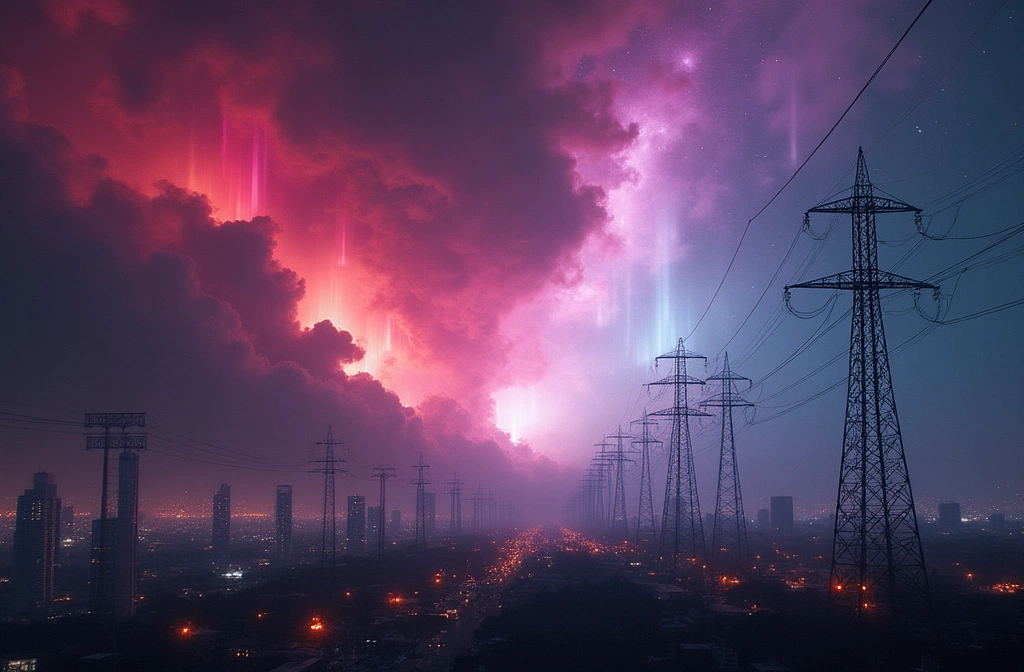
Researchers have identified a potential flaw in how we model extreme geomagnetic storm impacts: what appears to be a natural ceiling on planetary response may actually be a statistical artifact rather than physical reality.
The core concern is straightforward—and serious. If the current theoretical limit on geomagnetic storm damage is the product of incomplete data rather than actual physics, then our infrastructure risk models may underestimate exposure to the most extreme solar events.
Why this matters: Power grids, telecommunications, GPS, and financial systems all depend on accurate risk assessment. Risk models inform grid hardening decisions, insurance pricing, and emergency preparedness investment. If those models are systematically underestimating tail-end risk, the actual vulnerability of critical infrastructure to severe space weather is greater than currently assumed.
The specific mechanism researchers are challenging involves what has been treated as a saturation point—a theoretical maximum to how severely Earth's magnetosphere can respond to solar bombardment. If that saturation assumption is wrong, even well-protected systems could face cascade failures during extreme geomagnetic events that exceed current design specifications.
This is not a prediction of an imminent storm. This is a recalibration of what "worst case" actually means. Historical records and satellite data have limits—there may simply not be enough observed data points at the extreme end of the scale to confidently establish a true upper bound. Researchers appear to be suggesting the statistical distribution of possible events extends further than previously mapped.
For preparedness planners and infrastructure operators, this signals a need to revisit assumptions baked into current resilience models. Organizations relying on worst-case scenarios derived from these models may need to stress-test against more extreme parameters.
Watch for follow-up research quantifying the actual range of possible extreme geomagnetic events and revised risk modeling from agencies like NOAA's Space Weather Prediction Center.
