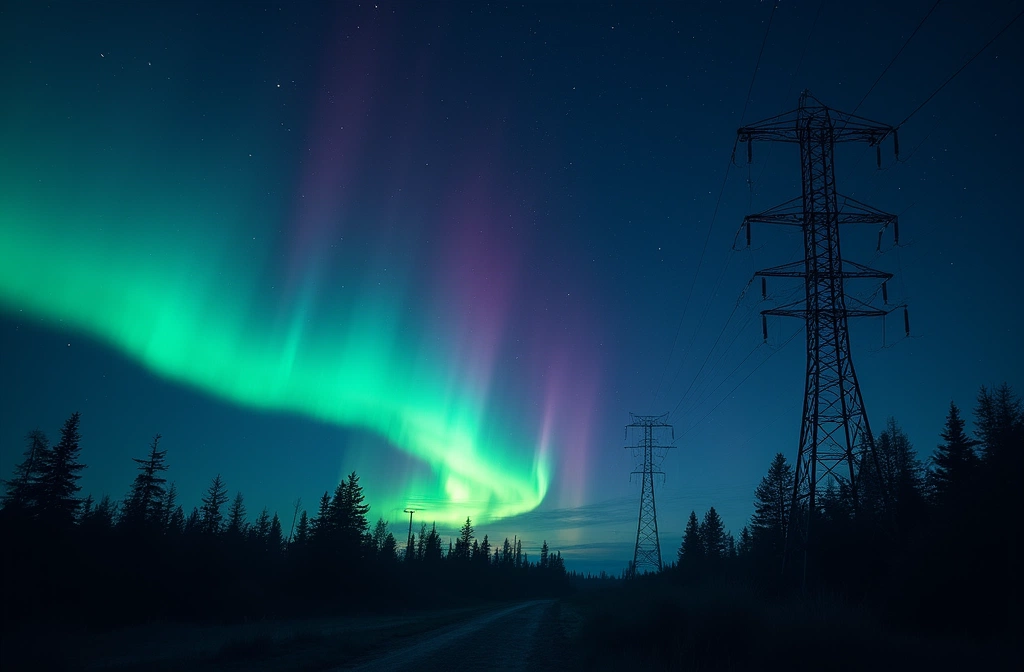
NOAA is tracking a powerful stream of solar wind flowing from a massive coronal hole in the sun's atmosphere, with geomagnetic storm conditions expected Thursday and Friday. According to reporting on the advisory, these conditions will create favorable viewing windows for the Northern Lights across higher latitudes.
Context: Geomagnetic storms occur when solar wind interacts with Earth's magnetosphere. NOAA's Space Weather Prediction Center categorizes these events on a scale; the current forecast suggests activity in the range that produces aurora visibility but does not typically trigger widespread infrastructure disruption. However, the distinction matters for preparedness tracking.
Why this registers: Even moderate geomagnetic events test grid response systems and communication networks—particularly satellite-dependent operations, GPS systems, and power distribution centers with marginal stability margins. This event is low severity, but it's a useful real-world data point. If you maintain a preparedness log, note:
- Event window: Thursday-Friday (specific times not provided in current advisories)
- Trigger: Coronal hole solar wind stream
- Expected severity: Aurora-producing range (NOAA classification pending)
What to watch next: Monitor NOAA Space Weather Prediction Center updates through Friday for any unexpected escalation in K-index or Kp readings. Geomagnetic storms can intensify or weaken based on solar wind density and magnetic field orientation—predictions are not absolute. If this event holds at forecast levels, it will dissipate naturally as solar wind conditions normalize.
A secondary signal: Coronal holes that produce multi-day solar wind streams sometimes indicate increased solar activity cycles. Track whether additional holes appear over the next 2-3 weeks. Clustering of events doesn't change near-term risk but does suggest the sun is entering a more active phase—relevant to longer-term infrastructure resilience planning.
For most readers, this is aurora-viewing weather. For infrastructure operators and grid monitors, it's a scheduled stress test. For preparedness analysts, it's a baseline measurement in an increasingly active solar cycle.
