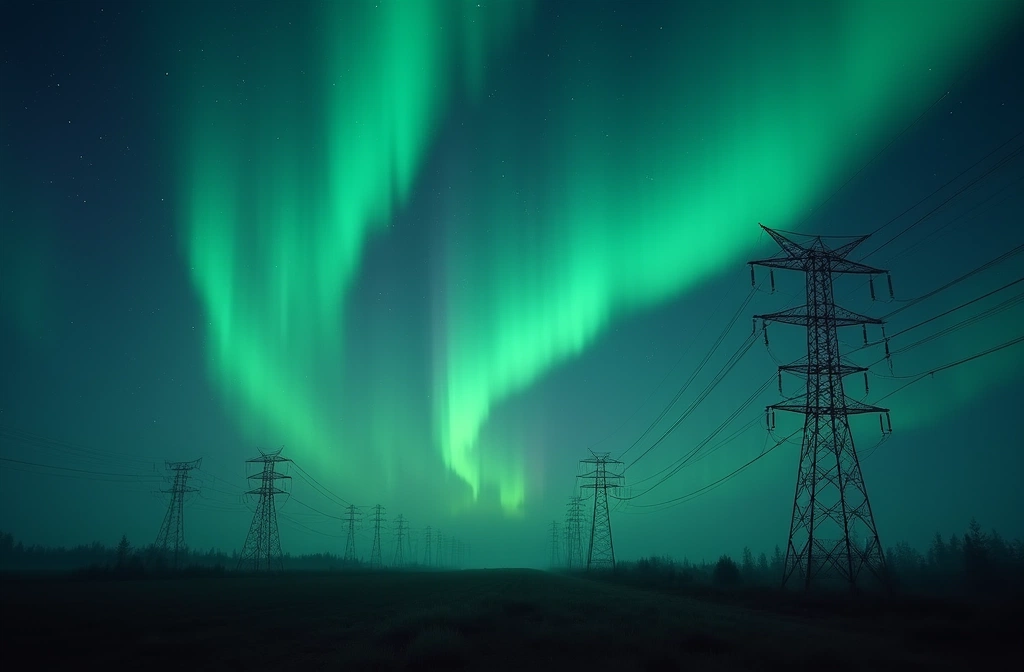
A stream of solar material is forecast to impact Earth's magnetosphere this weekend, according to reporting from Orbital Today. The collision could trigger geomagnetic storms and energize the auroral oval — the ring of aurora activity that typically circles the polar regions.
The immediate observable effect: northern lights may be visible farther south than usual, including potential visibility in Michigan and Maine. This is the visual indicator that the magnetosphere is being compressed and energized.
The operational concern is more specific. NOAA's Aurora Dashboard and space-weather forecasters are actively monitoring for weak to minor HF radio disruptions on the sunlit side of Earth as the storm develops. HF radio — used in aviation, maritime, amateur radio, and certain military/emergency communications — is sensitive to ionospheric disturbance. Even minor storm conditions can degrade propagation and create dead zones in long-distance HF links.
Why this matters: HF remains a critical backup communication layer in preparedness planning, particularly for remote areas where terrestrial infrastructure is sparse. A weekend disruption is less operationally critical than a weekday event, but it's a useful real-world test of how your particular HF-dependent systems perform under actual geomagnetic stress.
This is not a major event — the expected range is weak to minor, not moderate or severe. But it's worth using as a signal check: if you rely on HF for emergency comms, backup navigation, or cross-regional coordination, observe performance this weekend against forecast conditions. Note any propagation shifts, dead zones, or signal degradation. That data is more valuable than any theoretical model.
NOAA's Aurora Dashboard is the authoritative real-time source for geomagnetic activity and forecast updates. Check it Friday and Saturday morning to track actual vs. predicted storm intensity.
