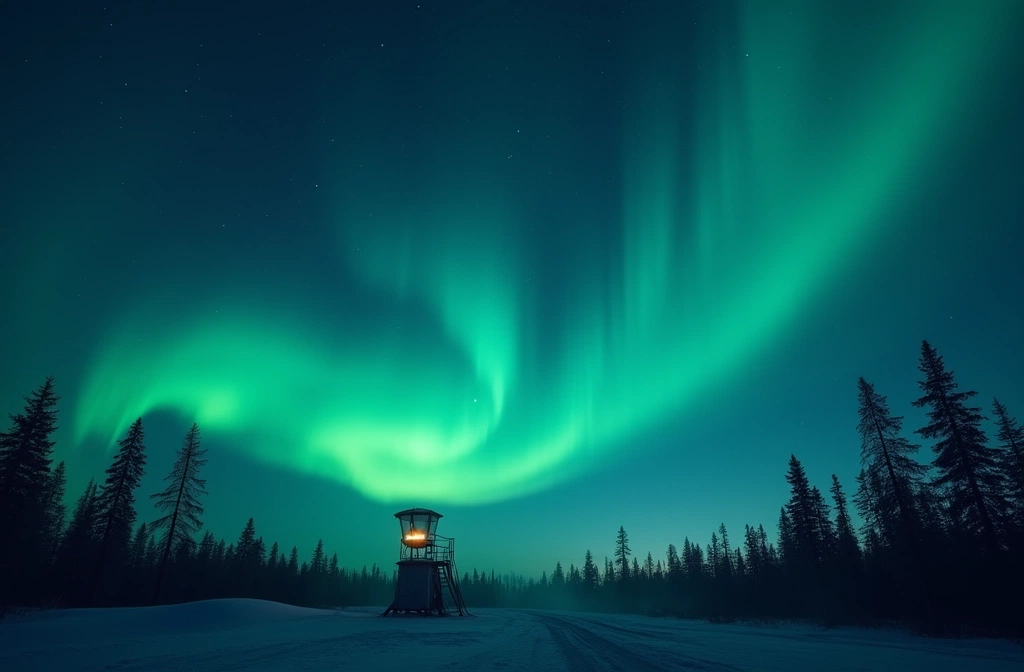
Fox 2 and MSN reported rising aurora activity coinciding with the initiation of a geomagnetic storm watch. Aurora visibility at higher latitudes is a known indicator of geomagnetic disturbance, though the sources do not specify the current Kp index, storm classification (G-scale), or timeline for potential impact.
Geomagnetic storms pose documented risks to power grids, satellite communications, and GPS-dependent systems. During strong geomagnetic events, induced currents in long transmission lines can stress transformers and, in worst-case scenarios, trigger cascading outages. Telecommunications relying on ionospheric propagation and precision agriculture dependent on GPS can experience degradation or temporary service loss.
The watch status indicates NOAA's Space Weather Prediction Center (or equivalent monitoring body) has elevated alert level but has not escalated to a warning. This is the appropriate time for infrastructure operators to review protocols and for preparedness-minded individuals to verify communication backups and battery inventories — not overreact, but verify readiness.
Key unknowns from available reporting: the specific magnitude of the current geomagnetic disturbance, expected duration of the watch period, and whether this activity is part of a broader solar cycle uptick. Without official severity classification in these sources, it remains premature to assume grid-threatening conditions, though the watch status reflects real geophysical activity warranting baseline alertness.
Historically, geomagnetic storms in the G3-G4 range (moderate to strong) have caused isolated power outages and satellite anomalies without widespread grid failure. The 1859 Carrington Event remains the reference case for severe space weather impact; the 2003 Halloween storms caused regional blackouts in Scandinavia. Current watch status does not indicate Carrington-scale risk, but does confirm ongoing solar activity worthy of monitoring.
