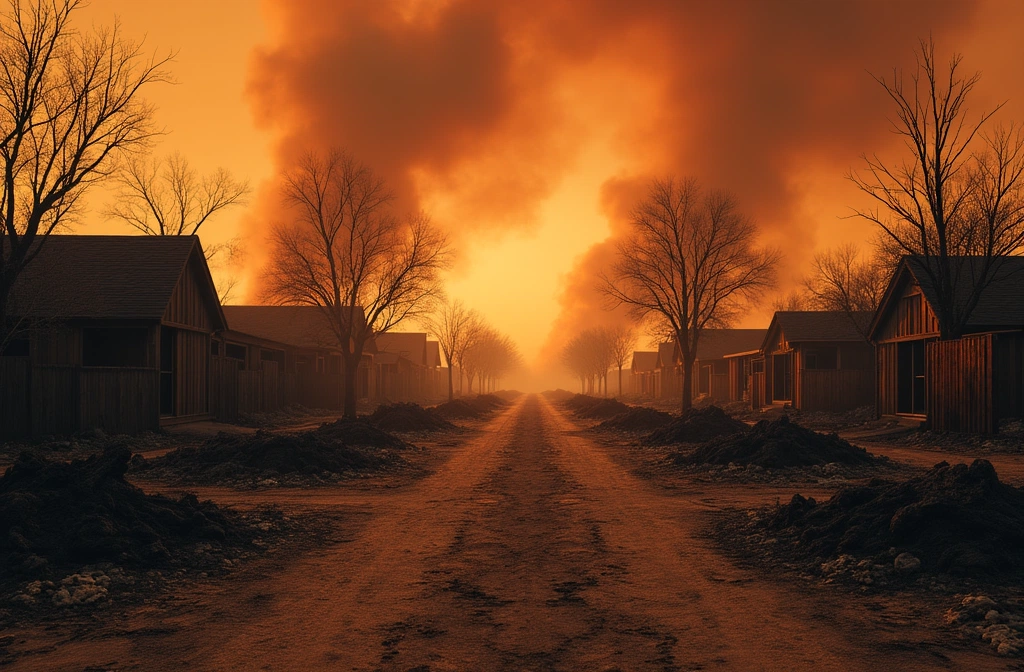
The Pineland Road fire and Highway 82 fire in Georgia have together destroyed more than 100 homes, marking part of a larger pattern of wildfires across the southeastern United States this spring. According to The Guardian's reporting, heavy rain in the region has not proven adequate to suppress these fires—a signal that underlying drought conditions remain severe enough to sustain active fire behavior even after precipitation events.
This matters because wildfire resilience depends on soil moisture saturation and fuel moisture content, not rainfall alone. When drought conditions are entrenched, isolated rain events often fail to penetrate deep enough or persist long enough to meaningfully reduce fire risk. The fact that heavy rain has not tamed these fires suggests the region may be operating in a persistent drought state that requires sustained, systematic precipitation to reverse.
For preparedness planning, this underscores a critical distinction: visible rain does not equal resolved drought. Communities in fire-prone regions should calibrate their wildfire risk assessments on longer-term drought indices (USDA drought monitor classifications, soil moisture data) rather than individual weather events. Emergency management agencies and utility operators in the South should be factoring in the possibility of sustained fire season activity even after precipitation, which affects evacuation logistics, power grid vulnerability (lines down from fire-caused outages), and community water system strain (firefighting demand, potential contamination from ash).
Watch for: official drought classification updates from federal agencies and whether fire activity continues or intensifies in subsequent weeks despite recent rainfall. That signal will indicate whether this is a temporary anomaly or a seasonal trend requiring elevated preparedness posture across infrastructure and evacuation planning.
