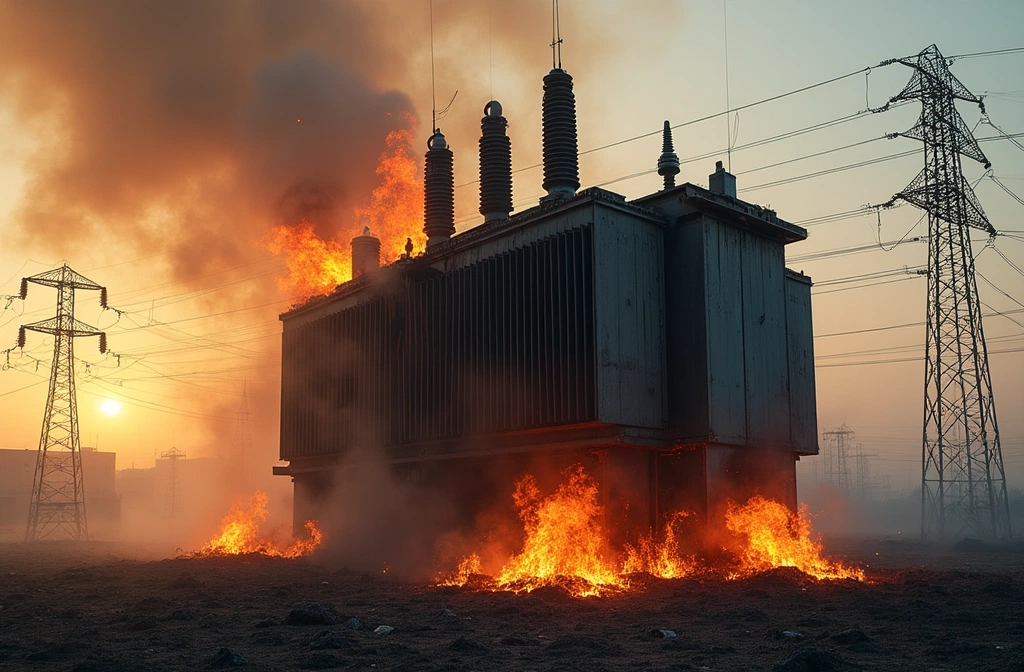
The Electricity Company of Ghana (ECG) announced a power outage affecting the Pokuase Amanfrom area and surrounding neighborhoods in Accra West, attributed to a faulty transformer. The incident was first reported on May 2, 2026.
This is a routine grid event—but it illustrates a persistent vulnerability in urban power distribution. Transformers are critical load-balancing nodes. When one fails without redundancy in place, entire sectors go dark. Ghana's grid, like many developing infrastructure systems, relies on aging equipment with delayed maintenance cycles and limited spare capacity.
Why this matters: Single transformer failures typically affect thousands of people in densely populated areas. Unlike generation-level failures or transmission line damage, transformer faults are often diagnosed and repaired within hours. But the lag between detection and restoration creates a window where hospitals, water treatment, refrigeration, and communications may operate on backup power or fail entirely.
For preparedness readers, this underscores a critical gap: most urban outage plans assume grid restoration within 24-48 hours. That assumption holds for localized transformer faults. But it does NOT hold if multiple distribution nodes fail simultaneously—whether from a coordinated cyber event, equipment cascade, weather event, or physical infrastructure stress.
The signal here is methodological, not alarmist. Watch whether ECG publishes root cause analysis and replacement timeline. Repeated failures in the same sector suggest deferred maintenance and constrained capital allocation—both indicators of systemic stress. When utilities cannot fund predictive maintenance, failure frequency increases and recovery time stretches.
For households and small businesses in similar grids: document your outage duration and impacts. Build a local baseline of grid reliability. That data matters more than national statistics when planning your own resilience buffer.
