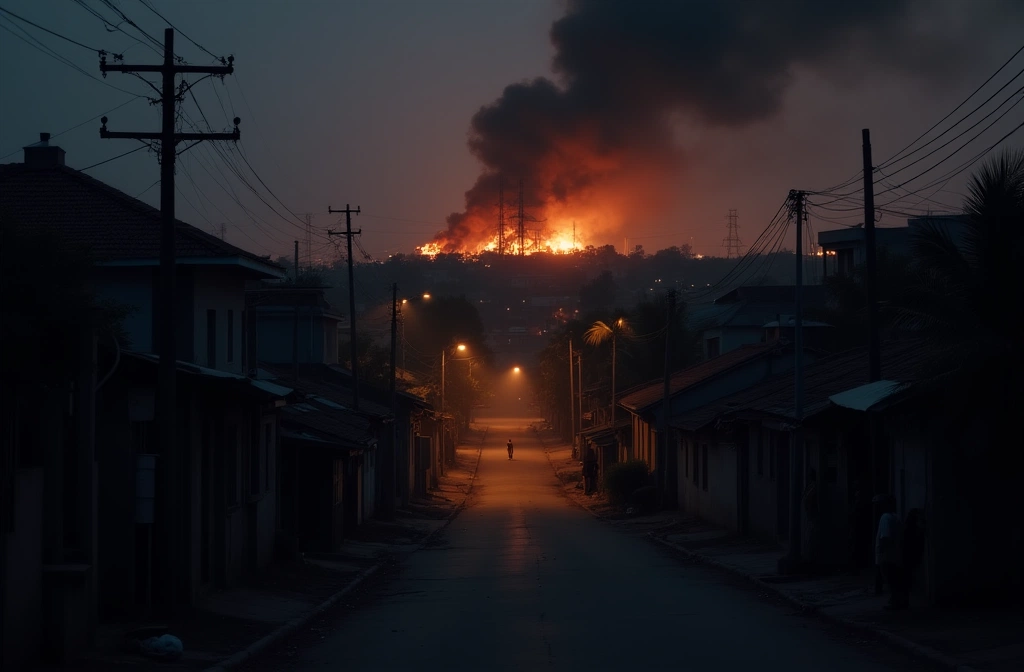
According to reporting from YEN.COM.GH, the Electricity Company of Ghana announced a rotating blackout schedule impacting over 100 communities across the Accra West metropolis. The outages are attributed to reduced power generation capacity caused by a fire at the Akosombo substation. ECG indicated that electricity supply would be restored once generation capacity improves.
This event underscores a critical infrastructure vulnerability: single-point-of-failure dependencies in regional power systems. The Akosombo facility appears to be a significant node in Ghana's generation profile. When a single asset is compromised—whether by equipment failure, weather, or other causes—the response is broad geographic impact affecting populated urban areas.
For infrastructure-dependent systems (water treatment, medical facilities, telecommunications backhaul, fuel distribution), a 12-hour rolling blackout creates cascade risk. Hospitals on backup generators consume stored fuel reserves. Water systems lose pressure. Data centers and mobile towers cycle through battery reserves. Even low-severity outages stress interconnected dependencies.
The rolling schedule approach—rather than unplanned blackouts—suggests ECG maintains some load management capability. That's operationally positive. However, the scale (100+ communities) and the cause (infrastructure damage requiring repair time) means this is not a minutes-long event. Restoration timelines depend on damage assessment and parts availability at Akosombo.
What to watch: How quickly ECG restores full capacity. If repair timelines extend beyond stated estimates, you may see expanded outage zones or longer blackout windows. Secondary indicator—whether other regional utilities (West Africa Power Pool members) activate emergency power imports, which would signal Ghana's generation gap is significant enough to require external support.
