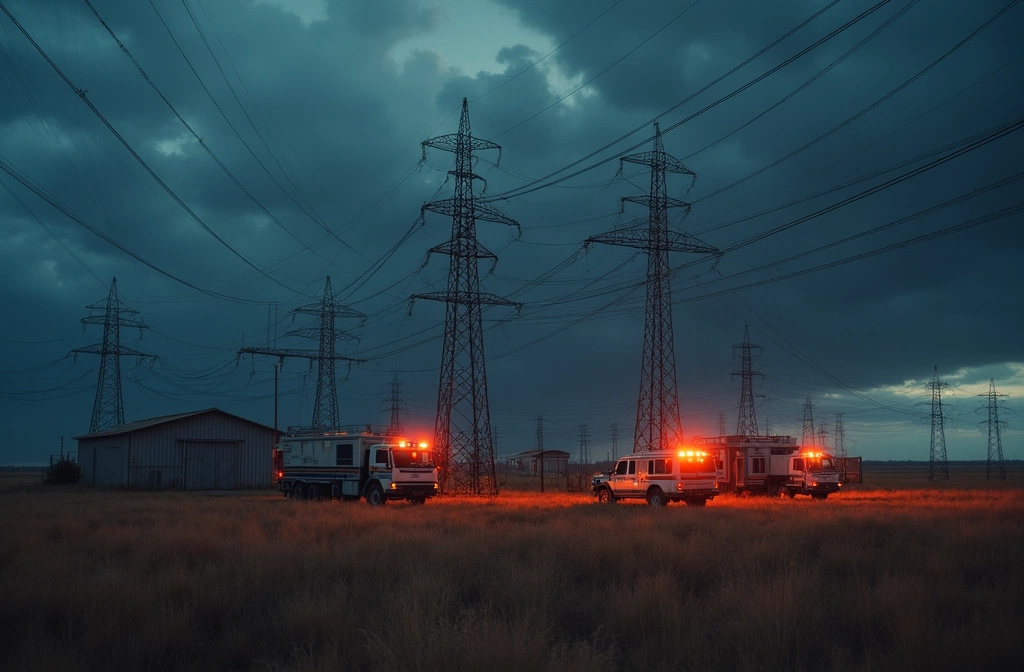
Terry Lamphier's recent examination of local power grid resilience, published in The Union, highlights a documented gap in emergency preparedness infrastructure. According to analysis referencing Koppel's interviews with government officials, emergency services—including food, water, generator capacity, and emergency housing—were designed to handle disruptions lasting only days, not weeks or months.
This assessment emerges from Lamphier's investigation into repeated PG&E blackouts affecting Grass Valley residents. Frustrated by inconsistent public information from both PG&E and local authorities, Lamphier turned to AI-assisted research to establish baseline causes and patterns—a signal in itself that transparency gaps exist at the utility and municipal level.
The implication is straightforward: if actual grid outages extend beyond the design parameters of local emergency systems, communities face a cascading vulnerability. Water treatment and distribution typically require continuous power. Food supply chains depend on refrigeration and transportation. Generator fuel supplies are finite and depend on delivery networks that themselves require functioning infrastructure.
What makes this significant is not speculation about causes, but rather the documented admission that preparedness planning assumed a bounded disruption scenario. Whether current grid vulnerabilities could actually force that scenario—through weather, equipment failure, or other mechanisms—remains a separate technical question. But the fact that emergency planners designed for "days" rather than longer periods suggests either confidence in rapid restoration capacity or an acceptance of risk beyond that window.
For communities dependent on PG&E service, this is a structural vulnerability worth understanding. The grid may be robust in normal conditions; the question Lamphier raises is whether the human systems supporting it during extended disruption are equally robust.
