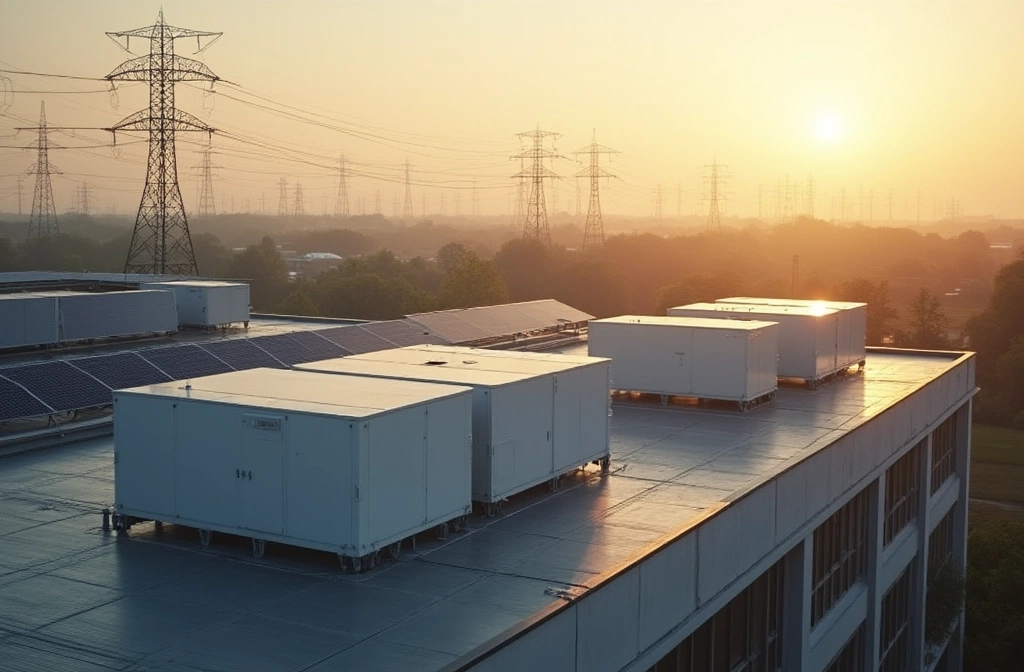
According to TycoonStory, commercial and industrial (C&I) operators now confront escalating power challenges: recurrent energy emergencies, voltage fluctuations driven by widespread distributed photovoltaic integration, and rising demand for grid stability. The article frames grid-forming energy storage as a mechanism to reinforce C&I energy resilience in response to these pressures.
Why this matters: Grid instability—particularly voltage sag and swell caused by high penetration of solar generation—degrades equipment lifespan, triggers facility shutdowns, and increases operational risk. Traditional grid support mechanisms (centralized generation, synchronous condensers) face capacity limits as distributed resources proliferate. Grid-forming storage systems provide local voltage support and can operate independently of traditional grid anchors, potentially reducing dependency on utility-coordinated responses during emergencies.
However, the TycoonStory piece does not provide specifics on deployment scale, adoption rates, regulatory barriers, or cost structures. The framing suggests grid-forming storage is positioning itself as part of the C&I resilience toolkit, but actual market penetration and effectiveness metrics remain unquantified in available signals.
Systemic risk angle: If C&I operators adopt grid-forming storage unevenly—concentrated in high-value facilities while smaller operations remain exposed—this could create a resilience gap that fragments grid recovery capability during widespread outages. Conversely, rapid uncoordinated deployment could introduce new failure modes if systems lack interoperability standards or if cybersecurity is treated as secondary to performance.
What to watch: Monitor whether regulatory frameworks (FERC, state utility commissions) begin formally recognizing grid-forming storage as eligible for resilience incentives or ancillary service payments. Track actual C&I deployment announcements and their geographic clustering. Watch for technical standards alignment efforts across vendors. These signals will indicate whether grid-forming storage becomes mainstream infrastructure hardening or remains a niche solution.
